
 By

First, sum the product purchase price to calculate landed cost. Also include origin handling, main freight, and insurance. Add customs duties, port destination fees, and broker charges. Include inland delivery and any unrecoverable import taxes. Then, divide this total landed cost by the total number of units received. This determines your final landed cost per unit.
Landed cost shows the true financial cost. It covers bringing inventory to your warehouse door or fulfillment center. For example, 2,000 units bought at 4.50 each will cost 10,701.02 ÷ 2,000 = 5.35 per unit. This includes freight, duty, and fees. Also, import VAT is treated as recoverable. Use the calculator below. You can run your own shipment on a CIF, FOB, or Australia basis.
Landed cost and import duty calculator
Runs in your browser; nothing you enter is sent anywhere. Carrier figures differ, so confirm the final numbers with your forwarder. Whole shipment: all-in-one freight calculator →
What line items go into a landed cost calculator?
You must account for every expense involved in moving inventory from the supplier’s factory floor to your warehouse. Leaving out minor port surcharges or delivery fees will artificially inflate your profit margins on paper.

- Product cost: The base invoice price charged by your supplier under your agreed commercial term.
- Origin charges: These are costs incurred before international transit. For example, they include export clearance or warehouse handling. Also, inland factory-to-port pickup is an origin charge when buying under EXW or FCA terms.
- Main freight: This is the cost of international transport. It can be by sea, air, rail, or road freight courier. We calculate it on actual or chargeable weight and volume.
- Cargo insurance: Premium paid to protect your cargo against loss, damage, or theft during transit.
- Destination charges: Terminal handling charges (THC), container release fees, port security surcharges, and delivery order costs assessed at the port or airport of arrival.
- Customs broker fees: Service fees paid to a licensed customs broker or agent to clear your shipment through customs.
- Import duty: Tariffs levied by national customs authorities based on your item’s tariff code and country of origin.
- Import VAT or GST: Value-added or sales taxes collected at entry. This is only part of your landed cost if your business cannot recover it.
- Inland delivery: Local trucking, container drayage, or courier shipping from the entry port to your facility or Amazon FBA warehouse.
- Accessorial fees: Additional costs such as customs inspection fees, container demurrage, port storage, or mandatory fumigation.
How Incoterms affect your initial cost calculation
Your agreed Incoterm determines expenses. Some are already in the seller’s price quote. You must pay others directly to freight forwarders or customs officials.
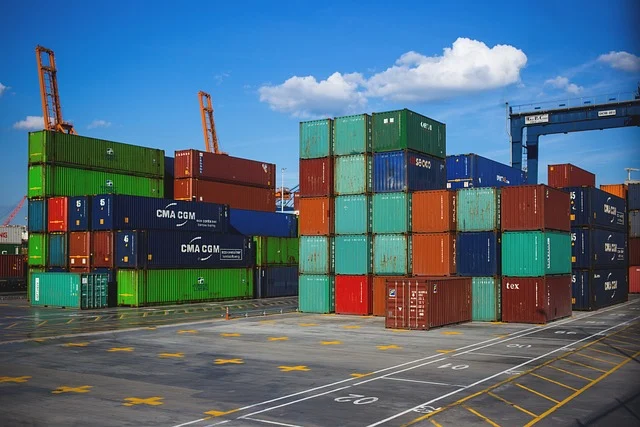
Under Ex Works (EXW), you pay all costs. This includes origin factory pickup. It also covers final delivery. However, under Free On Board (FOB), your supplier pays local origin charges. They also cover export clearance. You take financial responsibility once goods load onto the vessel. For a landed cost calculator, under Cost, Insurance, and Freight (CIF), the seller covers main transport. They also pay insurance to your destination port. But you remain responsible for port handling. You also handle import duties and local cartage. If your supplier ships duty paid, see the DDP vs DAP guide. This guide helps you understand which costs are included in your supplier’s invoice price, including VAT.
How customs value is calculated by country
Customs authorities do not calculate import duty on product invoice value alone. Each country defines its own customs value basis, which dictates whether the taxable base includes international freight and transit insurance.

- CIF basis: The European Union uses this. So do the United Kingdom, Japan, and many other nations. Customs authorities calculate duty on the combined total. This includes the goods value, international freight, and insurance up to the importing border.
- FOB basis: The United States uses this. Customs authorities assess duty solely on the export value of the goods at the origin port. This excludes international freight and transit insurance.
- Australia basis: Australia assesses custom value on the transaction value. They convert this to Australian Dollars using customs rules. Generally, this excludes international transport and insurance from the customs duty base.
Confirm the required customs valuation method with your customs broker before calculating duties. Read our customs value guide for detailed rules on additions and deductions.
The core landed cost formulas
You can use these rules. They help you calculate your shipment’s total landed cost. Also, you can determine unit economics.
- Customs value (CIF basis) = Goods invoice + International freight + Insurance to border
- Customs value (FOB basis) = Goods value at port of export
- Import duty = Customs value × Duty rate percentage
- Next, Import VAT/GST base = Customs value + Import duty + Port handling (+ Inland transit where applicable)
- Import VAT/GST amount = VAT base × Local VAT rate percentage
- Total landed cost = Goods + Freight + Insurance + Duty + Brokerage fees + Destination fees + Inland transport (+ Non-recoverable VAT)
- Landed cost per unit = Total landed cost ÷ Total units received
Example 1: an LCL shipment on a CIF basis
Consider an import of 2,000 units priced at 4.50 FOB, giving a total goods cost of 2,000 × 4.50 = 9,000. The shipment measures 6.2 m³ and weighs 1,450 kg, moving as Less than Container Load (LCL) freight.

- Revenue tons: LCL freight charges use weight or measurement (W/M). You select the greater value. This is between total volume in cubic meters and total weight in metric tonnes. For example, 1,450 kg equals 1.45 tonnes. So, W/M = max(6.2, 1.45) = 6.2.
- Ocean freight: For example, the rate is 85 per revenue ton. So, ocean freight is 6.2 × 85 = 527.
- Insurance: Example transit insurance policy cost is 40.
- CIF customs value: 9,000 (goods) + 527 (freight) + 40 (insurance) = 9,567.
- Import duty: At an example rate of 6%, duty is 9,567 × 0.06 = 574.02.
- Destination and handling fees: For example, destination port charges are 260. The customs broker fee is 120. Inland trucking costs 180. Therefore, these total 260 + 120 + 180 = 560.
- Landed cost excluding VAT: 9,567 + 574.02 + 560 = 10,701.02.
- Landed cost per unit: 10,701.02 ÷ 2,000 = 5.35.
Now, calculate import VAT. Use an example rate of 20%. Apply it to the CIF value plus duty: (9,567 + 574.02) × 0.20 = 10,141.02 × 0.20 = 2,028.20. If your business is VAT-registered, you can recover import VAT. This is a temporary cash-flow outlay. It is not a true cost. However, if you cannot recover VAT, the total landed cost becomes 10,701.02 + 2,028.20 = 12,729.22. As a result, the unit landed cost is 12,729.22 ÷ 2,000 = 6.36. Use a landed cost calculator for details on weight/measurement billing. Review the LCL calculation guide.
Example 2: the same shipment on an FOB basis
Countries that assess customs duty on an FOB basis exclude ocean freight. They also exclude transit insurance. So, customs authorities do not include these in the duty calculation.

- Import duty: 9,000 × 0.06 = 540.00.
- Landed cost excluding VAT: 9,000 (goods) + 527 (freight) + 40 (insurance) + 540 (duty) + 560 (local fees) = 10,667.00.
- Landed cost per unit: 10,667.00 ÷ 2,000 = 5.33 (5.3335 unrounded).
Assessing duty on an FOB basis saves 34.02 in duties for this shipment. This reduces individual unit cost by roughly 0.02 when compared to a CIF valuation base.
| Component | Example 1 (CIF basis) | Example 2 (FOB basis) |
|---|---|---|
| Goods (2,000 × 4.50) | 9,000.00 | 9,000.00 |
| Ocean freight (6.2 W/M × 85) | 527.00 | 527.00 |
| Insurance | 40.00 | 40.00 |
| Duty at 6% | 574.02 | 540.00 |
| Destination, broker and delivery | 560.00 | 560.00 |
| Landed cost excluding VAT | 10,701.02 | 10,667.00 |
| Per unit | 5.35 | 5.33 |
Splitting landed cost across several products
A container or consignment may hold different product lines. If you divide total freight evenly across total unit counts, you distort true product margins. Small, lightweight products will carry freight expenses. However, heavy, bulky items cause these costs. A landed cost calculator can help with these complexities, factoring in elements like VAT.

Allocate multi-SKU shipment costs using logic tied to how you assess those costs:
- Freight and cargo handling: Allocate based on each SKU’s proportion of total shipment volume (cubic meters) or chargeable weight (kilograms).
- Import duties: Calculate duties line-by-line. Use each product’s specific HS tariff code. Also use the item invoice valuation.
- Customs broker and documentation fees: Distribute proportionally based on item value or divide equally per line item.
For example, the 6.2 m³ shipment above contains 4.0 m³ of Product A and 2.2 m³ of Product B. As a result, freight splits as follows: Product A pays (4.0 ÷ 6.2) × 527 = 340.00. Product B pays (2.2 ÷ 6.2) × 527 = 187.00. Check the total: 340.00 + 187.00 = 527.00.
Low-value thresholds and courier rules
Regional de minimis rules can eliminate import duties. Also, they can alter tax collection points. This applies to small parcels and express courier shipments:

- United States: US Customs and Border Protection (CBP) has suspended de minimis exemptions. This applies across all transport modes. Low-value shipments require formal or informal entry. As a result, duties apply based on standard classification rules. See US de minimis in 2026.
- United Kingdom: Shipments valued at £135 or less have no customs duty. This excludes excise goods. However, supply-chain VAT is collected at the point of sale.
- European Union: A uniform €3 duty fee per product category applies to low-value consignments entered into the EU.
- Australia: Shipments under AUD 1,000 generally enter duty-free at the border. Registered foreign merchant platforms collect GST at the checkout.
How to avoid common landed cost calculation mistakes
Inaccurate landed cost figures distort retail pricing, margin expectations, and inventory valuation on balance sheets. Avoid these frequent errors:

- Ignoring destination surcharges: Always request fully itemized quotes from forwarders. Port handling, terminal documentation, and container drayage often equal or exceed ocean freight on short-haul routes. Review the freight quote guide to identify hidden line items.
- Misclassifying tariff rates: Selecting an incorrect tariff code leads to inaccurate duty assumptions or customs fines upon audit. Verify classifications with the HS codes explained resource.
- Mishandling foreign currency conversions: Express all product prices in a single currency. Also, express freight quotes and customs duties this way. Use the official central bank exchange rate. This rate applies on the customs declaration date.
- Treating recoverable VAT as an expense: Including reclaimable import VAT in landed costs artificially reduces perceived gross profit margins. It also misstates inventory values.
Frequently asked questions
What is included in landed cost?
Landed cost includes product purchase price, origin charges, main freight, transit insurance, import duties, port destination fees, customs broker fees, inland delivery, and unrecoverable import taxes.
Is VAT part of landed cost?
Include import VAT or GST in landed cost only if your business cannot reclaim it from tax authorities. Registered businesses eligible to recover import VAT treat it as a temporary cash flow item rather than a cost.
Is import duty calculated on CIF or FOB value?
The duty valuation method depends on the importing country’s rules. For example, countries like the US use FOB values. However, the EU and UK calculate duty on CIF values. These values include international freight and insurance.
How do I calculate landed cost per unit?
Calculate total landed cost by summing all procurement, transport, duty, and delivery charges. Then divide this total by the net quantity of usable units received.
Does US de minimis still apply to small shipments?
No, CBP has suspended de minimis exemptions for all entry modes. This means low-value shipments entering the United States require formal or informal entry. As a result, they are subject to standard import duties and processing fees.
Related guides
- UK Import VAT and Duty: The £135 Rule and Goods Over £135
- Importing into Australia: Duty, GST and the A$1,000 Threshold
- How to Calculate Import Duty: Customs Value, Tariff Code and Rate
- EU €3 Customs Duty on Low-Value Parcels (From 1 July 2026)
Sources and further reading
- GOV.UK: Tax and Customs for Goods Sent from Abroad: official guide to UK threshold rules.
- CBSA: CUSMA Low-Value Shipments: official Canadian customs threshold guidelines.
- Australian Border Force: Import Declarations: official Australian threshold guidance.