
 By
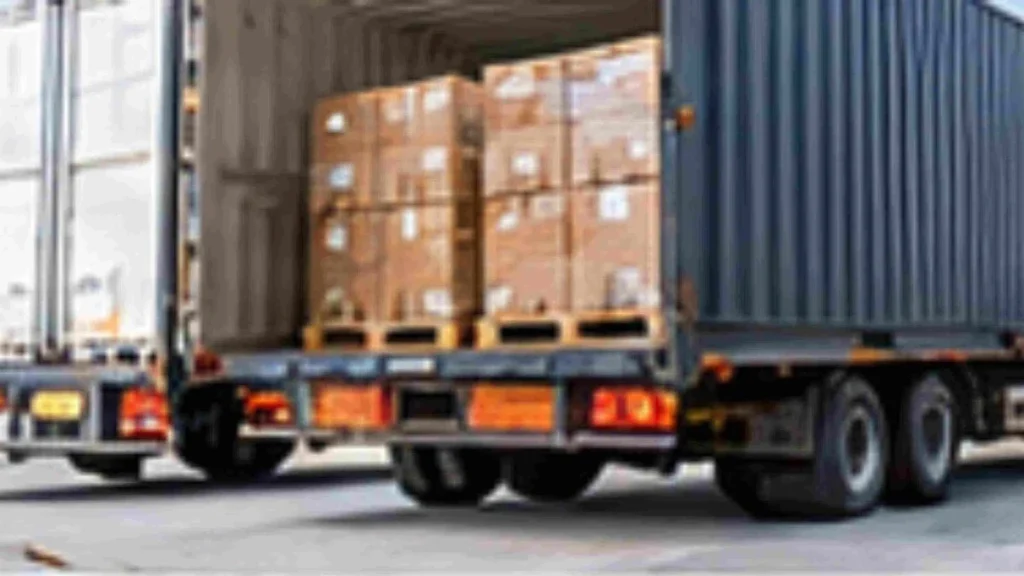
A standard 20ft container fits 11 Euro pallets. Alternatively, it holds 9 US standard pallets on a single floor level. A 40ft container fits up to 25 Euro pallets. You can practically fit 23–24 with clearance. It also fits 20 US standard pallets single-stacked. Double-stacking can double these figures. However, height and weight limits must allow it.
Pallets per container or truck
Runs in your browser; nothing you enter is sent anywhere. Carrier figures differ, so confirm the final numbers with your forwarder. Whole shipment: all-in-one freight calculator →
How many pallets fit in a 20ft and 40ft container?
The exact number of pallets in a shipping container varies. It depends on interior dimensions and pallet footprints. Door clearances and cargo overhang also play a role. A standard dry container has an interior width of 2,352 mm (7 ft 8.6 in). Usable floor lengths are 5,900 mm for a 20ft container. For a 40ft container, the length for how many pallets fit is 12,032 mm.
The table below compares standard floor capacity. It covers different container types with single-tier loading. The first value shows theoretical maximum capacity. This assumes zero clearance. The second value indicates practical capacity. It allows 50 mm clearance for forklift handling.
| Pallet | 20ft | 40ft / 40ft HC | 45ft HC |
|---|---|---|---|
| Euro 1, 1,200 × 800 mm (47.2 × 31.5 in) | 11 / 11 | 25 / 23 | 27 / 27 |
| Euro 2, 1,200 × 1,000 mm (47.2 × 39.4 in) | 9 / 9 | 22 / 20 | 24 / 24 |
| US GMA, 48 × 40 in (1,219 × 1,016 mm) | 9 / 9 | 20 / 20 | 24 / 24 |
| Square, 1,100 × 1,100 mm | 10 / 10 | 20 / 20 | 24 / 24 |
| Australian, 1,165 × 1,165 mm | 10 / 5 | 20 / 10 | 22 / 11 |
Freight carrier guidelines match these floor capacities. For example, iContainers rates a 20ft box. It holds 11 Euro pallets when single-stacked. For a standard 40ft box, practical freight planning allows 23–24 Euro pallets. It also allows 20 Euro 2 pallets or 20 US standard pallets. A 40ft high cube container has the same floor area as a standard 40ft box. So, its single-level floor capacity is identical.
Pallet dimensions are detail-covered in standard pallet sizes and Euro pallet dimensions guides.
How many pallets fit in a 20ft container?
A standard 20ft container fits 11 Euro pallets (1,200 × 800 mm) or 9 US standard pallets (48 × 40 in / 1,219 × 1,016 mm) single-stacked on the floor.

You can fit 11 Euro 1 pallets. This requires a turned layout on the floor. One column runs lengthwise. It measures 1,200 mm along the container length. It also measures 800 mm across the width. The other column runs crosswise. It measures 800 mm along the length. It measures 1,200 mm across the width. The combined width is 2,000 mm (1,200 + 800 mm). This easily clears the 2,352 mm interior width. Also, the crosswise column holds 7 pallets. This is down the 5,900 mm length (7 × 800 mm = 5,600 mm). The lengthwise column holds 4 pallets (4 × 1,200 mm = 4,800 mm). This totals 11 pallets.
Capacity drops to 9 pallets for US GMA (48 × 40 in) or Euro 2 pallets (1,200 × 1,000 mm). You can place two columns side by side. This measures 2,235 mm wide (1,016 + 1,219 mm). It leaves 117 mm of clearance. Also, four rows fit down the length. This measures 4,876 mm (4 × 1,219 mm) for 8 pallets. You can add 1 turned pallet in the remaining end space. This measures 1,016 mm in length. Therefore, you get 9 pallets total.
How many pallets fit in a 40ft container?
Standard 40ft dry containers and 40ft high cube containers both provide 12,032 mm internal length and 2,352 mm internal width. Single-stacked, how many pallets fit in a 40ft container is up to 25 Euro 1 pallets, 22 Euro 2 pallets, or 20 US GMA pallets.
You can fit a maximum of 25 Euro pallets geometrically. However, practical loading usually yields 23 to 24 Euro pallets. This allows necessary maneuvering room for forklifts near container doors.
You can fit 20 US standard 48 × 40 in pallets. They fit single-stacked in a staggered row arrangement. One column has 40 inches across. The other has 48 inches across. This uses 2,235 mm of width. This arrangement fits 9 rows down the length. Plus, it fits 1 turned end pallet.
A 40ft high cube container has the same floor dimensions as a standard 40ft box. Both measure 12,032 x 2,352 mm. Therefore, their single-tier floor capacity is identical. Its extra 305 mm (1 ft) height only increases the pallet count when you double-stack them.
How many pallets fit in a 20ft container in Australia?
Standard Australian freight uses square Australian pallets measuring 1,165 × 1,165 mm (supplied by Chep or Loscam).
Placing two 1,165 mm pallets side by side takes 2,330 mm of width (1,165 + 1,165 = 2,330 mm), leaving 22 mm of width tolerance inside a 2,352 mm container. Down the 5,900 mm length of a 20ft box, 5 pallets fit in a row (5 × 1,165 = 5,825 mm). Thus, theoretical capacity is 10 pallets in a 20ft container and 20 pallets in a 40ft container.
However, 22 mm of total tolerance is usually not enough in real logistics. Pallets with overhanging cargo, bulging wrap, or swollen timber can easily exceed 2,352 mm in combined width. As a result, Australian transport companies often load 1,165 x 1,165 mm pallets single-wide down the center line. This reduces real-world floor capacity to 5 pallets in a 20ft container. It is 10 pallets in a 40ft container.
Australian pallets measure 1,165 × 1,165 mm. These are regional standard load carriers. However, they are not among the six global standards in ISO 6780:2003.
How to calculate pallet capacity step by step
Calculate exact pallet capacity for any custom pallet size using geometry rather than simple volume (CBM) division:
- Confirm usable container floor dimensions: A 20ft floor is 5,900 × 2,352 mm. Also, 40ft and 40ft HC floors are 12,032 × 2,352 mm. You must deduct 50 mm from the length and width. This allows for handling tolerance.
- Test width alignment: Sum the widths of side-by-side pallet columns across 2,352 mm. However, the combined width must not exceed 2,352 mm.
- Calculate column counts: Divide the container’s interior length by the pallet length. Do this along each column. So, Column count = floor(usable length ÷ pallet length).
- Sum total floor positions: Add column counts together to establish total single-tier floor capacity.
Example 1: Euro pallets in a 40ft container
For Euro 1 pallets (1,200 × 800 mm) in a 40ft box, run one crosswise column. This uses 800 mm along the length. Then, run one lengthwise column. This uses 1,200 mm along the length. This layout uses 2,000 mm of width (1,200 + 800 mm).
- Crosswise column count: 12,032 ÷ 800 = 15.04 → 15 pallets
- Lengthwise column count: 12,032 ÷ 1,200 = 10.03 → 10 pallets
- Total theoretical floor capacity: 15 + 10 = 25 pallets
With 50 mm clearance (11,982 mm usable length): 11,982 ÷ 800 = 14.98 (14 pallets) and 11,982 ÷ 1,200 = 9.99 (9 pallets), giving 14 + 9 = 23 practical pallets (typically 23–24 in practice).
Example 2: US 48 × 40 in pallets in a 40ft container
For US GMA pallets (1,219 × 1,016 mm), place one column with 1,016 mm width across. Also, place one with 1,219 mm width across. This uses 1,016 + 1,219 = 2,235 mm of width. It leaves 117 mm of clearance.
- 48 in along length column: 12,032 ÷ 1,219 = 9.87 → 9 pallets
- 40 in along length column: 12,032 ÷ 1,016 = 11.84 → 11 pallets
- Total single-tier load: 9 + 11 = 20 pallets
Why standard math fails: clearance, overhang, and reefer limits
A primary error occurs in container planning. People divide the total container CBM volume by the pallet volume. However, containers are rigid rectangles. They require an exact geometric fit.
Why “10 pallets in a 20ft” is wrong for 48 × 40 pallets
Online claims state a 20ft container holds 10 US standard (48 × 40 inch) pallets. However, these claims are geometrically impossible.
- Two 40 inch sides across take 2,032 mm in width. Four rows down the length use 4 × 1,219 mm. This totals 4,876 mm. As a result, this fits 8 pallets.
- Remaining length is 5,900 − 4,876 = 1,024 mm. Turning 1 pallet fits in 1,016 mm length, reaching 9 pallets total.
- A 10th pallet requires a 5th row (5 × 1,219 = 6,095 mm > 5,900 mm) or two turned pallets side by side (2 × 1,219 = 2,438 mm > 2,352 mm). Max capacity is strictly 9 pallets.
Similarly, Euro 2 pallets (1,200 × 1,000 mm) cannot fit 10 in a 20ft box because 5 × 1,200 mm = 6,000 mm exceeds container interior length.
Reefer container width restrictions
Refrigerated, or reefer, containers have thick walls. Also, air ducts reduce their internal width. It shrinks from 2,352 mm to 2,284–2,294 mm.
- Two Australian pallets measure 1,165 mm each. So, they need 2,330 mm combined. As a result, they cannot fit side by side in a reefer container.
- US GMA pallets have a combined width of 2,235 mm. They fit with less than 50 mm clearance. This complicates forklift handling.
- Reefer floor capacity usually drops by 1–2 pallets relative to standard dry containers.
Double stacking: height, door and weight limits
Double stacking doubles pallet floor capacity when cargo allows, but requires meeting three critical physical limits:
1. Door header and interior height limits. Hapag-Lloyd specifications show standard 40ft interior height is 2,395 mm with door height of 2,292 mm. A 40ft high cube provides 2,700 mm interior height and 2,597 mm door height. Stacker pallets must clear the door header during loading.
Example 3: Stacking Euro pallets in a 40ft high cube
First, consider each loaded Euro pallet at 1.25 m (1,250 mm) tall. Stacking two high gives you 2 × 1.25 m, or 2.50 m (2,500 mm). In a 40ft high cube, 2,500 mm clears the 2,597 mm door height. It also clears the 2,700 mm interior height. This allows you to fit 25 × 2, or 50 Euro pallets.
In a standard 40ft container, 2,500 mm exceeds the 2,395 mm interior height. It also exceeds the 2,292 mm door height. Therefore, double-stacking in a standard box requires individual pallet height under 1,146 mm.
2. Container payload and road transport weight limits. Imagine each Euro pallet weighs 550 kg. Then 50 double-stacked pallets weigh 27,500 kg. This fits within a 40ft HC maximum payload of 28,600 kg. However, if pallets weigh 650 kg each, 50 pallets equal 32,500 kg. This exceeds the container payload. Consequently, the maximum payload restricts the load to 28,600 ÷ 650, or 44 pallets. Always check local road axle weight limits.
3. Pallet compression strength and carton crush ratings. EPAL specifications rate Euro pallets for a safe working load of 1,500 kg and bottom-pallet compression capacity of 5,500 kg. However, corrugated cartons usually crush before wooden pallets fail; verify carton Edge Crush Test (ECT) limits.
Palletized vs floor loading: trade-offs
You balance labor speed against space use. This happens when you choose between palletized shipping and loose floor loading.
- Palletized cargo: Fast loading/unloading (45–60 minutes) via forklift, lowering labor costs and demurrage risk. However, wooden pallets occupy 10–15% of usable container volume.
- Floor-loaded cargo: This method maximizes box volume by filling empty space. However, manual loading takes 3–5 hours per container. This increases labor expense and turnaround time.
For example, 25 Euro pallets packed 1.25 m high take 30 m³ of volume. Over half the container remains empty space in a 67.7 m³ standard 40ft box. When cargo density is light, hand-loading loose boxes is often more economical. See How Many Cartons Fit in a 20ft or 40ft Container? for more information.
Tips before booking your container
- Measure fully loaded pallets: Cartons may overhang. Also, wrap or strapping can bulge. This increases dimensions beyond bare wooden pallet footprints.
- Plan box stacking layers: Calculate carton layout before building pallets for uniform stack heights.
- Check inland transport weight limits: Verify origin and destination road weight restrictions, which are often lower than vessel container limits.
Frequently asked questions
How many pallets fit in a 40ft container?
A standard 40ft container fits up to 25 Euro pallets (1,200 × 800 mm) or 20 US standard pallets (48 × 40 in) single-stacked. Practical freight clearance typically reduces Euro pallet loads to 23–24 pallets.
How many pallets fit in a 20ft container?
A 20ft container fits 11 Euro pallets or 9 US standard pallets single-stacked. Fitting 10 US standard pallets is geometrically impossible due to width constraints.
How many pallets fit in a 20ft container in Australia?
Australian standard pallets measure 1,165 x 1,165 mm. Theoretically, 10 pallets fit in a 20ft container, two-wide. However, tight 22 mm clearance usually restricts loading. So, you can only load 5 pallets single-wide down the center.
Does a 40ft high cube hold more pallets than a 40ft standard?
Not on a single tier, as both containers share identical floor dimensions (12,032 × 2,352 mm). High cube height only increases capacity when double stacking cargo.
Can I double stack pallets in a shipping container?
Yes, provided total stacked height clears the door header (2,292 mm standard, 2,597 mm high cube), total weight remains under payload limits, and bottom boxes support the weight.
Related guides
- How Many Cartons Fit in a 20ft or 40ft Container?
- 20ft vs 40ft Container: Which Is Better for Your Shipment?
- Shipping Container Dimensions: 20ft, 40ft, 40ft High Cube and 45ft
- Reefer Container Dimensions and Capacity (20ft and 40ft High Cube)
Sources and further reading
- iContainers: 40-Foot Container Guide: pallet counts and layout limitations.
- EPAL: Euro Pallet Specifications: dimensions, load capacity, and standards.
- Hapag-Lloyd: 20′ Standard Container: container specifications and payloads.