
 By
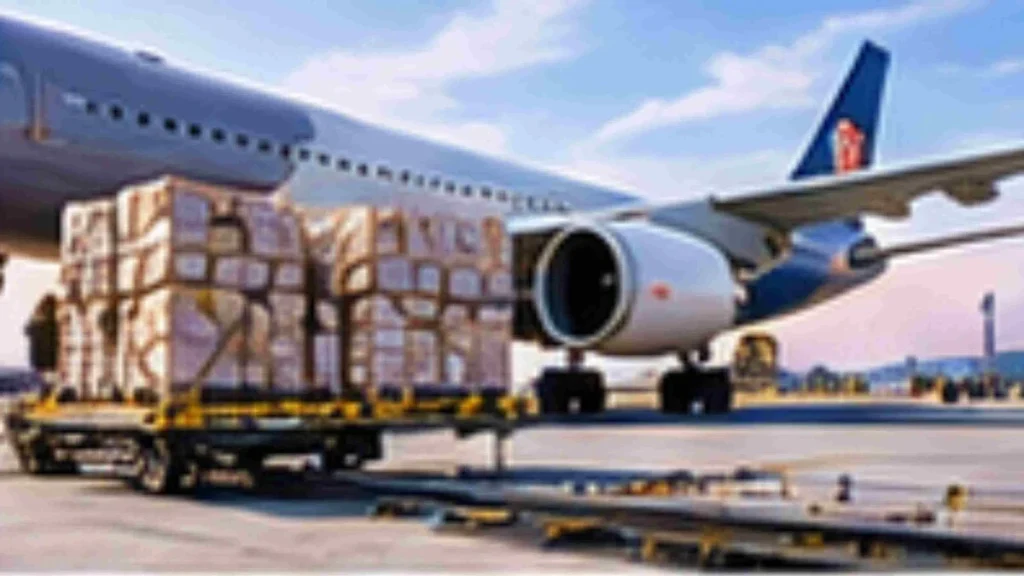
Carriers calculate air freight chargeable weight by comparing a shipment’s gross weight against its volumetric weight. As a result, you pay whichever figure is higher. To calculate volumetric weight for standard air cargo, multiply package dimensions in centimeters (L × W × H). Next, divide that total by 6,000.
Air freight chargeable weight calculator
Runs in your browser; nothing you enter is sent anywhere. Carrier figures differ, so confirm the final numbers with your forwarder. Whole shipment: all-in-one freight calculator →
air freight chargeable weight calculator: how it works
Aircraft belly space and main deck holds have physical weight limits alongside volume boundaries. Freight forwarders and airlines use chargeable weight to balance space and weight on every flight. Light, bulky goods occupy valuable space. Because of this, carriers price space based on density rather than scale weight alone.

The global standard formula for general air cargo uses a 1:6,000 volumetric ratio. In addition, the International Air Transport Association (IATA) established this figure as an industry standard:
- Volumetric weight (kg) = (Length × Width × Height in cm) ÷ 6,000 × total package count
- Chargeable weight = the higher figure between actual gross weight and volumetric weight
Major freight operators follow this standard across international routes. DHL Global Forwarding defines the standard density ratio as 1:6,000 using the formula ((L × W × H in cm) / 6,000) × total packages. Maersk highlights that the 6,000 divisor is the IATA benchmark for air freight. Converting one cubic meter (1,000,000 cm³) with this divisor yields a density equivalent of 166.67 kg per m³ (frequently rounded to 167 kg).
Integrated express couriers like DHL Express, FedEx, and UPS apply a divisor of 5,000 for parcel shipments. As a result, this yields a higher volumetric weight for identical cargo dimensions.
Step-by-step guide to calculating air freight chargeable weight
- Measure maximum package dimensions: Record the longest length, widest width, and highest point in centimeters for every piece. Account for package bulging, structural handles, corner protection, and pallet overhang.
- Determine actual gross weight: Weigh every packed carton or skid on a certified scale to obtain the total gross weight in kilograms. First, ensure you include all box materials, strapping, and wood pallets.
- Calculate volumetric weight per line item: Multiply length by width by height in centimeters and divide by 6,000. Multiply that result by the quantity of identical boxes in that line item.
- Combine total shipment values: Add together the actual gross weights of all items. Next, add together all volumetric weights across all line items. As a result, you find total actual weight and total volumetric weight.
- Identify the billable figure: Compare total actual gross weight against total volumetric weight. The larger of the two values is the official chargeable weight used for carrier freight rates.
Example 1: bulky cartons where volume determines cost
Consider a shipment consisting of four identical cartons measuring 80 × 60 × 50 cm (31.5 × 23.6 × 19.7 in) with an actual weight of 30 kg per carton.
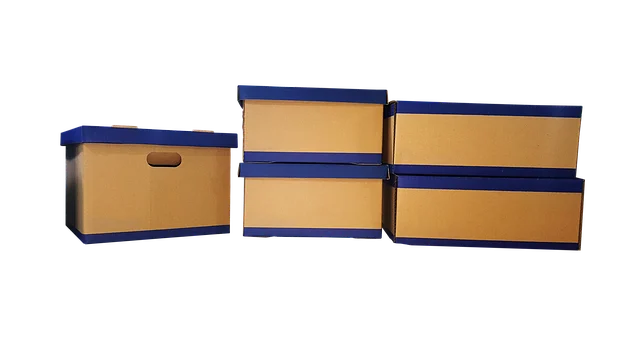
- Volume per carton: 80 × 60 × 50 = 240,000 cm³ (0.24 m³)
- Volumetric weight per carton: 240,000 ÷ 6,000 = 40 kg
- Total volumetric weight: 40 kg × 4 cartons = 160 kg
- Total actual gross weight: 30 kg × 4 cartons = 120 kg
- Chargeable weight: 160 kg (since 160 kg is greater than 120 kg)
Because the cartons are bulky, you pay for 40 kg more than the actual scale weight. The shipment’s physical density is 120 kg ÷ 0.96 m³ = 125 kg/m³, which falls below the 166.67 kg/m³ break-even threshold.
Example 2: dense cargo where actual weight determines cost
Consider a shipment of dense industrial parts packed in two cartons, each measuring 50 × 40 × 30 cm (19.7 × 15.7 × 11.8 in) and weighing 45 kg per carton.

- Volume per carton: 50 × 40 × 30 = 60,000 cm³ (0.06 m³)
- Volumetric weight per carton: 60,000 ÷ 6,000 = 10 kg
- Total volumetric weight: 10 kg × 2 cartons = 20 kg
- Total actual gross weight: 45 kg × 2 cartons = 90 kg
- Chargeable weight: 90 kg (since 90 kg is greater than 20 kg)
The density of this cargo is 90 kg ÷ 0.12 m³ = 750 kg/m³. Because this exceeds the 166.67 kg/m³ break-even point, the airline bills on actual scale weight.
Example 3: calculating chargeable weight directly from total CBM
If you already know your shipment’s total volume in cubic meters (CBM), you can multiply CBM directly by 166.67. So, this quickly determines volumetric weight in kilograms.

A palletized consolidated air shipment measures 2.4 m³ in total volume and has an actual gross weight of 310 kg.
- Volumetric weight: 2.4 m³ × 166.67 kg/m³ = 400 kg
- Actual gross weight: 310 kg
- Chargeable weight: 400 kg
When shipping pallets, measure the full outer perimeter. Include the wooden skid base and any overhang. Use a chargeable weight calculator for detailed skid measuring instructions. This helps calculate the CBM of a pallet.
Calculating air freight chargeable weight in inches and pounds
When measuring cargo in inches and pounds, convert the standard 1:6,000 metric ratio into imperial units. First, use standard conversion factors (1 cubic inch = 16.387 cm³, 1 kg = 2.20462 lb):
- 6,000 ÷ 16.387 = 366.1 in³ per kg, giving the formula: Volumetric weight (kg) ≈ total in³ ÷ 366
- 366.1 ÷ 2.20462 = 166.1 in³ per lb, giving the formula: Volumetric weight (lb) ≈ total in³ ÷ 166
Example 4: imperial measurement calculation
A shipment consists of three cartons measuring 24 × 20 × 18 inches (61.0 × 50.8 × 45.7 cm), each weighing 40 lb (18.1 kg).
- Volume per carton: 24 × 20 × 18 = 8,640 in³
- Total shipment volume: 8,640 in³ × 3 cartons = 25,920 in³
- Volumetric weight in pounds: 25,920 ÷ 166 = 156.1 lb (or 25,920 ÷ 366 = 70.8 kg)
- Total actual gross weight: 40 lb × 3 cartons = 120 lb (54.4 kg)
- Chargeable weight: 156.1 lb (70.8 kg)
The 166 divisor in inches is a rounded representation of the 6,000 metric divisor. Minor variations can occur when switching between metric and imperial systems during quote calculations.
Carrier divisors, break-even densities, and rate thresholds
Different transport modes and logistics providers apply distinct volumetric divisors based on equipment capacity and trade lane economics.
| Transport mode / carrier | Divisor (cm³/kg) | Density break-even (kg/m³) | Density break-even (lb/ft³) |
|---|---|---|---|
| Standard Air Cargo (IATA standard) | 6,000 | 166.67 | 10.4 |
| Express Courier (DHL Express, FedEx) | 5,000 | 200.00 | 12.5 |
| Rail Freight (DHL Global Forwarding) | 3,000 | 333.33 | 20.8 |
| Ocean Freight LCL (Sea Freight standard) | 1,000 | 1,000.00 | 62.4 |
To convert density in kg per m³ to pounds per cubic foot (lb/ft³), multiply by 0.06243. For example, 166.67 kg/m³ × 0.06243 = 10.4 lb/ft³.

If your cargo density exceeds the carrier’s break-even point, you pay only on scale weight. If density is below that threshold, the carrier charges for volumetric space. Use a chargeable weight calculator for this.
How carrier rounding, minimums, and packaging affect billing
Airlines and freight forwarders enforce specific measurement, rounding, and billing rules. Because of this, these rules directly increase your final invoice if you do not anticipate them during budgeting:
- Dimensional rounding up: Carriers round up fractional centimeters or inches to the next whole integer before calculating volumetric weight. For example, staff record a box measuring 45.1 cm as 46 cm.
- Chargeable weight billing steps: Air freight tariffs round final billable weight up to the nearest 0.5 kg or whole kilogram increment. A calculated chargeable weight of 142.1 kg becomes 142.5 kg or 143 kg depending on carrier rules.
- Bounding box rule: Measure irregular items, flexible bags, or bulging cartons using an imaginary rectangular bounding box. Next, use the extreme points of length, width, and height to establish billable volume regardless of empty spaces.
- Pallet weight and height inclusion: Pallets and skids are part of the cargo. A standard wood pallet adds 14 to 15 cm in height and 15 to 25 kg to actual gross weight.
- Minimum billable thresholds: Air waybills often carry minimum freight charges. Because of this, you typically pay for 100 kg on general air cargo or flat minimum fees on smaller shipments.
How to measure cartons and pallets for accurate freight quotes
Inaccurate physical measurements are the leading cause of billing disputes with freight forwarders. Follow these steps to obtain reliable chargeable weight figures:

- Measure maximum outer dimensions: Check each piece across its widest points. First, factor in box bulging, external handles, corner protectors, and pallet overhang. Next, review the measuring guide for step-by-step techniques.
- Weigh complete shipping units: Always weigh fully packed cartons and palletized assemblies on calibrated scales. Include strapping, stretch wrap, and wood skids.
- Calculate line items individually: Calculate volumetric weight separately for each distinct crate or box dimension before summing the total shipment.
- Verify quoted divisors: Confirm whether your logistics provider quotes under general air cargo (6,000 divisor) or courier rules (5,000 divisor).
- Check volumetric conversions: Use the CBM to kg guide to verify conversion factors. Also, check them across air, sea, road, and rail transport modes.
When air freight is not the right choice for your shipment
Understanding chargeable weight highlights when air cargo becomes economically unfeasible for certain commodity types:
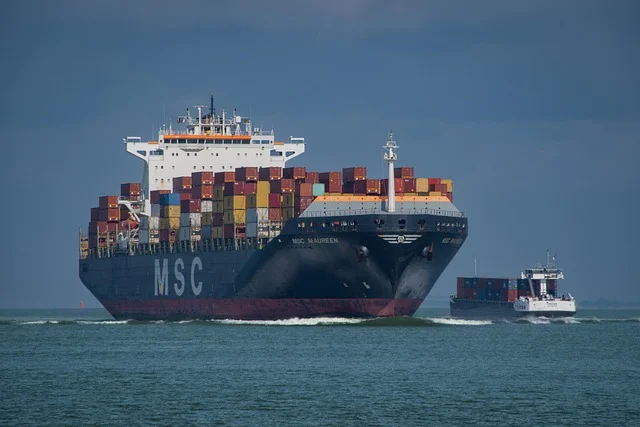
- Low-density, high-volume goods: Products like pillows, foam insulation, uncompressed apparel, or empty plastic containers generate high volumetric weights relative to value. As a result, these goods drive air freight costs per unit extremely high.
- Heavy industrial bulk items: Dense machinery, metals, or liquids incur high actual weight charges. Unless transit speed is urgent, ocean LCL or FCL freight provides far lower transport costs.
- Small low-weight parcels: Shipments under 45 kg often face minimum air waybill fees. As a result, express courier services or postal parcel networks become more cost-effective than general air freight.
Common mistakes that trigger unexpected freight surcharges
- Applying courier rules to air cargo quotes: Standard airport-to-airport air freight uses a 6,000 divisor, whereas express couriers use 5,000. Mixing up these divisors leads to incorrect budget estimates.
- Measuring product dimensions instead of packed crates: Air carriers measure the external dimensions of the final packaged crate or pallet. However, shippers mistakenly measure only the product inside.
- Omitting pallet weight and dimensions: Forgetting to include pallet weight (15–25 kg) and skid height (14–15 cm) understates both actual and volumetric weight. So, always include these figures.
- Ignoring dimensional rounding up: Across a 50-carton shipment, rounding up dimensions by 0.5 cm on each side adds substantial weight. As a result, you face unexpected volumetric weight on your final bill.
- Failing to compare transport modes on chargeable weight: Comparing air freight to ocean freight using only actual scale weight creates misleading cost estimates. Because of this, light, bulky cargo appears cheaper than it actually is.
Frequently asked questions
What is chargeable weight in air freight?
Chargeable weight is the billable weight value determined by comparing a shipment’s actual gross weight against its volumetric weight. The carrier bills whichever of the two figures is higher.
How do I calculate volumetric weight for air freight?
Multiply length, width, and height in centimeters and divide by 6,000 for each item, then add the results together. For measurements in inches, divide total cubic inches by 166 to calculate volumetric weight in pounds, or by 366 for kilograms.
How many kg is 1 CBM in air freight?
First, apply the standard IATA 1:6,000 air cargo density ratio. Using this formula, 1 m³ (CBM) equals 166.67 kg of volumetric weight. However, carriers commonly round this figure to 167 kg.
Why do express couriers use 5,000 instead of 6,000?
Integrators such as DHL Express, FedEx, and UPS establish a stricter 5,000 divisor (200 kg per m³) for small parcel constraints. However, commercial air cargo forwarders use the IATA standard 6,000 divisor.
Does chargeable weight apply to dense cargo?
Yes, chargeable weight applies to all cargo, but for dense items, actual gross weight exceeds volumetric weight. In those cases, the airline bills based entirely on actual gross weight.
Related guides
- Rail Freight Chargeable Weight (1:3000) and How Rail Compares
- Canada Post Volumetric Weight: 5,000 vs 6,000 Explained
- Parcelforce and UK International Parcels: Volumetric Weight (5,000)
- Dimensional Weight Calculator: FedEx, UPS, USPS and DHL Rules Compared
Sources and further reading
- DHL Global Forwarding: Calculating Chargeable Weight: air 1:6,000, sea 1:1,000 and rail 1:3,000 ratios.
- Maersk: Air Cargo Chargeable Weight: the 6,000 divisor set by IATA.