
 By

Incoterms 2020 are eleven standardized international commercial terms published by the International Chamber of Commerce. They define the division of costs, risks, and responsibilities in global trade. The rules include seven for any transport mode and four for sea transport. Because of this, they clarify who arranges carriage, handles customs, and bears transit losses.
Incoterms 2020: who pays for what
Runs in your browser; nothing you enter is sent anywhere. Carrier figures differ, so confirm the final numbers with your forwarder. Whole shipment: all-in-one freight calculator →
What Incoterms cover and what they do not
Incoterms clarify specific operational duties across international supply chains so buyers and sellers avoid misunderstandings during shipment. They explicitly assign:

- Delivery location and risk transfer: The exact point where responsibility for physical loss or damage shifts from seller to buyer.
- Cost allocation: Which party pays for packing, loading, local drayage, freight, terminal handling, insurance, customs duties, and taxes.
- Customs clearance: Who acts as the exporter or importer of record and obtains official export and import licenses.
- Transport contracts: Which party must book and pay the ocean liner, airline, rail operator, or trucking company.
- Documentation: Mandatory paperwork the seller must supply, such as commercial invoices, bills of lading, or certificates of origin.
Incoterms do not govern every aspect of an international deal. For example, they do not set purchase prices, specify currency, or transfer legal title (ownership) of goods. In addition, they omit payment terms such as letters of credit or net 30 terms. Also, they exclude contract breach remedies, force majeure definitions, IP rights, and court jurisdiction. You must state those conditions explicitly in your commercial contract.
To make an Incoterm enforceable, always append the exact named geographic place and edition. Writing “FCA 123 Factory Lane, Shanghai, China, Incoterms 2020” leaves no ambiguity. Writing merely “FCA Shanghai” leaves room for dispute if multiple freight terminals exist within that port city.
The 11 Incoterms 2020 rules explained
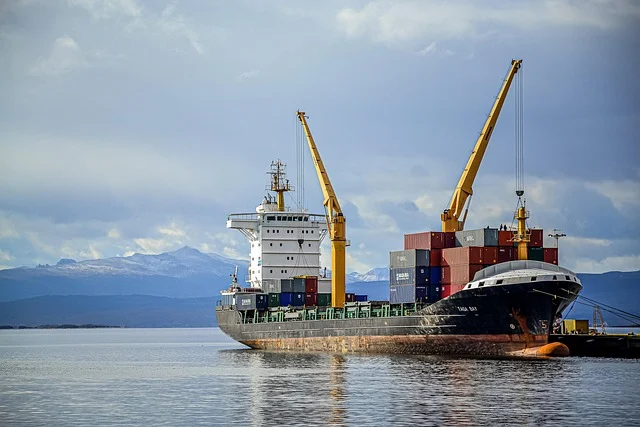
The International Chamber of Commerce (ICC) organizes the 11 rules into two distinct categories based on transport method. First, seven multimodal rules apply to any transport mode. Next, four maritime rules apply exclusively to sea and inland waterway transport.
Multimodal rules (for any mode or combined transport)
- EXW (Ex Works): The seller makes goods available at its own premises or factory. The buyer bears maximum responsibility, paying for loading, export clearance, main freight, import clearance, and final delivery.
- FCA (Free Carrier): The seller delivers export-cleared goods to the buyer’s carrier at a named place. If delivery occurs at the seller’s facility, the seller loads the vehicle. In addition, FCA allows the buyer to instruct its carrier to issue a bill of lading with an “on board” notation directly to the seller.
- CPT (Carriage Paid To): The seller books and pays for main transport to the named destination. However, risk transfers to the buyer as soon as the seller hands goods to the first carrier at origin.
- CIP (Carriage and Insurance Paid To): The seller pays freight and main transport to the destination. Risk shifts to the buyer at origin upon delivery to the first carrier. Under Incoterms 2020, CIP requires the seller to purchase high-level “all risks” insurance cover (Institute Cargo Clauses A) equal to at least 110% of the contract value.
- DAP (Delivered at Place): The seller bears all risks and costs to bring goods to the named destination. Next, the buyer unloads the arriving vehicle. In addition, the buyer pays import customs duties and clearance fees.
- DPU (Delivered at Place Unloaded): The seller handles transport, arrives at the destination, and unloads the cargo. In fact, DPU is the only Incoterm that requires the seller to unload the shipment at destination. It replaced the older DAT (Delivered at Terminal) rule to allow unloading outside transport terminals.
- DDP (Delivered Duty Paid): The seller carries maximum obligation under this rule. As a result, they manage transit risk, main freight, import customs clearance, taxes, and duties to deliver goods fully cleared to your designated address.
Sea and inland waterway rules
- FAS (Free Alongside Ship): The seller places export-cleared cargo alongside the vessel at the named port of shipment. Risk and cost pass to the buyer once goods rest on the dock alongside the ship.
- FOB (Free on Board): The seller loads export-cleared goods onto the buyer’s vessel at the port of origin. However, risk passes to the buyer once cargo is safely on board the ship.
- CFR (Cost and Freight): The seller pays freight to the port of destination. However, risk transfers to the buyer as soon as the seller loads goods on board at the origin port.
- CIF (Cost, Insurance and Freight): The seller pays ocean freight to the port of destination and provides cargo insurance. Under Incoterms 2020, CIF requires minimum coverage under Institute Cargo Clauses (C). Risk transfers to the buyer at origin once cargo is on board the ship.
| Rule | Mode | Risk passes to buyer | Main freight paid by | Export clearance | Import clearance |
|---|---|---|---|---|---|
| EXW Ex Works | Any | Goods made available at seller’s premises, not loaded | Buyer | Buyer | Buyer |
| FCA Free Carrier | Any | Handed to buyer’s carrier at named place | Buyer | Seller | Buyer |
| CPT Carriage Paid To | Any | Handed to first carrier | Seller | Seller | Buyer |
| CIP Carriage and Insurance Paid To | Any | Handed to first carrier | Seller | Seller | Buyer |
| DAP Delivered at Place | Any | At named destination, ready for unloading | Seller | Seller | Buyer |
| DPU Delivered at Place Unloaded | Any | At named destination, after unloading | Seller | Seller | Buyer |
| DDP Delivered Duty Paid | Any | At named destination, ready for unloading | Seller | Seller | Seller |
| FAS Free Alongside Ship | Sea | Alongside the vessel at port of shipment | Buyer | Seller | Buyer |
| FOB Free on Board | Sea | On board the vessel at port of shipment | Buyer | Seller | Buyer |
| CFR Cost and Freight | Sea | On board the vessel at port of shipment | Seller | Seller | Buyer |
| CIF Cost, Insurance and Freight | Sea | On board the vessel at port of shipment | Seller | Seller | Buyer |
How risk and cost transfer in different rules
The distinction between where cost ends and where risk transfers is the source of many international shipping disputes. In non-C rules, cost and risk move together at the exact same geographic point:
- EXW and F-rules: Cost and risk both shift to the buyer at origin. For example, this occurs at the factory, origin carrier, or departure port.
- D-rules: Cost and risk both remain with the seller until arrival at destination.
The C-rules (CPT, CIP, CFR, CIF) separate the cost point from the risk point. First, the seller pays main freight to the named port or destination city. However, risk transfers to the buyer at origin once the cargo is loaded or handed to the carrier. For example, if seawater damages a container under CFR, the buyer bears the loss even though the seller paid freight.
Insurance obligations under CIP and CIF
Only two Incoterms mandate that one party purchase transit insurance: CIP and CIF. In both instances, the seller must buy insurance for the buyer’s benefit.
- CIP insurance: Requires mandatory broad coverage under Institute Cargo Clauses (A) or similar “all risk” terms. This protects against theft, fire, damage, and loss, subject to standard policy exclusions.
- CIF insurance: Mandates baseline cover under Institute Cargo Clauses (C). As a result, it covers only listed major disasters such as vessel grounding, sinking, collision, or fire.
For detailed comparisons of coverage levels, read our cargo insurance guide.
Who pays for each transport step
Understanding which party pays for individual logisitical operations helps prevent surprise expenses on commercial invoices.
| Step | EXW | FCA (seller’s premises) | FOB | CIF | DAP |
|---|---|---|---|---|---|
| Loading at seller’s premises | Buyer | Seller | Seller | Seller | Seller |
| Export clearance | Buyer | Seller | Seller | Seller | |
| Main freight | Buyer | Buyer | Buyer | Seller | Seller |
| Insurance obligation | None | None | None | Seller, ICC (C) minimum | None |
| Import clearance and duty | Buyer | Buyer | Buyer | Buyer | Buyer |
| Unloading at destination | Buyer | Buyer | Buyer | Buyer, unless in the carriage contract | Buyer |
DDP functions similarly to DAP, but the seller clears import customs and pays foreign import duties and taxes. Next, DPU functions like DAP, except the seller unloads cargo at destination. Detailed trade-offs are available in our guides on FOB vs CIF, EXW vs FCA, and DDP vs DAP.
Worked cost evaluation examples
Example 1: Comparing FCA and DAP procurement costs
Suppose an international supplier offers a shipment at either FCA Factory (10,000 currency units) or DAP Destination Warehouse (11,400 currency units). Your freight forwarder quotes main transit at 1,200 currency units and marine transit insurance at 30 currency units.

- Total landed cost using FCA: 10,000 (goods) + 1,200 (freight) + 30 (insurance) = 11,230 currency units.
- Total landed cost using DAP: 11,400 currency units (seller covers transit and transit risk).
- Net difference: 11,400 − 11,230 = 170 currency units.
Under both options, the buyer remains responsible for import customs clearance, local import duties, and final destination unloading. Purchasing under DAP costs 170 currency units more, but shifts transit loss risk and logistics management back to the seller. Run both sets of figures through our landed cost tool before selecting your term.
Example 2: Calculating required CIP insurance coverage
Suppose a seller exports goods under CIP with a invoice value of 15,000 currency units. In this case, the minimum policy cover is 15,000 × 1.10 = 16,500 currency units. Also, this policy must match the transaction currency and meet Institute Cargo Clauses (A) terms.
How to choose the right Incoterm for your shipment
Selecting an unsuitable trade term can cause delays, unexpected port storage fees, or legal disputes over export licenses.

- Containerized freight: ICC explanatory notes explicitly recommend FCA, CPT, or CIP instead of FOB, CFR, or CIF. Sellers deliver containerized goods to container yards (CY) or inland depots (CFS) days before loading. Under traditional FOB terms, sellers remain legally exposed to transit risk while cargo sits inside terminal yards outside their control.
- Air cargo, road transport, and courier express: Always select multimodal rules (EXW, FCA, CPT, CIP, DAP, DPU, DDP). Maritime terms like FOB or CIF are inappropriate for non-maritime transport.
- DDP shipments: Use DDP only if the foreign seller is officially registered as the importer of record in the destination country. As a result, they can pay local import taxes or Value Added Tax (VAT).
- EXW risks for exporters: EXW requires foreign buyers to handle export clearance in the seller’s home country. Sellers often struggle to collect valid official proof of export required by tax authorities to justify zero-rated VAT export sales. Switching from EXW to FCA Seller Premises fixes this issue cleanly.
When reviewing freight rate breakdowns, verify that your quotes correspond to the exact physical boundaries of your agreed Incoterm rule. First, check our guide on how to read a freight quote to match cost line items accurately.
Incoterms 2030 status and official updates
Incoterms 2020 remains the current, legally active set of trade rules. The International Chamber of Commerce updates Incoterms roughly every ten years. ICC drafting committees begin preliminary review cycles years in advance, laying preliminary groundwork for potential Incoterms 2030 revisions.

No new rules or revisions have been issued since 2020. Because of this, any online reference to “Incoterms 2025” or “Incoterms 2026” is incorrect. You should continue using “Incoterms 2020” in commercial agreements.
Common Incoterm mistakes to avoid
- Omitted or incomplete locations: Specifying “FOB Port” instead of naming the precise origin seaport terminal (e.g., “FOB Port of Ningbo, Terminal 3, Incoterms 2020”).
- Using maritime rules for air or truck transport: Agreement terms such as “FOB Air Freight” are legally contradictory because air transport has no vessel deck rail or on-board maritime loading mechanics. Use FCA instead.
- Assuming C-rules shift risk at destination: Buyers often assume CFR or CIF places transit liability on the seller until destination delivery. Risk transfers at the loading port.
- Failing to mandate proper insurance additions: Relying on CIF baseline insurance cover (Clause C) for fragile goods that require all-risk coverage (Clause A).
- Leaving off the version year: Omitting “Incoterms 2020” leaves contracts vulnerable to outdated interpretations from 2010 or 2000 editions.
Related guides
Frequently asked questions
How many Incoterms 2020 rules are there?
There are eleven Incoterms rules in total. First, seven apply to any transport mode (EXW, FCA, CPT, CIP, DAP, DPU, DDP). In addition, four apply strictly to sea and inland waterway transport (FAS, FOB, CFR, CIF).
When did Incoterms 2020 come into force?
Incoterms 2020 came into effect globally on 1 January 2020, as issued by the International Chamber of Commerce. They remain the primary active trade rules today.
Is there an Incoterms 2025 or Incoterms 2030?
No Incoterms 2025 or 2026 rules exist. Incoterms 2020 remains the official active revision while ICC committees conduct preliminary research for the eventual Incoterms 2030 release.
Which Incoterms rule requires the seller to unload?
Only DPU (Delivered at Place Unloaded) requires the seller to unload cargo at the destination. Under DAP and DDP, the seller delivers goods ready for unloading, leaving the unloading task to the buyer.
Do Incoterms decide when ownership transfers?
No. Incoterms address delivery, transport costs, customs clearance, and transit risk transfer. However, you must define title and ownership transfer rules separately within the sales contract.
Related guides
- US De Minimis ($800) Suspended: What Importers Need to Know in 2026
- UK Import VAT and Duty: The £135 Rule and Goods Over £135
- How Import Duty Is Calculated: Customs Value, Tariff Code and Rate
- HS Codes Explained: How to Find the Right Tariff Code
Sources and further reading
- ICC: Incoterms Rules: the official Incoterms 2020 rules.
- ICC: Incoterms 2020 Checklist (PDF): the 11 rules by transport mode.