
 By

To determine freight class, divide total shipment weight in pounds by volume in cubic feet. You find cubic feet by dividing Length × Width × Height in inches by 1,728. This calculation gives you density in pounds per cubic foot (pcf). Use a freight class calculator for the NMFC density chart (2025 scale). This density maps directly to 13 sub-classes. These range from Class 50 for dense goods to Class 400 for lightweight cargo.
Freight class calculator (NMFC density, 2025 scale)
Runs in your browser; nothing you enter is sent anywhere. Carrier figures differ, so confirm the final numbers with your forwarder. Whole shipment: all-in-one freight calculator →
What is the NMFC density chart (2025 scale)?
The National Motor Freight Traffic Association (NMFTA) maintains the National Motor Freight Classification (NMFC) system. This system standardizes freight classes across North American Less-Than-Truckload (LTL) shipping. Under NMFTA Docket 2025-1 and Disposition Bulletin 1371, effective July 19, 2025, major LTL carriers like Estes Express Lines and Old Dominion Freight Line adopted an updated 13-sub density scale.

This 13-sub scale replaced legacy commodity-specific class rules with a standardized density breakdown. Lower class numbers (such as Class 50 or 55) represent dense, compact freight that packs efficiently into trailers. Higher class numbers (such as Class 300 or 400) represent light, bulky cargo that consumes significant trailer space relative to its weight. Because carriers bill freight based on hundredweight (cwt) adjusted by class, denser freight carries lower shipping rates per pound.
| Sub | Density (lb/ft³) | Class |
|---|---|---|
| 1 | Less than 1 | 400 |
| 2 | 1 but less than 2 | 300 |
| 3 | 2 but less than 4 | 250 |
| 4 | 4 but less than 6 | 175 |
| 5 | 6 but less than 8 | 125 |
| 6 | 8 but less than 10 | 100 |
| 7 | 10 but less than 12 | 92.5 |
| 8 | 12 but less than 15 | 85 |
| 9 | 15 but less than 22.5 | 70 |
| 10 | 22.5 but less than 30 | 65 |
| 11 | 30 but less than 35 | 60 |
| 12 | 35 but less than 50 | 55 |
| 13 | 50 or greater | 50 |
Density affects freight class and cost
Pay close attention to the scale wording “but less than”. A density measurement of exactly 12.00 pcf falls into sub 8 (Class 85). However, a density of 11.99 pcf falls into sub 7 (Class 92.5). A fraction of a pound or inch can push a shipment across a class threshold, directly altering your freight invoice.
While general commodities follow this 13-sub grid, specific product types keep unique handling unit scales or fixed commodity codes based on liability or handling needs. So, checking your product’s specific NMFC item code is essential.
LTL freight pricing uses hundredweight (cwt) pricing tiers. Freight rate tariffs assign a dollar rate per 100 pounds based on origin, destination, and freight class. As a result, a Class 125 shipment costs substantially more per hundred pounds than a Class 70 shipment on the exact same lane. Trailer space and weight capacity represent fixed operational bounds for a motor carrier. Therefore, dense cargo lets carriers maximize payload weight. In contrast, low-density shipments fill trailer volume before reaching maximum gross weight limits.
use a freight class calculator to find LTL class
To calculate LTL freight class manually or verify an online freight class calculator result, follow this step-by-step method used by carrier inspection terminals:

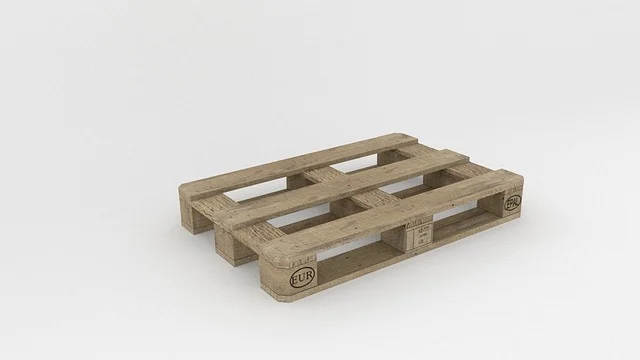
- Measure total outer dimensions: Measure the length, width, and height in inches at the extreme exterior points. For palletized loads, include the height of the wooden pallet deck and legs. In addition, measure any box overhang, strapping, or bulging stretch wrap.
- Calculate cubic feet: First, multiply length by width by height to get cubic inches. Then, divide by 1,728 (the number of cubic inches in a cubic foot).
Cubic feet = (Length × Width × Height) ÷ 1,728 - Weigh the shipment: Obtain the gross weight in pounds using a certified scale. Include the product, internal packaging, cartons, strapping, and the pallet itself.
- Calculate density (pcf): Divide the gross weight by the cubic feet.
Density (pcf) = Weight (lb) ÷ Cubic feet (ft³) - Lookup the class: Locate your calculated pcf value on the 2025 density scale to identify the corresponding sub-number and freight class.
For cylindrical items like drums, barrels, or carpet rolls, Estes and Old Dominion rules require a specific formula. First, multiply the maximum diameter by itself. Next, multiply that result by the length or height. In practice, you measure cylinders as rectangular boxes by using their widest diameter for length and width. For metric cylindrical shipments, see our cylinder CBM guide.
Carriers use the bounding box principle. This applies to irregular or non-rectangular shipments. Handles, valves, or brackets may protrude. Your measurement extends to these furthest points. For example, a 48-inch pallet has a 2-inch pipe. You must measure it as 50 inches wide. That pipe prevents other cargo from sitting flush. A freight class calculator considers these dimensions.
Worked calculation examples across different pallet types
The following real-world examples illustrate how dimensions, total weight, and packaging choices impact your final freight class under the 2025 scale.
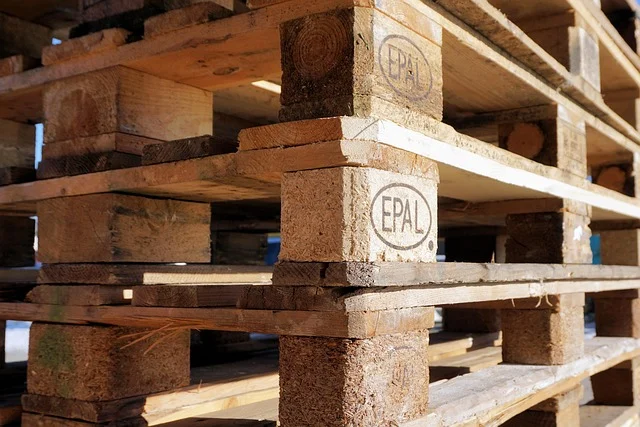
Example 1: A standard commercial pallet
A standard 48 × 40 in pallet loaded to a total height of 50 in (including pallet deck) weighs 650 lb gross.
- Volume: 48 × 40 × 50 = 96,000 in³
- Cubic feet: 96,000 ÷ 1,728 = 55.56 ft³
- Density: 650 lb ÷ 55.56 ft³ = 11.70 pcf
- 11.70 pcf falls into “10 but less than 12” (sub 7): Class 92.5
Example 2: A tall, lightweight pallet
A skid of lightweight insulated foam packaging measures 48 × 40 × 72 in and weighs 500 lb gross.
- Volume: 48 × 40 × 72 = 138,240 in³
- Cubic feet: 138,240 ÷ 1,728 = 80.00 ft³
- Density: 500 lb ÷ 80.00 ft³ = 6.25 pcf
- 6.25 pcf falls into “6 but less than 8” (sub 5): Class 125
If you re-pack this shipment onto two shorter pallets, or condense packaging to 48 in high, at the same 500 lb weight, volume drops to 53.33 ft³. Next, density rises to 9.38 pcf (500 ÷ 53.33). This shift moves the shipment into sub 6: Class 100. Adjusting stack height is often the fastest way to reduce LTL shipping costs for a freight class calculator.
Example 3: Dense metal hardware crate
A heavy wooden crate containing steel industrial fasteners measures 40 × 48 × 36 in and weighs 1,400 lb gross.
- Volume: 40 × 48 × 36 = 69,120 in³
- Cubic feet: 69,120 ÷ 1,728 = 40.00 ft³
- Density: 1,400 lb ÷ 40.00 ft³ = 35.00 pcf
- 35.00 pcf falls into “35 but less than 50” (sub 12): Class 55
Example 4: Metric dimensions from an overseas supplier
An import pallet measuring 120 × 100 × 120 cm arrives weighing 300 kg gross.
- Volume: 1.20 × 1.00 × 1.20 m = 1.44 m³
- Cubic feet: 1.44 m³ × 35.3147 = 50.85 ft³
- Weight: 300 kg × 2.20462 = 661.39 lb
- Density: 661.39 lb ÷ 50.85 ft³ = 13.00 pcf
- 13.00 pcf falls into “12 but less than 15” (sub 8): Class 85
| Example | Cubic feet | Weight (lb) | Density (pcf) | Class (2025 scale) |
|---|---|---|---|---|
| 1. Standard pallet | 55.56 | 650.00 | 11.70 | 92.5 |
| 2. Tall, light pallet | 80.00 | 500.00 | 6.25 | 125 |
| 3. Dense crate | 40.00 | 1,400.00 | 35.00 | 55 |
| 4. Metric pallet | 50.85 | 661.39 | 13.00 | 85 |
What transportability factors determine freight class beyond density?
While the 2025 NMFC scale relies primarily on density to determine sub-classes, the NMFTA defines four basic transportability characteristics. These establish a commodity’s baseline freight class:
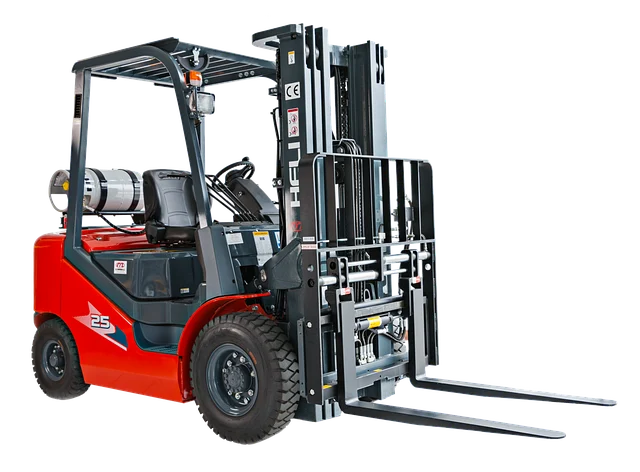
- Density: Weight per unit volume (pcf). Dense cargo maximizes trailer weight capacity without consuming excess space.
- Stowability: How easily freight stacks and fits alongside other cargo. Unusually shaped, non-stackable, or hazardous items restrict load efficiency and increase classification.
- Handling: The physical effort required to load and unload cargo. Items requiring specialized equipment, heavy forklifts, or extra care receive higher class ratings.
- Liability: Risk of damage, theft, spoilage, or harm to adjacent freight. High-value, perishable, or dangerous goods carry higher liability risks and elevated class codes.
Understanding these four factors clarifies why two items with identical density can carry different freight classes if one presents elevated liability or handling requirements. Fragile displays or hazardous materials may carry an elevated base class or mandatory surcharges regardless of density.
How do carriers verify shipment dimensions and handle reclassifications?
LTL carrier cross-dock hubs operate automated 3D laser dimensioning scales. When a forklift carries a pallet through an inspection portal, laser sensors record maximum length, width, and height down to fractions of an inch. Meanwhile, in-line platform scales record gross weight.
If a carrier scan shows larger dimensions or weight than declared on your Bill of Lading (BOL), the carrier reclasses your shipment. This reclassification triggers several charges:
- Freight rate adjustment: Carriers recalculate billed hundredweight charges at the higher freight class rate.
- Weight & inspection fees: Carriers charge administrative fees ($25 to $50) for issuing correction notices.
- Over-dimension and cubic capacity surcharges: Overhanging freight or pyramid stacking that prevents top-loading incurs linear foot penalties or non-stackable surcharges.
To ensure you declare shipment dimensions accurately, review our guide on how to measure cartons and pallets.
Carrier reclassifications are difficult to dispute after delivery because laser dimensioning systems record high-resolution images alongside time-stamped dimensional data. If a cardboard flap sticks out 2 inches or a strap loops loosely around a skid, the laser records those extreme points as the package outline.
How to prevent costly carrier reclassifications and billing adjustments
Applying rigorous measuring and documentation standards at your loading dock prevents unexpected freight bill adjustments:

- Measure extreme exterior points: Measure from the furthest protruding box corner or shrink wrap bubble to the outer edge of the opposite side.
- Include pallet weight and height: Weigh the complete skid deck and measure from the floor to the topmost item.
- Round dimensions up: Round fractional dimensions up to the next whole inch. Laser dimensioners scan extreme boundaries; rounding down guarantees a re-class billing adjustment.
- Target density boundaries: If your density calculates to 11.9 pcf, adding a small amount of weight or trimming 1 inch off pallet height moves your shipment to 12.0 pcf. As a result, you lower your class from 92.5 to 85.
- Write the NMFC item number on the BOL: Always write the exact NMFC item number along with the calculated class on the original Bill of Lading.
- Build flat, stackable tops: Eliminate pyramid stacking so pallets can be top-loaded, avoiding non-stackable penalties.
A bumping strategy saves money. This applies when shipments just miss a higher density sub-class. NMFC rules allow declaring a higher Bill of Lading weight. This bumps a shipment into a lower freight class tier. The freight class calculator shows this can reduce overall charges. This is true if the lower class rate yields a lower total cost. It must be less than shipping at actual weight.
When does freight class not apply to your shipment?
Freight class and NMFC codes apply specifically to LTL motor transport in North America. They do not apply in the following shipping scenarios:
- Full Truckload (FTL): When you hire a full 53-foot trailer, carriers set rates per mile or by flat lane rate regardless of freight class.
- Parcel small-package shipping: Express and ground parcel carriers like UPS and FedEx use Dimensional (DIM) Weight formulas rather than NMFC class structures.
- International ocean and air freight: Ocean shipping relies on Cubic Meters (CBM) or container unit rates. However, air freight uses volumetric weight ratios.
- Fixed commodity NMFC items: Certain high-value or hazardous commodities retain assigned NMFC item codes that do not utilize density scales.
Frequently asked questions
How do I calculate freight class?
Multiply length × width × height in inches, divide by 1,728 to find cubic feet, divide total gross weight in pounds by cubic feet to determine density in pcf, and match that density to the NMFC scale. Always include the height and weight of the wooden pallet deck.
When did the 13-sub density scale take effect?
The 13-sub density scale took effect on July 19, 2025, under NMFTA Docket 2025-1 and Disposition Bulletin 1371.
Does every product use the NMFC density scale?
No. While the 2025 NMFC update shifted most general commodities to density-based sub-classes, specific items keep dedicated commodity codes based on value, handling difficulty, or hazard characteristics.
What freight class is 12 pounds per cubic foot?
Under the 2025 scale, a density of exactly 12.00 pcf falls into sub 8 (“12 but less than 15”), which is Class 85.
Can I calculate freight class from metric measurements?
Yes. Convert cubic meters to cubic feet by multiplying by 35.3147 and convert kilograms to pounds by multiplying by 2.20462. Then divide total pounds by total cubic feet to get pcf, and look up your class in the density table. See our cubic feet guide for conversion details.
Related guides
- Loading Meter (LDM) Calculator: How LDM Works in European Road Freight
- How Many Boxes Fit on a Pallet? (Pallet Loading Calculator)
- US Truck Weight Limits: 80,000 lb and What It Means for Your Load
- Standard Pallet Sizes Around the World (US, Europe, Australia, Asia)
Sources and further reading
- NMFTA Disposition Bulletin 1371 (PDF): official publication of the 13-sub density scale.
- Estes: Freight Density Calculator: carrier measuring and density rules.
- Old Dominion: 2025 NMFC Classification Changes: carrier summary of July 2025 NMFC updates.