
Choosing Carton Sizes to Reduce Shipping Volume and Freight Costs
How to reduce shipping volume by choosing carton sizes that fit container inside dimensions, trimming void fill and cutting courier dimensional weight.
How to calculate CBM and cubic feet for cartons, pallets, crates and cylinders, convert between units and check how much a shipment really takes up.
How to reduce shipping volume by choosing carton sizes that fit container inside dimensions, trimming void fill and cutting courier dimensional weight.
Use this furniture CBM calculator method: measure each item as a box, allow for wrapping, total the volume and choose LCL, a 20ft or a 40ft container.

Shipping density is weight divided by volume. Learn the kg/m³ and lb/ft³ formulas, the break-even density for air, courier, sea and LTL, and how to pick a mode.
How to measure a box for shipping: measure each side at its longest point, include bulges and pallet height, and apply each carrier's rounding rules correctly.
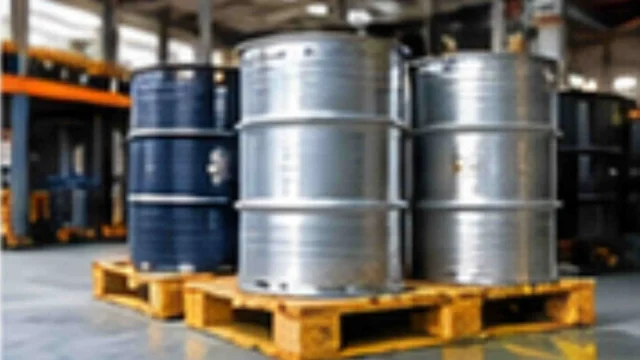
How to work out the CBM of cylinder cargo such as drums, pipes and rolls: true volume vs the square footprint carriers bill, with worked examples.
Pallet CBM calculator guide: footprint × total height including the deck, in meters. A EUR pallet loaded to 1.5 m is 1.44 m³. Formula and examples.
A CBM to kg calculator applies billing ratios, not a fixed conversion: 167 kg per m³ for air, 200 for courier, 333 for rail and road, 1,000 for sea LCL.
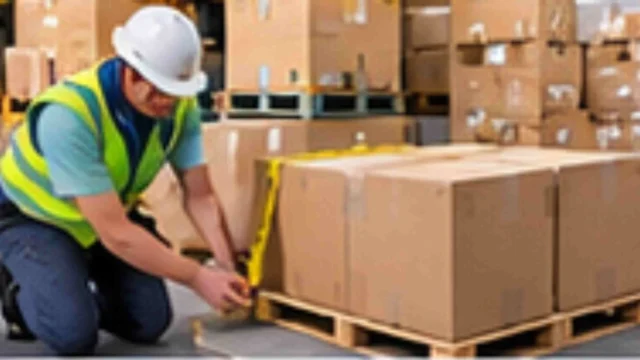
Carton CBM calculator guide: work out L × W × H × quantity for each packing-list line, then add the lines for total CBM. Examples and weight checks.
CBM calculator in inches: multiply L × W × H in inches and divide by 61,023.7 (about 61,024). A 24 × 16 × 12 in carton is 0.0755 CBM. Worked examples.
How to calculate cubic feet: multiply length × width × height in inches and divide by 1,728. A 24 × 18 × 16 in box is 4.0 ft³. Pallet and LTL examples.