
 By

To calculate cubic feet for shipping boxes, you must multiply the box’s length, width, and height in inches. Then, divide the result by 1,728. For example, a box measures 24 × 18 × 16 inches. This equals 6,912 cubic inches. When you divide by 1,728, it converts to 4.0 ft³.
If you measured your package directly in feet, multiply length by width by height. This gives you cubic feet without converting. Also, you can use the calculator below. It helps you calculate volume for non-standard shapes. You can also manage multi-box shipments. Measure sides in inches, feet, or centimeters.
Cubic feet calculator
Runs in your browser; nothing you enter is sent anywhere. Carrier figures differ, so confirm the final numbers with your forwarder. Whole shipment: all-in-one freight calculator →
The cubic feet formula for shipping boxes
A cubic foot represents a three-dimensional volume that measures 12 inches long, 12 inches wide, and 12 inches high. Because 12 × 12 × 12 equals 1,728, one cubic foot contains exactly 1,728 cubic inches. This spatial relationship forms the basis for all standard volume conversions in logistics and freight handling.
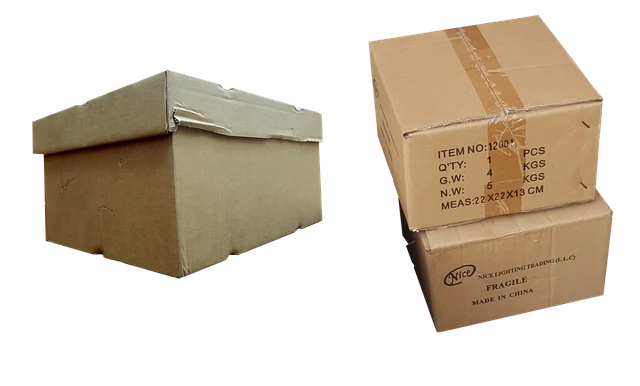
First, choose the corresponding mathematical formula. This depends on the measurement units you start with.
- Inches formula: cubic feet = (length × width × height in inches) ÷ 1,728
- Feet formula: cubic feet = length × width × height in feet
- Centimeters formula: cubic feet = (length × width × height in centimeters) ÷ 28,316.84
Using the inch formula is standard. You use it for individual shipping cartons. Measuring in inches avoids converting fractional dimensions. This prevents awkward repeating decimals. For instance, 16 inches converts to 1.3333 feet. Therefore, measuring in inches allows for greater accuracy. You can record outer carton dimensions more precisely in how to calculate cubic feet.
For multiple identical cartons, first calculate the total volume of a single carton. Then, multiply this by the total carton count. When shipping full pallets, treat the entire loaded pallet as one solid block. Measure from the floor surface. Measure to the highest point of the cargo stack.
US less-than-truckload (LTL) carriers publish an exact method. For example, Estes Express uses this method. You can calculate shipment density this way: cubic feet = (L × W × H in inches) ÷ 1,728.
Step-by-step instructions for calculating box volume
Calculating the cubic feet of any carton requires four basic steps:
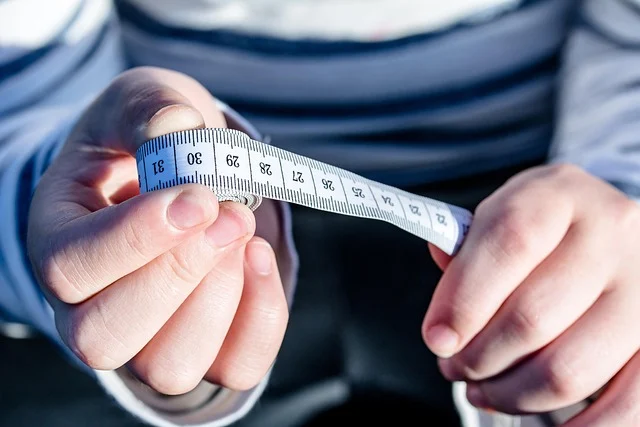
- Measure the outer dimensions: Place the box on a flat surface. Record its maximum length, width, and height in inches. Use a tape measure for this. Always measure from the widest exterior points. This includes any box bulging or tape seams.
- Multiply the three dimensions together: Multiply length by width by height (L × W × H). This determines the total volume in cubic inches.
- Divide by 1,728: Divide the total cubic inches by 1,728 to convert the volume into cubic feet.
- Round appropriately: You can round the decimal according to carrier requirements. This applies if you ship via parcel post or LTL freight. Also, you can keep up to two decimal places for billing accuracy.
Worked examples: single cartons, bulk shipments, and LTL pallets
Example 1: single carton using inch and feet methods
Consider a standard corrugated shipping carton measuring 24 × 18 × 16 inches.
Inch method:
- Multiply length by width: 24 × 18 = 432 sq in
- Multiply area by height: 432 × 16 = 6,912 in³
- Divide total cubic inches by 1,728: 6,912 ÷ 1,728 = 4.0 ft³
Feet method:
- Convert dimensions to feet: 24 in = 2 ft; 18 in = 1.5 ft; 16 in ÷ 12 = 1.3333 ft
- Multiply converted dimensions: 2 × 1.5 × 1.3333 = 4.0 ft³
Both calculation methods yield the same volume. To convert cubic feet to cubic meters (CBM), multiply cubic feet by 0.0283168. For example, 4.0 × 0.0283168 equals 0.1133 m³. You will use this for ocean freight or international shipping documentation.
Example 2: 30 cartons for moving or warehouse quotes
A business moving warehouse stock needs to calculate total vehicle space for 30 cartons measuring 20 × 14 × 12 inches each.
- Calculate single carton cubic inches: 20 × 14 × 12 = 3,360 in³
- Convert single carton to cubic feet: 3,360 ÷ 1,728 = 1.9444 ft³ per carton
- Multiply by total carton count: 1.9444 × 30 = 58.33 ft³
- Convert total volume to metric CBM: 58.33 × 0.0283168 = 1.65 m³
Avoid cumulative rounding errors when you calculate large carton counts. First, multiply the single box’s cubic inches by the total carton quantity. Then divide by 1,728. For example, (3,360 × 30) ÷ 1,728 = 100,800 ÷ 1,728 = 58.33 ft³.
Example 3: loaded pallet for US LTL freight classification
LTL freight carriers calculate total cubic volume. This establishes shipping density, expressed in pounds per cubic foot. As a result, this density directly determines the National Motor Freight Classification (NMFC) freight class.
For example, consider a standard 48 × 40 inch pallet. You stack it so the total height from the floor to the top of cargo is 60 inches. Its total combined weight is 850 pounds, including the pallet.
- Calculate gross volume: 48 × 40 × 60 = 115,200 in³
- Convert to cubic feet: 115,200 ÷ 1,728 = 66.67 ft³
- Calculate freight density: 850 ÷ 66.67 = 12.75 lb/ft³
- Consult the NMFC 13-sub density scale (effective July 19, 2025): a density between 12 and 15 lb/ft³ assigns class 85
Estes and other LTL carriers require shippers to include the wooden pallet’s physical height and weight. Excluding the pallet base understates total cubic feet. As a result, this artificially inflates density. This can lead to carrier re-weigh fines or class adjustments. For step-by-step guidance on class thresholds, see how to calculate freight density. Also, view the official freight class chart.
How to calculate cubic feet for cylinders and irregular shapes
Not all shipments travel in standard cuboid corrugated boxes. For example, cylinders, shipping tubes, and barrels require specific handling. Irregular crates also need specific handling. This depends on carrier policies.
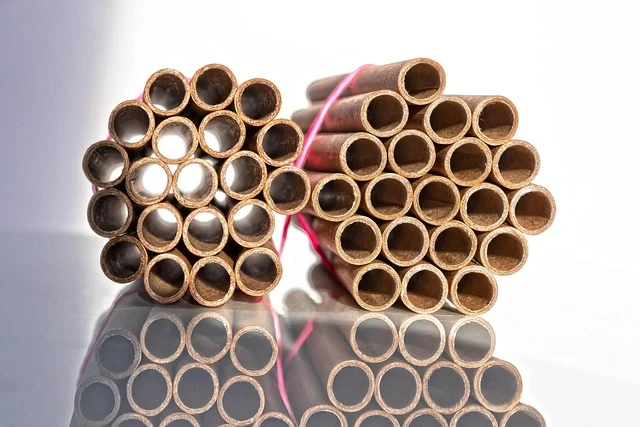
For geometric volume, you can use a formula. Multiply the radius squared by height and pi (π). This works for cylindrical containers. For example, use it for a mailing tube or drum.
cubic inches = π × radius² × height
For example, a shipping tube has a 3-inch radius, or 6-inch diameter. Its length is 36 inches. So, its geometric volume is 3.14159 × (3 × 3) × 36 = 1,017.88 cubic inches. Dividing by 1,728 yields 0.589 ft³.
However, major parcel carriers like UPS, FedEx, and USPS use the bounding box method. LTL freight companies also use this method for pricing. Carriers treat irregular or cylindrical shapes as rectangular boxes. They define them by maximum outer dimensions: maximum length × maximum width × maximum height. For example, a 6 × 6 × 36 inch cylinder is billed as a rectangular package. Under bounding box rules, this package is 6 × 6 × 36 = 1,296 cubic inches, or 0.75 ft³. Therefore, always use maximum bounding box dimensions. This helps you avoid unexpected freight adjustments when learning how to calculate cubic feet for shipping invoices.
Cubic feet of common box and pallet sizes
The reference table below displays standard box and pallet dimensions converted into cubic inches, cubic feet, and metric CBM:
| Size (inches) | Cubic inches | Cubic feet | CBM |
|---|---|---|---|
| 12 × 12 × 12 | 1,728 | 1.0 | 0.0283 |
| 16 × 12 × 12 | 2,304 | 1.333 | 0.0378 |
| 18 × 14 × 12 | 3,024 | 1.75 | 0.0496 |
| 18 × 18 × 16 | 5,184 | 3.0 | 0.0850 |
| 24 × 18 × 16 | 6,912 | 4.0 | 0.1133 |
| 24 × 24 × 24 | 13,824 | 8.0 | 0.2265 |
| 48 × 40 × 48 (pallet) | 92,160 | 53.33 | 1.5102 |
| 48 × 40 × 60 (pallet) | 115,200 | 66.67 | 1.8878 |
To convert cubic inches directly to CBM, divide by 61,023.7. For metric conversions, see CBM to cubic feet conversion.
How carriers round dimensions and calculate volume vs. dimensional weight
Real corrugated cartons rarely measure in exact whole numbers. This happens after assembly. Also, carriers round fractional measurements. This directly alters your billable volume. For example, consider a carton measuring 17.75 × 13.25 × 10.6 inches:
- Exact mathematical volume: 17.75 × 13.25 × 10.6 = 2,492.99 in³ ÷ 1,728 = 1.443 ft³
- Standard rounding to the nearest inch applies for FedEx and UPS parcel dimensional weight. Fractions under 0.5 round down. However, 0.5 or greater rounds up. This gives 18 × 13 × 11 = 2,574 in³ ÷ 1,728 = 1.490 ft³.
- Round up on each side as specified by USPS Domestic Mail Manual DMM 133. You round any fraction up to the next whole inch. This results in 18 × 14 × 11 = 2,772 in³ ÷ 1,728 = 1.604 ft³.
You must understand cubic feet and dimensional (DIM) weight. This is crucial for controlling your shipping costs. Cubic feet measures absolute physical volume. However, dimensional weight represents theoretical weight based on volume. For parcel shipments, carriers use dimensional weight rules. They apply a DIM divisor. For example, the DIM divisor is 139 for FedEx, UPS Daily Rates, and USPS starting July 12, 2026. This topic covers how to calculate cubic feet. They do not divide by 1,728.
dimensional weight in pounds = (length × width × height in inches) ÷ 139
Carriers charge the higher weight. They compare actual or dimensional weight. USPS uses commercial cubic pricing tiers. These apply to packages under one cubic foot (1,728 in³). Therefore, knowing how to calculate cubic feet is critical. It helps manage parcel surcharges. See the dimensional weight guide for full details.
How to measure boxes and pallets accurately
Accurate physical measurement prevents unexpected fees. It avoids freight re-classifications. Also, it stops invoice adjustments from transport carriers.
- Measure the maximum exterior dimensions of the container, from outer edge to outer edge, rather than interior dimensions.
- Always account for box bulge. Overfilled or heavily packed boxes expand under pressure. Measure across the widest point of the bulge. Do not measure seam lines. This is because automated laser dimensioning scanners register the maximum outer silhouette.
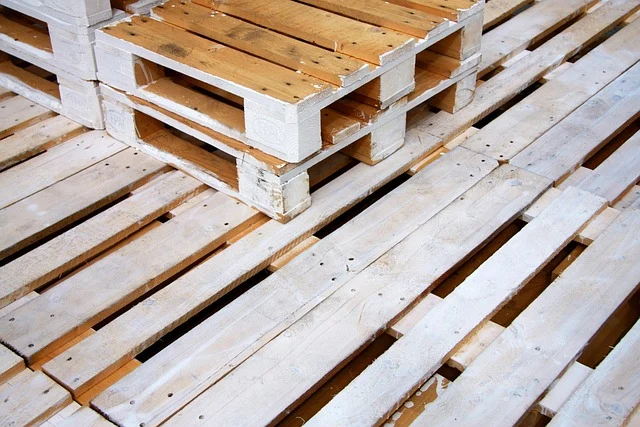
- You should measure loaded pallets at overhang points. Cartons may extend beyond the standard 48 × 40 inch deck. If they do, use the widest carton overhang points. Apply this for both length and width. You can find methods to keep cargo flush with pallet edges. See these in How to Measure a Box for Shipping (and Pallets) Without Getting Re-Billed.
- Measure pallet height from the floor surface to the highest point edge of cargo. Never exclude the pallet structure itself.
For specialized tools, review the complete measuring guide. This guide also covers irregular shape handling. In addition, it details carrier re-weigh dispute procedures.
Common mistakes when calculating cubic feet
Avoid these frequent calculation errors. They cause inaccurate shipping estimates. As a result, they lead to carrier audits.

- Dividing total inches by 12 instead of 1,728: Twelve converts linear inches to linear feet along one dimension. Volume spans three dimensions (12 × 12 × 12), requiring division by 1,728.
- Mixing units in one formula: Multiplying 2 ft × 18 in × 16 in produces an incorrect figure. Convert all measurements to inches or all measurements to feet before multiplying.
- Omitting pallet height and weight: You should not omit the 5 to 6 inch pallet height. For LTL shipments, this understates cubic feet. Also, it artificially inflates the calculated density.
- Rounding per-box volume before multiplying bulk quantities: Rounding 1.9444 ft³ down to 1.9 ft³ per box drops 0.0444 ft³ per carton. On a 300-box shipment, this underreports volume by 13.3 ft³. Multiply total cubic inches by quantity first, then divide by 1,728.
- Using interior product dimensions: Product dimensions ignore box wall thickness. They also ignore internal packing materials and outer master carton dimensions. Always measure the final packed exterior shipping box.
- Ignoring container bulge and shrink-wrap overhang: Automated carrier scanners pick up a shipment’s maximum shadow. Therefore, bulges and loose plastic wrap add billable cubic volume.
Frequently asked questions
How many cubic inches are in a cubic foot?
There are 1,728 cubic inches in one cubic foot. This figure comes from multiplying 12 inches in length. You also multiply 12 inches in width and 12 inches in height.
How do you calculate cubic feet in centimeters?
First, multiply length, width, and height in centimeters. This gives you cubic centimeters. Next, divide by 1,000,000 to convert to cubic meters (CBM). Then, multiply by 35.3147. For example, a 60 × 40 × 30 cm carton equals 0.072 m³. This is also 2.54 ft³.
How do you calculate CBM from feet?
Multiply length, width, and height in feet to find total cubic feet, then multiply by 0.0283168. A 4.0 ft³ carton equals 0.1133 m³ (4.0 × 0.0283168).
How many cubic feet is a standard pallet?
It depends on the loaded height. For example, a standard 48 × 40 inch pallet loaded to 60 inches occupies 66.67 ft³. However, the same pallet loaded to 48 inches occupies 53.33 ft³.
Why do LTL carriers require cubic feet calculations?
LTL carriers calculate density (pounds per cubic foot) to determine the NMFC freight class. Cubic feet serves as the divisor when calculating density for freight pricing scales.
Should pallet height be included in cubic feet calculations?
Yes. Carriers like Estes require shippers to include pallet height and pallet weight when calculating total shipment volume and density.
Related guides
- What Is CBM in Shipping? (Cubic Meter Explained)
- CBM Calculator: How to Calculate CBM for Shipping
- Pallet CBM Calculator: How to Calculate the CBM of a Pallet
- CBM Calculator in Inches: How to Calculate CBM from Inches
Sources and further reading
- NIST SP 811: Conversion Factors: official unit conversion factors.
- Estes: Freight Density Calculator: how carriers measure density.