
 By
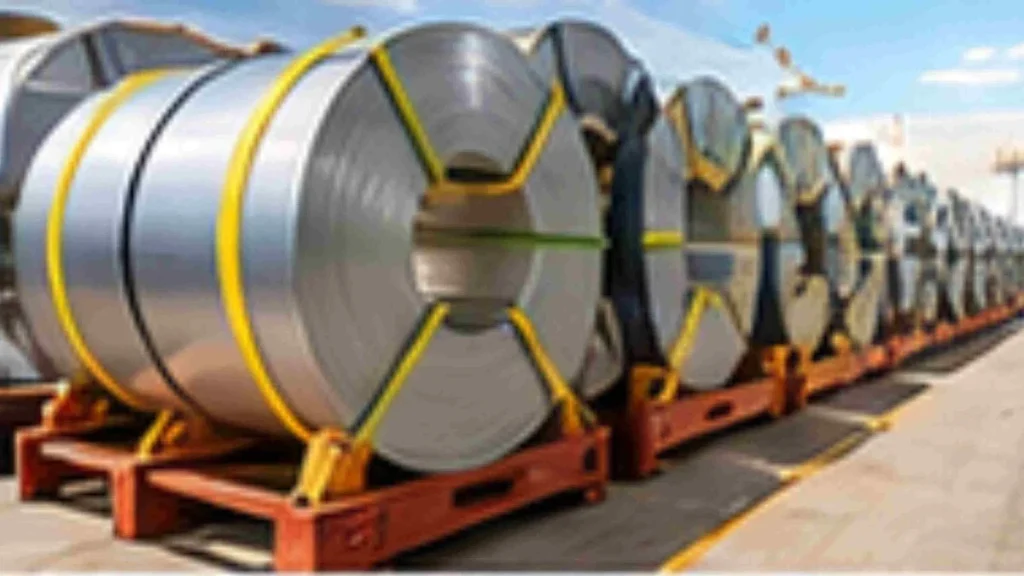
To calculate CBM for cylinders, drums, and rolls for freight shipping, multiply the widest outer diameter by the diameter. Then, multiply this by the total height or length in meters (diameter × diameter × height). Freight carriers use this bounding box formula. They do this rather than true geometric volume. This is because round items occupy a square floor footprint in containers and trucks.
A standard 200-liter steel drum measures 58.5 cm in diameter. It is also 88 cm tall. Internally, it holds 0.237 cubic meters of liquid. However, freight carriers bill that same drum at 0.301 m³. This is because the empty square corners around the cylinder cannot be packed with other cargo. You can prevent billing surprises by using the correct shipping volume. This also prevents re-measurement fees. Finally, it avoids unexpected freight rate adjustments on LCL ocean freight, air cargo, and LTL trucking lines. Use the tool below. It calculates both shipping CBM and true geometric volume for your cargo.
Cylinder, drum and roll volume calculator
Runs in your browser; nothing you enter is sent anywhere. Carrier figures differ, so confirm the final numbers with your forwarder. Whole shipment: all-in-one freight calculator →
How to calculate CBM for a cylinder: Step-by-step formula
To calculate the billing CBM of any cylindrical object, follow these steps to measure and compute its bounding box:
- Measure the outer diameter: Measure across the widest point of the cylinder. Use meters for this measurement. Also, include any protruding rims, chimes, locking rings, or protective handles.
- Measure the total height or length: Measure from base to top for vertical drums. For horizontal rolls, measure from end to end. Be sure to include projecting cores, valve caps, or plugs.
- Apply the bounding box formula: Multiply diameter × diameter × height (d × d × h) in meters.
- Multiply by total quantity: Multiply the single-unit CBM by the total number of cylindrical items in your shipment.
Depending on which units you use on your packing list, convert your measurements to cubic meters as follows:
- Centimeters (cm): Divide each dimension by 100 before multiplying, or calculate (diameter × diameter × height) ÷ 1,000,000. For example, a fabric roll measuring 30 cm in diameter and 150 cm long becomes (30 × 30 × 150) ÷ 1,000,000 = 0.135 m³.
- Millimeters (mm): Calculate (diameter × diameter × height) ÷ 1,000,000,000. For example, a pipe measures 400 mm in diameter. Its length is 2,000 mm. So, (400 × 400 × 2,000) ÷ 1,000,000,000 equals 0.32 m³.
- Inches (in): Calculate total cubic inches using diameter × diameter × height, then divide by 61,023.74. Alternatively, divide cubic inches by 1,728 to find cubic feet, then divide cubic feet by 35.315 to get CBM.
- Feet (ft): Multiply diameter × diameter × height in feet, then divide total cubic feet by 35.315.
Two ways to measure a cylinder: Shipping volume versus geometric volume
True (geometric) volume
True volume = π × r² × h. Here, r is the radius (half the diameter). Also, h is the height or length. This formula calculates internal liquid capacity. It also calculates payload volume or raw material quantity. Chemical suppliers, storage tank builders, and packaging engineers use this CBM of cylinder. They determine container capacity this way.
Shipping volume (the bounding box)
Shipping volume = d × d × h. Here, ‘d’ represents the outside diameter at the widest point. This formula treats the cylinder as a square-ended box. Therefore, it shows the minimal space needed for the item.
US LTL motor carriers need this for density. Estes instructs shippers. They say, “multiply the greatest dimension on the cylindrical plane by itself.” Then multiply by the object’s height or length. This is d × d × h. Quoting geometric volume incurs backcharges. This happens after cargo scans. CBM of cylinder calculations are vital.
Postal services handle small cylindrical packages differently. The USPS Domestic Mail Manual (DMM 133) permits a 0.785 multiplier factor for nonrectangular parcels when calculating dimensional weight. That adjustment applies strictly to USPS mail services, not to commercial ocean, air, or truck freight.
How much extra space round cargo occupies
The table below compares true volume against shipping volume for a 1-meter-long cylinder across several standard industrial diameters. Multiply these values by your item’s length to determine total volume gap.
| Diameter | True volume (m³) | Shipping volume (m³) | Extra billed (m³) |
|---|---|---|---|
| 30 cm (11.8 in) | 0.0707 | 0.0900 | 0.0193 |
| 45 cm (17.7 in) | 0.1590 | 0.2025 | 0.0435 |
| 58.5 cm (23.0 in) | 0.2688 | 0.3422 | 0.0734 |
| 80 cm (31.5 in) | 0.5027 | 0.6400 | 0.1373 |
Geometry dictates this space loss. However, you can manage costs. Pick fitted outer packaging. Also, arrange pallets efficiently. This will help you minimize side overhang.
Worked example 1: Calculating CBM for a shipment of steel drums
Suppose you ship 10 standard industrial steel drums, each measuring 58.5 cm in outer diameter and 88 cm tall at the widest points. Each filled drum weighs 230 kg.
- True volume per drum: Radius = 0.585 ÷ 2 = 0.2925 m. Geometric calculation: 0.2925 × 0.2925 × 3.1416 × 0.88 = 0.2365 m³.
- Shipping volume per drum: Bounding box calculation: 0.585 × 0.585 × 0.88 = 0.3012 m³.
- Ten drums total volume: 0.3012 × 10 = 3.01 m³.
- Total shipment weight: 230 kg × 10 = 2,300 kg (2.3 metric tonnes).
In Less than Container Load (LCL) ocean freight, charges rely on whichever figure is higher between total cubic meters and total metric tonnes (the W/M ratio, where 1 m³ equals 1,000 kg). Because 3.01 CBM of cylinder exceeds 2.3 metric tonnes, the carrier bills the shipment as 3.01 revenue tons. See our LCL calculation guide for details on minimum carrier thresholds and cargo shipping density rules.
Worked example 2: Calculating volumetric weight for fabric rolls in air freight
Consider 20 textile rolls moving by air freight. Each roll measures 1.6 m long, 30 cm in diameter, and weighs 18 kg.

- Shipping volume per roll: 1.6 m × 0.3 m × 0.3 m = 0.144 m³.
- Total shipment volume (20 rolls): 0.144 × 20 = 2.88 m³ (2,880,000 cm³).
- Air volumetric weight (using 1:6,000 divisor): 2,880,000 ÷ 6,000 = 480 kg.
- Actual physical weight: 18 kg × 20 = 360 kg.
- Chargeable weight: The air carrier bills for 480 kg because volumetric weight exceeds actual weight.
Using true geometric volume (0.1131 m³ per roll, or 2.262 m³ total) would calculate a volumetric weight of only 377 kg. Understating billable volume by 103 kg risks shipment delays or backcharges at the air terminal. Review the air freight chargeable weight guide for how airlines evaluate volumetric weight, in CBM of cylinder.
Whether placed standing upright or laid down flat, a roll’s bounding box volume remains d × d × L. Choose orientation based on stack stability, core protection, and warehouse handling equipment rather than expected freight savings.
Worked example 3: Calculating palletized drum density for US LTL freight
Suppose you have four fiber drums. Each drum is 22 inches in diameter. They are also 34 inches tall, for a CBM of cylinder. Each drum weighs 180 lb. You can load these drums on a standard 48 × 40 inch wooden pallet. The pallet is 5 inches tall. It also weighs 40 lb.
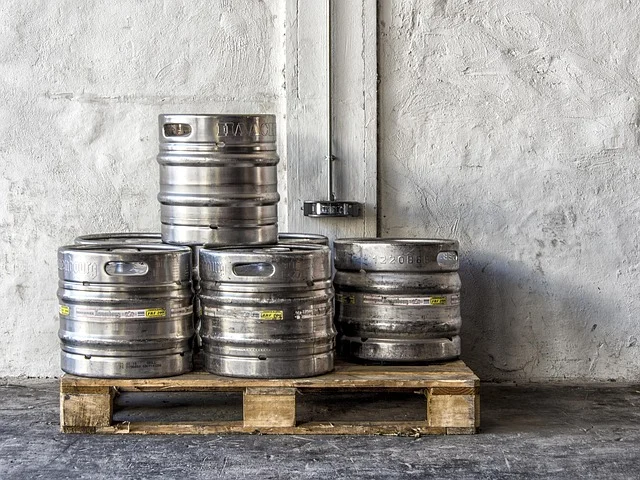
- Footprint with overhang: Placing four 22-inch drums in a 2×2 square creates a total load width of 2 × 22 = 44 inches. This exceeds the 40-inch pallet width by 4 inches. Because the drums extend past the wooden deck, the carrier measures the shipment footprint as 48 inches by 44 inches.
- Total height: 34 in (drum height) + 5 in (pallet height) = 39 inches total height.
- Cubic feet calculation: 48 × 44 × 39 = 82,368 cubic inches. Divide by 1,728 = 47.67 ft³ (1.35 m³).
- Total shipment weight: (4 × 180 lb) + 40 lb pallet weight = 760 lb gross weight.
- Freight density: 760 lb ÷ 47.67 ft³ = 15.94 lb/ft³.
The NMFC 13-sub density scale takes effect on July 19, 2025. This scale assigns shipments to freight class 70. This applies if the density is between 15 and 22.5 lb/ft³. Also, the item description must rely on density tables. You can use our freight class calculator. It helps you verify density-based classifications, including CBM of cylinder measurements.
Palletizing round cargo: Euro pallets, ISO pallets, and overhang
When you place cylindrical items on pallets, their physical footprint dimensions are important. They determine how efficiently you use floor area.
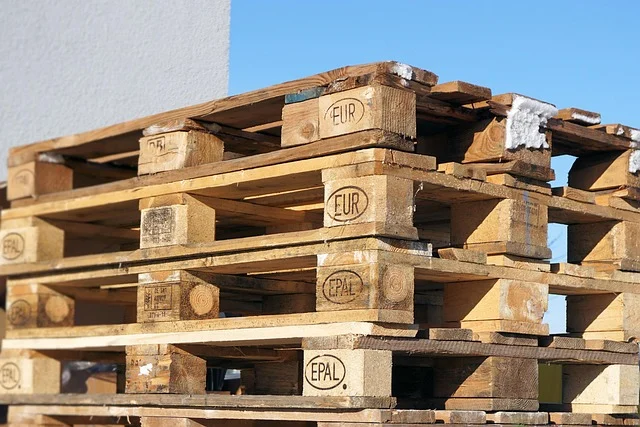
Two 58.5 cm drums fit side by side on a standard EUR 1 pallet. This pallet measures 1,200 × 800 mm. They occupy 117 cm along the 1,200 mm length. Also, they occupy 58.5 cm across the 800 mm width. Therefore, they fit within pallet deck boundaries without side overhang. Add the 144 mm height of an EPAL Euro pallet. This produces a total unit load volume of 1.20 m × 0.80 m × (0.88 m + 0.144 m) = 1.20 × 0.80 × 1.024 = 0.983 CBM of cylinder. The total gross weight is 485 kg when loaded with two 230 kg drums. This is well within the EUR 1 safe working load capacity of 1,500 kg.
Placing four 58.5 cm drums in a 2×2 square creates a 117 × 117 cm footprint. This overhangs the 1,000 mm side of an ISO standard 1,200 × 1,000 mm pallet and slightly exceeds an Australian 1,165 × 1,165 mm pallet. Any resulting overhang expands the billable footprint, as explained in how to calculate the CBM of a pallet.
How to measure edge cases: Tapered drums, extended cores, and soft rolls
Irregular round items require careful measurement to prevent unexpected re-measurement fees:

- Tapered pails and drums: Plastic buckets, metal pails, and nesting fiber drums feature a top rim wider than their base. Always measure the maximum top rim diameter—including lid latches, handles, or sealing rings—for the d × d footprint calculation.
- Rolls with extended cores: Fabric, plastic film, or metal coils often have cores. These cores can be cardboard, plastic, or steel. Also, they extend past the material edge. Therefore, measure the overall length from core tip to core tip. Do not just measure the width of the rolled material.
- Soft or compressible rolls: Insulation, foam, or loosely wound textiles can bulge under strapping or shift during transport. Measure rolls at their widest point after strapping or stretch-wrapping to record final dimensions.
- Bundled pipes or tubes: You may strap multiple small pipes into circular bundles. If so, measure the maximum outer diameter of the entire bundle. Measure across the thickest band, coupling, or fitting.
For more detailed measurement techniques, consult how to measure cartons and pallets.
Common mistakes to avoid when calculating CBM for round cargo
- Quoting geometric volume instead of bounding box volume: Calculating volume with π × r² × h underestimates freight volume. It is 21.46% too low. As a result, this leads to billing adjustments.
- Ignoring protruding hardware: Overlooking locking rims, chimes, handles, spigots, and core extensions produces understated outer dimensions.
- Confusing radius and diameter: Substituting diameter into geometric formulas produces values that are four times too large. However, substituting radius into bounding box formulas understates volume. It understates volume by 75%.
- Omitting pallet height and overhang: Freight carriers calculate space based on the complete skidded load. This includes pallet tare height and side overhang.
- Assuming freight class relies only on density: Certain cylindrical commodities follow specific NMFC classification rules that supersede standard density tables.
Frequently asked questions
Do carriers charge for the true volume of a cylinder?
Freight carriers bill round items using bounding box volume. This is diameter × diameter × length. They do not use true geometric volume. Major LTL, ocean, and air carriers calculate density and chargeable volume for a CBM of cylinder. They base this on the total cubic space occupied in a truck or container.
What is the CBM of a 200-litre drum?
While a standard 200-liter (55-gallon) drum holds 0.200 m³ of internal liquid, its shipping volume depends on outer packaging. A typical steel drum measuring 58.5 cm in diameter and 88 cm tall occupies 0.301 m³ of freight space.
How do I calculate cubic feet for a cylinder in inches?
Multiply outer diameter by outer diameter by height in inches, then divide by 1,728. For example, a drum measuring 22 inches in diameter and 34 inches tall equals 22 × 22 × 34 = 16,456 cubic inches, or 9.52 ft³.
Should rolls ship standing upright or lying down flat?
Bounding box volume remains identical in both orientations because length and diameter dimensions do not change. Select orientation based on cargo stability, core protection, stacking limits, and warehouse material handling gear.
Does USPS treat round parcels differently from general freight?
USPS rules allow a 0.785 multiplier factor for nonrectangular parcels when calculating dimensional weight under DMM 133. This rule applies specifically to USPS mail systems, not commercial air, ocean, or LTL freight lines.
Related guides
- CBM Calculator in Inches: How to Calculate CBM from Inches
- CBM Calculator: How to Calculate CBM for Shipping
- What Is CBM in Shipping? (Cubic Meter Explained)
- How to Calculate Cubic Feet for Shipping Boxes
Sources and further reading
- Estes: Freight Density Calculator: detailed guidance on carrier density calculations.
- NIST SP 811: Conversion Factors: official metric unit conversion specifications.