
 By

UPS dimensional weight is length × width × height in inches divided by 139 for UPS Daily Rates or 166 for UPS Retail Rates. UPS rounds each measurement to the nearest whole number first, and then increases any fraction to the next whole pound. The bill uses the higher of actual and dimensional weight. Example: a 20.4 × 16.3 × 14.6 in box becomes 20 × 16 × 15 = 4,800 in³, which is 35 lb at Daily Rates but 29 lb at Retail Rates. Use the calculator below to compare both rate types for your box.
Dimensional weight calculator (FedEx, UPS, USPS, DHL and more)
Runs in your browser; nothing you enter is sent anywhere. Carrier figures differ, so confirm the final numbers with your forwarder. Whole shipment: all-in-one freight calculator →
The UPS formula, step by step
UPS’s published method has four steps:

- Measure length, width and height in inches.
- Round each measurement to the nearest whole number.
- Multiply, then divide by the divisor: 139 for Daily Rates, 166 for Retail Rates.
- Increase any fraction to the next whole pound.
UPS then compares that figure with the actual weight and bills the greater one. UPS notes that dimensional weight “may apply to all UPS domestic and international package services”, so do not assume it is a ground-only issue.
Which rate type applies depends on how UPS bills your shipment. Your UPS account terms or shipping receipt will show whether Daily or Retail Rates are being used.
Daily Rates vs Retail Rates: how big is the gap?
Because 166 is larger than 139, the Retail Rates divisor gives a lower dimensional weight for the same box. The ratio is 166 ÷ 139 = 1.194, so a Daily Rates dimensional weight is about 19.4% higher than the Retail Rates figure before the round-up to whole pounds.
| Box (in, rounded) | Volume (in³) | Daily ÷ 139 (lb) | Daily billed (lb) | Retail ÷ 166 (lb) | Retail billed (lb) |
|---|---|---|---|---|---|
| 10 × 8 × 6 | 480 | 3.45 | 4 | 2.89 | 3 |
| 16 × 12 × 10 | 1,920 | 13.81 | 14 | 11.57 | 12 |
| 20 × 16 × 15 | 4,800 | 34.53 | 35 | 28.92 | 29 |
| 24 × 18 × 18 | 7,776 | 55.94 | 56 | 46.84 | 47 |
These figures are dimensional weight only. If the actual weight is higher, UPS bills the actual weight instead.
A lower billable weight does not automatically mean a lower price; the rate per pound differs between rate types too. Compare the final charge, not just the weight.
Worked example 1: a bulky carton at both rate types
Say you ship a carton of bedding measuring 20.4 × 16.3 × 14.6 in, weighing 22 lb.
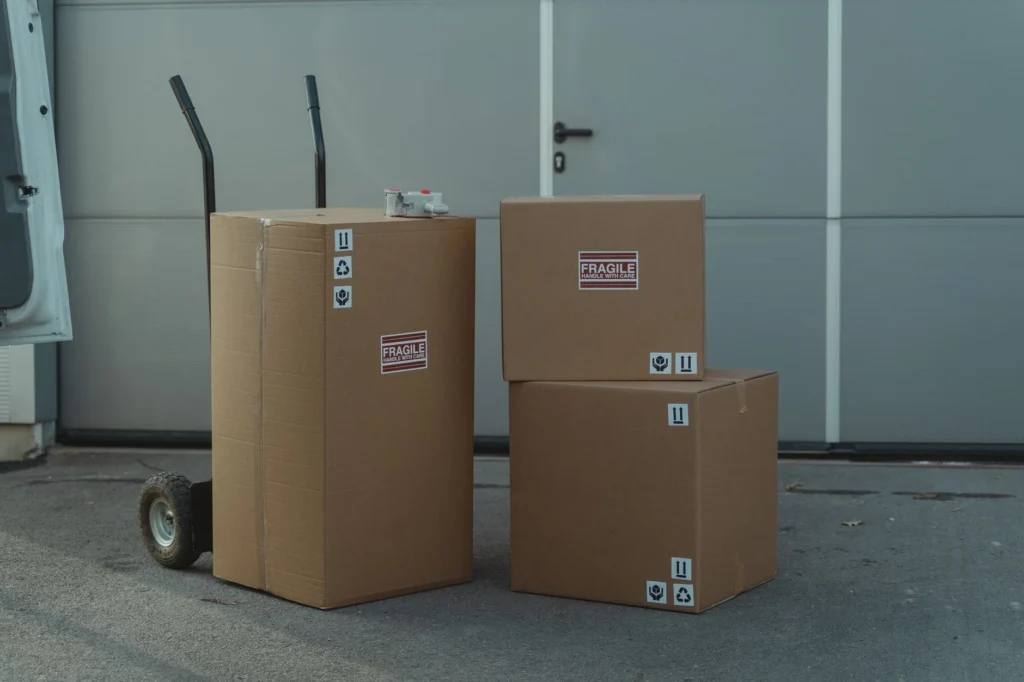
- Round each side to the nearest whole number: 20.4 → 20, 16.3 → 16, 14.6 → 15
- Multiply: 20 × 16 × 15 = 4,800 in³
- Daily Rates: 4,800 ÷ 139 = 34.53 lb, increased to 35 lb
- Retail Rates: 4,800 ÷ 166 = 28.92 lb, increased to 29 lb
- Compare with the actual 22 lb: dimensional weight is higher in both cases
Billable weight: 35 lb at Daily Rates, 29 lb at Retail Rates. In both cases you pay for more than the 22 lb the carton weighs.
Worked example 2: where actual weight can win
Now a 14 × 12 × 8 in box of kitchenware weighing exactly 10 lb.

- Dimensions are already whole numbers: 14 × 12 × 8 = 1,344 in³
- Daily Rates: 1,344 ÷ 139 = 9.67 lb, increased to 10 lb
- Retail Rates: 1,344 ÷ 166 = 8.10 lb, increased to 9 lb
- Compare with 10 lb actual
At Daily Rates the dimensional weight and actual weight are both 10 lb, so UPS bills 10 lb. At Retail Rates the actual weight of 10 lb is higher than 9 lb, so UPS bills actual weight. For moderately dense goods the two rate types can end up at the same billable weight.
The margin is thin, though. If the same box measured 14.6 × 12 × 8 in, it would round to 15 × 12 × 8 = 1,440 in³, and 1,440 ÷ 139 = 10.36 lb, increased to 11 lb at Daily Rates. That is 1 lb more than the actual weight, from 0.6 in on one side.
Converting to metric
UPS’s U.S. rule is written in inches and pounds. For reference, 139 in³/lb is about 5,022 cm³/kg and 166 in³/lb is about 5,997 cm³/kg. If your packing list is in centimeters, convert each side to inches (divide by 2.54) before rounding, rather than converting the final volume. Example: 50 cm ÷ 2.54 = 19.69 in, which rounds to 20 in. The CBM from inches guide covers the other direction.
Tips for lowering UPS dimensional weight
- Watch measurements near the halfway mark. 14.6 in rounds up to 15 in; trimming the carton to 14.4 in rounds to 14 in, cutting 1/15 of the volume.
- Round once, in the right order. Round each side to the nearest whole inch, multiply, divide, and only then increase any fraction to the next whole pound. Rounding converted centimeter figures or the volume as well can shift the result.
- Check which rate type you are on. Moving between rate types changes the divisor, but also the rates, so compare totals.
- Avoid bulging cartons. Overfilled boxes measure larger than their nominal size. See how to measure cartons and pallets.
- Right-size the box. An inch removed from one side cuts the volume by the product of the other two sides, so an inch off the shortest side removes the most; test options in the calculator. The guide on reducing dimensional weight has more ideas.
- Compare carriers. FedEx and USPS also divide by 139 but round dimensions differently. See the carrier comparison and FedEx dimensional weight.
FAQ
What is the UPS dimensional weight divisor?
UPS uses 139 for Daily Rates and 166 for Retail Rates. Dimensional weight is length × width × height in inches divided by the applicable divisor.
Does UPS round dimensions up?
UPS rounds each measurement to the nearest whole number, so 14.4 in becomes 14 in and 14.6 in becomes 15 in. The resulting weight is then increased to the next whole pound if it has any fraction.
Does UPS dimensional weight apply to international shipments?
UPS states that dimensional weight may apply to all UPS domestic and international package services. Check the terms for the specific service you book.
Why is the Retail Rates dimensional weight lower?
Retail Rates divide by 166 instead of 139. A larger divisor gives a smaller result, about 16% lower for the same box (139 ÷ 166 = 0.837).
Is UPS billed on actual or dimensional weight?
UPS bills on whichever is greater. UPS can bill a dense box on actual weight even when its dimensional weight is close.
Related guides
- USPS Dimensional Weight in 2026: The Switch from 166 to 139
- Canada Post Volumetric Weight: 5,000 vs 6,000 Explained
- DHL Express Volumetric Weight (5000 Divisor) Explained
- Parcelforce and UK International Parcels: Volumetric Weight (5,000)
Sources and further reading
- UPS: Shipping Dimensions and Weight: 139 for daily rates, 166 for retail rates.
- FedEx: What Is Dimensional Weight?: divide by 139, round each side to the nearest inch.
- USPS Domestic Mail Manual 133: Weight and Dimensional Weight: the 139 divisor for parcels over 1 cubic foot.