
 By

FOB (Free on Board) and CIF (Cost, Insurance and Freight) are both Incoterms 2020 rules for sea and inland waterway transport, and under both the risk passes to the buyer once the goods are on board the vessel at the port of shipment. The difference is cost: under CIF the seller also pays ocean freight to the destination port and buys minimum insurance. To compare offers, add your own freight and insurance to the FOB price, for example 18,500 FOB + 1,350 freight + 65.51 insurance = 19,915.51, and set that against the supplier’s CIF price. Use the tool below to see every step side by side.
Incoterms 2020: who pays for what
Runs in your browser; nothing you enter is sent anywhere. Carrier figures differ, so confirm the final numbers with your forwarder. Whole shipment: all-in-one freight calculator →
What FOB and CIF have in common
- Both are among the four ICC rules for sea and inland waterway transport only.
- The seller handles export clearance and delivers the goods on board at the port of shipment.
- Risk passes to the buyer at the same moment: when the goods are on board.
- The buyer handles import clearance, duty and import taxes.
The named place differs. FOB names the loading port (“FOB Ningbo”), while CIF names the destination port (“CIF Felixstowe”), even though risk still passes at the loading port.
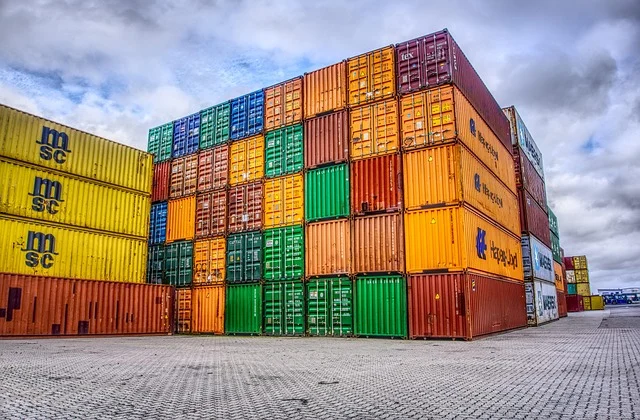
Where FOB and CIF differ
| Item | FOB | CIF |
|---|---|---|
| Named place | Port of shipment | Port of destination |
| Risk passes | On board at port of shipment | On board at port of shipment |
| Ocean freight paid by | Buyer | Seller |
| Cargo insurance | No obligation; buyer usually insures | Seller, minimum Institute Cargo Clauses (C), contract price plus 10% |
| Chooses shipping line or forwarder | Buyer | Seller |
| Destination port charges | Buyer | Buyer, unless included in seller’s contract of carriage |
| Import duty and taxes | Buyer | Buyer |
How to compare an FOB and a CIF quote
Comparable cost = FOB price + ocean freight + insurance (+ any origin charges not in the FOB price)

Compare that total with the CIF price. Destination charges, duty and import taxes are extra under both rules, so leave them out of this step and add them when you work out landed cost.
Example 1: Ningbo to Felixstowe
A supplier quotes FOB Ningbo 18,500 or CIF Felixstowe 20,300 (example values). Your forwarder quotes an example freight of 1,350 and insurance at an example rate of 0.3% on 110% of the cost-plus-freight value.
- Cost plus freight: 18,500 + 1,350 = 19,850.
- Insured value: 19,850 × 1.10 = 21,835.
- Premium: 21,835 × 0.003 = 65.505, rounded to 65.51.
- FOB route total: 18,500 + 1,350 + 65.51 = 19,915.51.
- CIF offer: 20,300, which is 20,300 − 19,915.51 = 384.49 more.
On these example numbers, buying FOB saves 384.49 and lets you use your own forwarder. If the CIF price had come out lower, you would still need to check destination charges before choosing it. The freight quote guide lists the lines to look for.
Does FOB or CIF change your import duty?
The Incoterm does not set the duty basis; the importing country does. Some countries assess duty on a CIF-type value (goods plus freight and insurance to the border), others on an FOB-type value. If you buy FOB and your country uses a CIF-type basis, you add freight and insurance to the invoice value at import anyway. The customs value guide covers this in more depth.

Example 2: duty on the same shipment, two bases
Using the FOB route from Example 1 (goods 18,500; freight and insurance 1,350 + 65.51 = 1,415.51) and an example duty rate of 4%:
- CIF-type basis: 18,500 + 1,415.51 = 19,915.51; 19,915.51 × 0.04 = 796.62.
- FOB-type basis: 18,500 × 0.04 = 740.00.
- Difference: 796.62 − 740.00 = 56.62.
The Incoterm in your contract does not change which line applies to you. Ask your customs broker which basis your country uses.
Control, visibility and destination charges
Under FOB the buyer books the freight, picks the forwarder, sees the actual rate and controls the timing. Under CIF the seller picks the carrier and the buyer sees only a bundled price. The buyer still pays the charges at the destination port that are not part of the seller’s contract of carriage, and has no say in who sets them. Before accepting a CIF offer, ask the destination agent for a written list of charges payable on arrival. The ocean freight charges guide explains the common ones.

Containers: why ICC points to FCA and CIP
FOB and CIF suit goods the seller loads directly on board a vessel. ICC’s explanatory notes advise that where you hand goods to a carrier before loading, as with containers delivered to a terminal, FCA fits better than FOB and CIP fits better than CIF. Under FOB the seller still carries the risk while its container sits in the terminal, outside its control. However, under FCA, risk passes when you hand over the container. Also, CIP requires broader insurance, Institute Cargo Clauses (A), instead of the (C) minimum under CIF. See EXW vs FCA and Incoterms 2020 explained for the full picture.

Which should you choose?
- Choose FOB if you have a forwarder you trust, ship regularly, or want to consolidate several suppliers into one container.
- Next, choose CIF if you are a small or first-time importer and the supplier’s freight is competitive, but get the insurance terms and destination charges in writing.
- Choose FCA or CIP for full containers handed over at a terminal, and for any air shipment.
- Buy extra cover under CIF if the goods are high-value: the minimum Institute Cargo Clauses (C) cover is limited. The cargo insurance guide explains the options.
Common mistakes
- Writing “FOB airport” for air freight. FOB is a sea-only rule; use FCA.
- Confusing Incoterms FOB with US domestic terms such as “FOB destination”, which are different shipping terms with their own rules.
- Assuming a CIF price includes import duty or delivery to your warehouse.
- Relying on the CIF minimum insurance for high-value goods.
- Comparing an FOB and a CIF price directly, without adding freight and insurance to the FOB figure.
FAQ
What is the main difference between FOB and CIF?
Under CIF the seller pays ocean freight to the destination port and buys minimum insurance; however, under FOB the buyer does both. Risk passes at the same point under both rules, on board at the loading port.
Is CIF more expensive than FOB?
The CIF price is higher because it includes freight and insurance, but the total cost can be higher or lower than buying FOB and booking freight yourself. Compare using FOB price + freight + insurance.
Who pays destination charges under CIF?
The buyer, unless the seller’s contract of carriage includes them. Ask for a list of arrival charges before you agree.
Can FOB be used for air freight?
No. FOB is one of the four Incoterms 2020 rules for sea and inland waterway transport only. Therefore, use FCA for air shipments.
Does choosing FOB or CIF change import duty?
Not directly. The importing country’s valuation basis decides whether you include freight and insurance in the customs value.
Related guides
- DDP vs DAP: Who Pays Import Duty and VAT?
- US De Minimis ($800) Suspended: What Importers Need to Know in 2026
- UK Import VAT and Duty: The £135 Rule and Goods Over £135
- How Import Duty Is Calculated: Customs Value, Tariff Code and Rate
Sources and further reading
- ICC: Incoterms Rules: the official Incoterms 2020 rules.
- ICC: Incoterms 2020 Checklist (PDF): the 11 rules by transport mode.