
 By
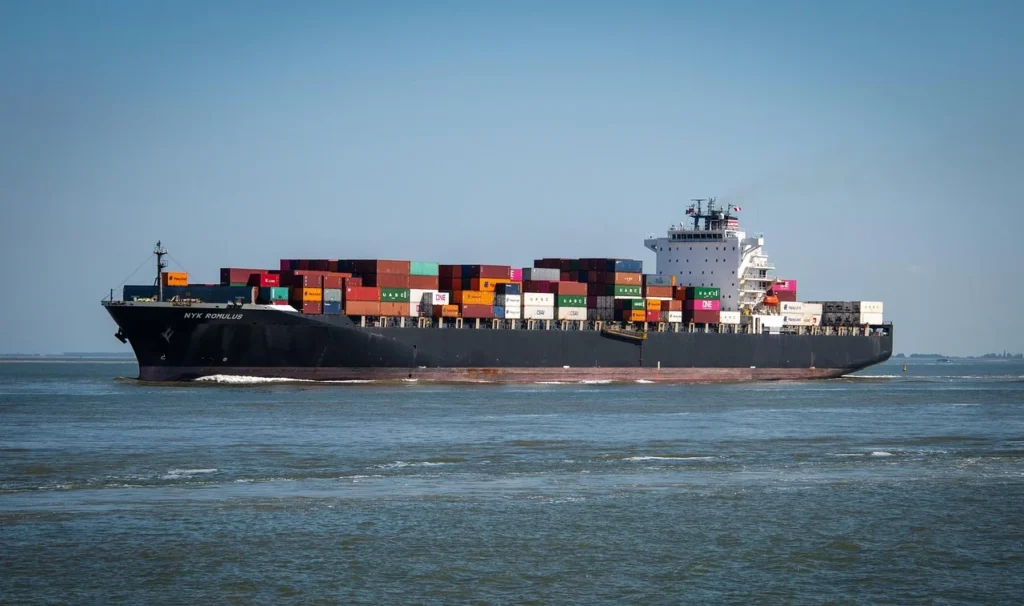
An ocean freight quote is built from three parts: origin charges, the main sea leg (base rate plus surcharges such as the bunker adjustment factor, BAF), and destination charges such as terminal handling (THC), CFS fees for LCL, customs clearance and delivery. For LCL most of these are charged per revenue ton, the greater of cubic meters or metric tonnes. A shipment of 4.2 m³ weighing 1,800 kg is billed as 4.2 revenue tons, and every per-ton charge multiplies by that figure. Use the calculator below to work out revenue tons with your own rate and minimum.
Ocean LCL freight calculator (W/M revenue tons)
Runs in your browser; nothing you enter is sent anywhere. Carrier figures differ, so confirm the final numbers with your forwarder. Whole shipment: all-in-one freight calculator →
How an ocean freight quote is structured
The same container passes through three stages, and each stage carries its own charges.
| Charge | What it covers | Often quoted for FCL | Often quoted for LCL |
|---|---|---|---|
| Base ocean freight | The port-to-port sea leg | Per container | Per revenue ton |
| BAF (bunker adjustment factor) | Fuel cost changes | Per container | Per revenue ton |
| Peak season surcharge (PSS) | Extra charge in busy periods | Per container | Per revenue ton |
| THC (origin and destination) | Terminal handling at each port | Per container | Per revenue ton or included in CFS |
| CFS charge | Loading or unloading LCL cargo at a container freight station | Not used | Per revenue ton |
| Documentation / B/L fee | Issuing the bill of lading and paperwork | Per bill of lading | Per bill of lading |
DHL Global Forwarding notes that carriers charge FCL per container, while they charge LCL on weight or measure (W/M). The names and the way carriers and forwarders group charges vary, so you should read each line rather than relying on its label.
The main sea leg
Base ocean freight
The base rate is the price of moving the cargo from the port of loading to the port of discharge. However, it is rarely the full sea cost on its own.
Bunker adjustment factor (BAF)
BAF passes fuel cost changes on to the shipper. However, it can change during the validity of a quote, so you should check whether your rate is “all-in” or whether carriers add BAF at the rate applying on the sailing date.
Peak season and other surcharges
Carriers may add a peak season surcharge in busy periods, and other named surcharges for currency changes, congestion or specific risks. Ask your forwarder to list every surcharge separately and to say whether each one is fixed or subject to change.
Origin and destination charges
- Terminal handling charge (THC): the cost of handling the container at the terminal, charged at origin and again at destination.
- CFS charge (LCL): a container freight station is the warehouse where LCL cargo is consolidated before sailing and separated after arrival. CFS charges cover that handling.
- Documentation and B/L fee: a flat fee per shipment or bill of lading.
- Customs clearance: the broker’s fee for the export or import declaration. Duty and import VAT or GST are separate and paid on top.
- Delivery: trucking from the terminal or CFS to your door.
Which of these you pay depends on your Incoterm. Under FOB the seller covers origin charges up to loading on the vessel, while under EXW the buyer pays from the seller’s premises; see Incoterms 2020 explained and FOB vs CIF.
How per-ton charges are calculated for LCL
Revenue tons (W/M) = max(volume in m³, weight in tonnes), where 1 m³ counts as equal to 1,000 kg. Forwarders typically apply a minimum of 1 CBM (1 W/M), though minimums vary by carrier and lane. The full method is in how LCL sea freight is calculated.

All rates below are example rates only. You should replace them with your own quote. For example, per-ton charges include: ocean freight 45, BAF 12, origin CFS 15 and destination CFS 20, a total of 45 + 12 + 15 + 20 = 92 per revenue ton, plus an example documentation fee of 40 per bill of lading.
Example 1: bulky shipment (volume decides)
4.2 m³ weighing 1,800 kg (1.8 t).
- W/M = max(4.2, 1.8) = 4.2 revenue tons
- Per-ton charges: 92 × 4.2 = 386.40
- Plus documentation: 386.40 + 40 = 426.40
Example 2: dense shipment (weight decides)
1.5 m³ weighing 2,600 kg (2.6 t).
- W/M = max(1.5, 2.6) = 2.6 revenue tons
- Per-ton charges: 92 × 2.6 = 239.20
- Plus documentation: 239.20 + 40 = 279.20
Example 3: small shipment (minimum decides)
0.4 m³ weighing 150 kg (0.15 t).
- W/M = max(0.4, 0.15) = 0.4, raised to the 1 W/M minimum
- Per-ton charges: 92 × 1 = 92
- Plus documentation: 92 + 40 = 132
The small shipment pays for 1 revenue ton while using 0.4 m³. Below the minimum, per-unit cost rises quickly, which is one reason to consolidate orders.
How to compare two quotes
Headline rates mislead when quotes split charges differently. Put both on the same basis.
Example: two forwarders quote the 4.2 revenue-ton shipment from Example 1, both from the same origin port to your warehouse (example rates):
| Line | Quote A (per RT) | Quote B (per RT) |
|---|---|---|
| Ocean freight | 30 | 55 |
| BAF | 20 | included |
| Origin CFS | 15 | 15 |
| Destination CFS | 30 | 20 |
| Total per RT | 95 | 90 |
Quote A looks cheaper on ocean freight (30 vs 55) but costs 95 × 4.2 = 399 against 90 × 4.2 = 378 for Quote B. Then add each quote’s flat fees before deciding.
A checklist for comparing quotes:
- Same scope: same Incoterm, same pickup and delivery points, same services included.
- Same unit: per container, per revenue ton or per shipment. Convert everything to a total for your shipment.
- Fixed or variable: which surcharges can change before sailing.
- Exclusions: duty, taxes, inspections, storage and demurrage and detention are usually outside the quoted price.
- Validity: the dates and sailings the rates apply to.
More detail on reading quotes is in how to read and compare freight quotes, and LCL vs FCL shows when a full container becomes cheaper.
Common mistakes
- Comparing base rates only and missing surcharges and destination fees.
- Forgetting the minimum on very small LCL shipments.
- Confusing THC with CFS on LCL quotes, or paying for both where one is included in the other.
- Leaving out charges paid at destination when working out landed cost.
- Assuming surcharge names mean the same thing across forwarders.
FAQ
What are ocean freight surcharges?
They are charges added to the base ocean rate for specific costs or conditions, such as fuel (BAF), busy periods (peak season surcharge) or currency changes. Names and amounts vary by carrier and lane.
What does BAF mean in shipping?
BAF stands for bunker adjustment factor. It adjusts the freight price for changes in the cost of ship fuel.
What is THC in ocean freight?
THC is the terminal handling charge; it covers the cost of handling the container at the port terminal. We charge it at both the origin and the destination port.
What is a CFS charge?
Next, this is the fee for handling LCL cargo at a container freight station, where workers consolidate shipments before sailing and separate them after arrival. They usually charge it per revenue ton.
How are LCL charges calculated?
Most LCL charges multiply by revenue tons, the greater of cubic meters and metric tonnes, typically with a 1 W/M minimum. We add flat fees such as documentation on top.
Related guides
- Verified Gross Mass (VGM): SOLAS Rules, Methods 1 and 2
- Shipping Container Dimensions: 20ft, 40ft, 40ft High Cube and 45ft
- Reefer Container Dimensions and Capacity (20ft and 40ft High Cube)
- Open Top and Flat Rack Containers: Sizes and When to Use Them
Sources and further reading
- iContainers: How Ocean Freight Charges Are Calculated: the W/M rule and minimums.
- SEKO Logistics: LCL Shipping: 1 CBM = 1,000 kg revenue ton.
- DHL Global Forwarding: Calculating Chargeable Weight: air 1:6,000, sea 1:1,000 and rail 1:3,000 ratios.