
 By
In shipping, CBM stands for cubic meter (m³). It measures the total outer volume your freight occupies. You calculate it by multiplying the length, width, and height of a package in meters. (Length × Width × Height). Freight forwarders use it with actual weight. This helps them determine shipping costs and container space requirements. For example, a standard export carton measuring 60 × 40 × 30 cm equals 0.072 CBM. Also, a loaded Euro pallet reaching 150 cm in height equals 1.44 CBM. Use the calculator below. It will turn any carton size into CBM, cubic feet, and chargeable weight.
CBM calculator
Runs in your browser; nothing you enter is sent anywhere. Carrier figures differ, so confirm the final numbers with your forwarder. Whole shipment: all-in-one freight calculator →
What does CBM mean in shipping?
One CBM is a three-dimensional cube. It measures 1 meter long, 1 meter wide, and 1 meter high. In other volume units, 1 CBM equals 1,000 liters. This is approximately 35.3147 cubic feet or 61,023.7 cubic inches. Carriers designate volume as CBM, m³, or “cubic meter” on rate sheets. You will also see this on bills of lading and commercial invoices. All of these terms express what is CBM in shipping: the same physical space measurement.

CBM measures a packaged item’s external boundary. It does not measure its contents or interior space. For example, a half-empty shipping box occupies the same physical space inside a container as a fully packed box. This is true if both boxes have identical dimensions. Freight carriers bill based on the total outer space packaging occupies inside transport equipment.
The standard mathematical formulas for CBM calculations are:
- Single carton CBM: length (m) × width (m) × height (m)
- Total shipment CBM: single carton CBM × total quantity of cartons
How to calculate CBM step-by-step
You must convert all outer box measurements into meters. Then, multiply them to calculate freight volume. Alternatively, you can divide the calculated cubic volume by the appropriate conversion factor.
Calculating CBM from centimeters
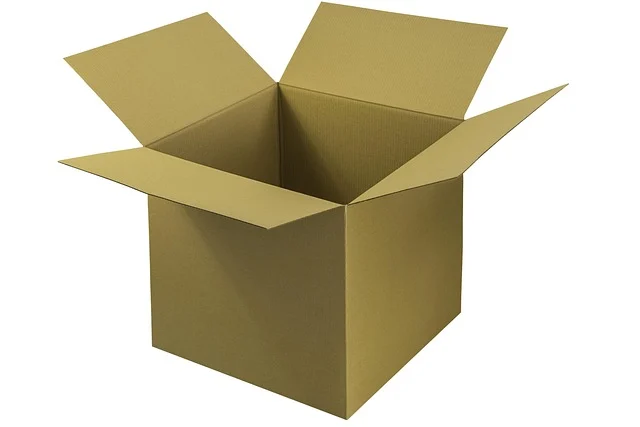
When measuring in centimeters, multiply length by width by height and divide the result by 1,000,000. See the CBM calculation guide for full metric conversion details.
- Measure the outer length, width, and height in centimeters. For example, use 60 cm × 40 cm × 30 cm.
- Multiply the three dimensions to calculate cubic centimeters: 60 × 40 × 30 = 72,000 cm³.
- Divide by 1,000,000: 72,000 ÷ 1,000,000 = 0.072 CBM.
Calculating CBM from inches
When measuring cargo in inches, multiply length by width by height to find cubic inches, then divide by 61,023.74. Alternatively, divide cubic inches by 1,728 for cubic feet, then divide by 35.3147. If using imperial units, refer to what is CBM in shipping for exact factors.
- Measure outer dimensions in inches (e.g., 24 in × 16 in × 12 in).
- Multiply the three dimensions: 24 × 16 × 12 = 4,608 cubic inches.
- Divide by 61,023.74: 4,608 ÷ 61,023.74 = 0.0755 CBM.
Calculating CBM for multiple cartons and mixed shipments
For identical cartons, multiply the CBM of one carton by the total carton count. However, for shipments with multiple carton sizes on a packing list:
- Calculate individual CBM for one carton of each distinct size.
- Multiply each carton size’s CBM by its respective quantity.
- Add the line item CBM totals together for the grand total volume.
Calculating CBM for palletized shipments
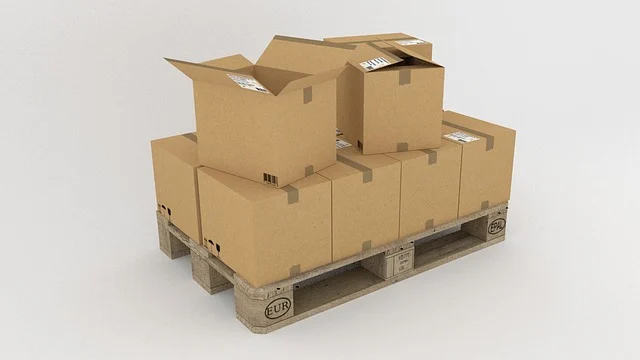
For palletized goods, measure the complete unit. This includes the wooden or plastic base and cargo overhang. Standard Euro pallets measure 120 cm × 80 cm. They have a base height of 14.4 cm. Also, standard ISO industrial pallets measure 120 cm × 100 cm, which helps understand what is CBM in shipping.
You can stack cargo on a Euro pallet. If the total height is 150 cm (including the pallet base), you calculate the volume. The calculation for What is CBM in shipping is 1.2 m × 0.8 m × 1.5 m = 1.44 CBM. However, cargo protruding beyond pallet edges increases the length or width. This is because carriers evaluate the maximum outer dimensions of the handling unit.
How freight charges depend on CBM vs weight
Transport vehicles reach volume limits (“cube out”) or weight limits (“weigh out”). A aircraft filled with lightweight foam fills its cargo hold while remaining far below its weight capacity. If carriers billed solely by actual weight, low-density cargo would occupy space without paying its fair share.

Carriers charge freight based on chargeable weight. This includes volumetric or dimensional weight. The carrier compares actual gross weight against volumetric weight. Also, it bills the higher value.
Sea freight LCL (Less than Container Load)
Ocean LCL uses a 1:1,000 ratio (1 CBM = 1,000 kg or 1 metric tonne). LCL ocean freight is quoted per “revenue ton” (RT) or “weight/measurement” (W/M). Billing applies to whichever is greater: shipment volume in CBM or actual weight in metric tonnes.
Air freight
Air cargo follows the International Air Transport Association (IATA) volumetric ratio. This ratio is 1:6,000 cm³/kg. Therefore, it is 166.67 kg per 1 CBM. To calculate air volumetric weight, multiply total shipment CBM by 166.67 kg.
Express couriers
Express couriers (including DHL Express, FedEx, and UPS) use a ratio of 1:5,000 cm³/kg (200 kg per 1 CBM). Multiply total shipment CBM by 200 kg to find express volumetric weight.
Rail and road transport
Road and rail carriers apply conversion factors based on trailer capacity. European road freight commonly uses 1 CBM = 333 kg (1:3,000 ratio), while regional rail corridors range between 200 kg and 333 kg per CBM. Review the CBM to kg guide for complete ratio tables.
When to switch from LCL to full container load (FCL)
Small sea shipments share container space through LCL. Because LCL incurs per-CBM origin and destination handling fees, billing scales linearly with volume. As a result, at a specific threshold, booking an entire 20-foot container (FCL) becomes cheaper. This is true even if the container is partially full. Therefore, you save money compared to paying LCL consolidation fees.
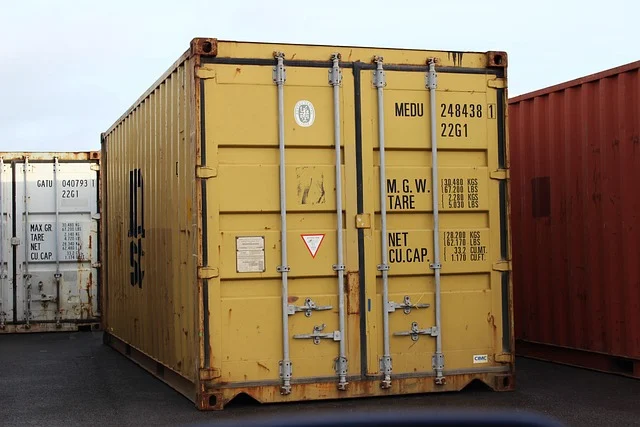
The financial tipping point for ocean LCL and FCL usually falls between 13 CBM and 15 CBM. This depends on the trade lane and port charges. Standard 20ft FCL containers carry a flat rate. They have the same rate whether you load 15 CBM or 28 CBM. Therefore, when your packing list reaches 13 CBM, you should request quotes for both LCL and 20ft FCL. Compare the landed costs.
Typical CBM values for cartons, pallets, and containers
The table below details volume measurements for standard packaging units and containers. Container dimensions represent internal capacities. Ocean carriers like Hapag-Lloyd publish these capacities, which helps explain what is CBM in shipping. However, usable volume varies by manufacturer.
| Item | Size | CBM | Cubic feet |
|---|---|---|---|
| Small e-commerce carton | 35 × 25 × 15 cm | 0.0131 | 0.46 |
| Standard export carton | 60 × 40 × 30 cm | 0.072 | 2.54 |
| Euro pallet loaded to 150 cm | 120 × 80 × 150 cm | 1.44 | 50.85 |
| 1,200 × 1,000 pallet loaded to 150 cm | 120 × 100 × 150 cm | 1.80 | 63.57 |
| 20 ft standard container (inside) | 5.90 × 2.352 × 2.395 m | 33.2 | 1,172 |
| 40 ft high cube container (inside) | 12.032 × 2.35 × 2.70 m | 76.3 | 2,694 |
How much cargo actually fits inside a container?
Unusable gaps naturally remain between boxes. They also exist around pallets and below container ceilings. In logistics, we term this unused volume “broken stowage.”
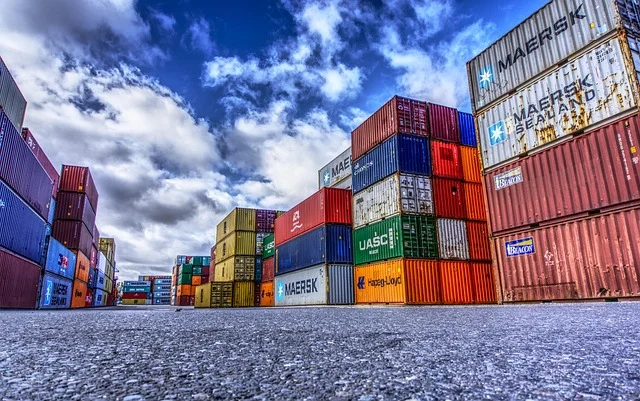
Practical usable capacity guidelines for standard ocean containers:
- 20ft container (33.2 CBM internal): holds 25–28 CBM of actual cargo.
- 40ft standard container (67.7 CBM internal): holds 54–58 CBM of actual cargo.
- 40ft High Cube container (76.3 CBM internal): holds 62–68 CBM of actual cargo.
Packing loose master cartons directly (floor-loading) maximizes usable volume. Loading pre-palletized cargo reduces capacity but speeds up loading and unloading.
Worked examples: Calculating chargeable weight and costs
Example 1: Light, bulky ocean LCL shipment
Suppose you import 40 cartons of plastic housewares. Each carton measures 50 × 40 × 35 cm. Also, each carton weighs 12 kg.

- Single carton volume: 0.5 m × 0.4 m × 0.35 m = 0.07 CBM.
- Total shipment volume: 0.07 CBM × 40 = 2.8 CBM.
- Total gross weight: 12 kg × 40 = 480 kg = 0.48 metric tonnes.
- Compare for sea LCL: 1 CBM equals 1 tonne. You have 2.8 CBM versus 0.48 tonnes. Volume is higher. So, the chargeable weight is 2.8 RT.
- At an ocean rate of $60 per revenue ton: 2.8 × $60 = $168 freight cost.
Example 2: Small, heavy metal parts shipment
Consider 10 small cartons. They contain steel fittings. Each carton measures 40 × 30 × 25 cm. Also, each carton weighs 35 kg.
- Single carton volume: 0.4 m × 0.3 m × 0.25 m = 0.03 CBM.
- Total shipment volume: 0.03 CBM × 10 = 0.3 CBM.
- Total gross weight: 35 kg × 10 = 350 kg = 0.35 metric tonnes.
- For example, compare for sea LCL: 0.3 CBM vs 0.35 tonnes. Actual weight (0.35 tonnes) exceeds volume (0.3 CBM).
- Because sea LCL has a 1 CBM / 1 RT minimum fee, we bill the shipment at 1.0 RT. See how LCL sea freight is calculated. This link explains the step-by-step billing rules.
Example 3: Comparing the same 2.8 CBM cargo across transport modes
Using the 2.8 CBM cargo (480 kg actual weight) from Example 1 shows how billing varies by transport mode:
- Ocean LCL: Charged on 2.8 RT (volume governs).
- Air Freight (1:6,000 ratio): Volumetric weight is 2.8 × 166.67 kg = 466.68 kg. Actual weight is 480 kg. Actual weight governs, so chargeable weight is 480 kg.
- Express Courier (1:5,000 ratio): Volumetric weight is 2.8 × 200 kg = 560 kg. Volumetric weight governs over actual weight (480 kg), so chargeable weight is 560 kg.
Common CBM calculation mistakes and how to avoid them
- Measuring inner item sizes instead of outer carton walls: Freight rates depend on external dimensions. Always measure outer carton edges.
- Ignoring pallet dimensions and height: Pallets add 14.4 cm of base height and footings. When you ship palletized cargo, measure from the floor to the top of the stack. Review how to calculate the CBM of a pallet. Also, see How to Measure a Box for Shipping (and Pallets) Without Getting Re-Billed.
- Failing to account for box bulging: Overpacked cartons bulge at their side walls. Automated optical scanners capture maximum outer points. As a result, a 1 cm bulge across 50 cartons increases billed CBM.
- Dividing by incorrect unit factors: Dividing centimeters by 1,000 or 100,000 instead of 1,000,000 causes major calculation errors.
- Rounding intermediate box calculations: Rounding single carton volume before multiplying by box count compounds errors. Calculate exact figures first and round final total volume.
Where CBM appears on shipping documentation
CBM is recorded on standard shipping paperwork across international trade:

- Supplier quotes and pro forma invoices: These list preliminary estimated carton counts. They also show total CBM for budgeting.
- Packing lists: These detail carton quantities. They also show outer dimensions, gross weight, and CBM per line item.
- Forwarder rate quotes: Forwarders display ocean LCL rates. They quote these rates “per CBM” or “per W/M”. Also, they show minimum billing thresholds.
- Bills of Lading (B/L) and Air Waybills (AWB): These records show the final verified freight volume. You can use them for cargo manifests. In addition, they serve as official billing documents.
Frequently asked questions
What does CBM stand for in shipping?
CBM stands for cubic meter (m³). It represents total outer space occupied by a carton, pallet, or shipment, calculated as length × width × height in meters.
How much weight is 1 CBM?
CBM measures volume, not weight. For billing, sea LCL equates 1 CBM to 1,000 kg. However, air freight equates 1 CBM to 166.67 kg. Express couriers equate 1 CBM to 200 kg.
Is CBM the same as cubic feet?
No, CBM and cubic feet measure volume in different units. One CBM equals 35.3147 cubic feet. International ocean freight uses CBM, while US domestic freight commonly uses cubic feet.
How is CBM calculated for multiple cartons of different sizes?
First, calculate the CBM for one carton of each size. Next, multiply each CBM by its respective quantity. Finally, sum the line item totals.
Why can a forwarder’s measured CBM be higher than the supplier’s packing list?
Forwarders measure cargo upon receipt. They use laser scanners to do this. However, bulging box sides, added pallet bases, plastic wrap, and rounded measurements frequently increase scanned CBM in shipping. This makes it higher than supplier estimates.
Related guides
- How to Measure a Box for Shipping (and Pallets) Without Getting Re-Billed
- How to Calculate Cubic Feet for Shipping Boxes
- CBM to CFT: Convert CBM to Cubic Feet (and Back)
- Pallet CBM Calculator: How to Calculate the CBM of a Pallet
Sources and further reading
- NIST SP 811: Conversion Factors: official metric conversion factors.
- SEKO Logistics: LCL Shipping: Learn about ocean freight revenue ton standards. Also, find LCL consolidation rules here.
- DHL Global Forwarding: Calculating Chargeable Weight: volumetric ratios across air, sea, and rail transport modes.