
 By
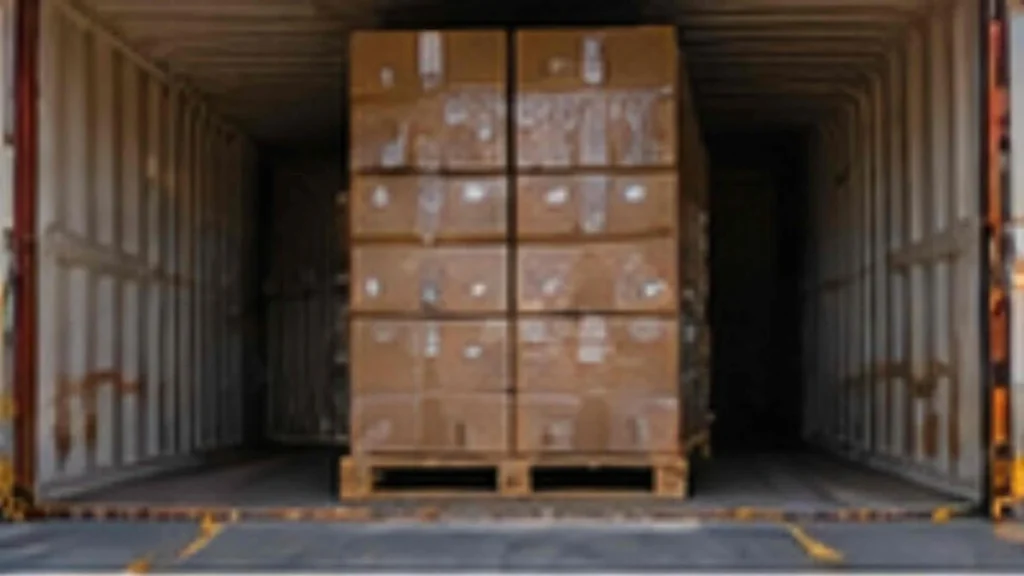
A standard 20ft container holds 200 to 400 floor-loaded cartons. A 40ft High Cube fits 700 to 900 cartons. Box dimensions determine exact capacity. You can calculate how many cartons fit in a container. Divide interior length, width, and height by carton dimensions. Round each number down. Then multiply all three values together.
Simply dividing container volume by single carton CBM causes costly estimation errors. This happens because solid boxes cannot fill empty corner spaces. However, the rest of this guide covers step-by-step capacity formulas and load tables. Also, we include clearance allowances, payload limits, and pallet comparisons.
How Many Cartons Fit in a 20ft or 40ft Container? Exact Capacity, Math and Load Tables
A standard 20ft container typically holds 200 to 400 floor-loaded cartons. Meanwhile, a 40ft High Cube fits 700 to 900 cartons depending on box dimensions. To find exact capacity, divide container interior length, width, and height by carton dimensions. Next, round each value down and multiply the three numbers.
Calculating carton capacity by simply dividing total container volume by single carton CBM creates costly errors. Because boxes are solid shapes, they cannot melt into empty corners. Real-world stuffing requires accounting for container wall corrugated geometry and door header heights. In addition, you must consider carton bulging, orientation rules, and gross weight limits.
Container loading calculator (cartons per container)
Runs in your browser; nothing you enter is sent anywhere. Carrier figures differ, so confirm the final numbers with your forwarder. Whole shipment: all-in-one freight calculator →
What is the difference between a 20ft and 40ft container?
The primary difference between a 20ft and a 40ft container lies in internal usable length, volumetric capacity, and payload density. A 40ft container provides roughly double the floor area and volume of a 20ft unit. However, both container sizes have nearly identical maximum gross payload weight limits.
A standard 20ft container offers an internal length of 5.9 meters and 33.2 m³ total volume (25 to 28 m³ usable). Next, a standard 40ft container offers 12.03 meters length and 67.7 m³ total volume (55 to 58 m³ usable). In addition, the 40ft High Cube adds 30 cm ceiling height, reaching 76.3 m³ total volume (65 to 68 m³ usable).
Safety standards cap maximum payloads around 28,000 kg. Because of this, dense cargo hits weight limits early in a 20ft container. However, lightweight goods fit better in a 40ft or 40ft High Cube. There, volume dictates overall capacity, influencing how many cartons fit in a container How Many CBM in a 40ft Container? 40ft and High Cube Capacity. In addition, these lighter items maximize total container space.
| Container type | Inside length (mm) | Inside width (mm) | Inside height (mm) | Door height (mm) | Max payload (kg) |
|---|---|---|---|---|---|
| 20ft Standard | 5,900 | 2,352 | 2,395 | 2,280 | 28,130 |
| 40ft Standard | 12,032 | 2,352 | 2,395 | 2,280 | 28,750 |
| 40ft High Cube | 12,032 | 2,350 | 2,700 | 2,585 | 28,600 |
Door opening heights are lower than internal ceiling heights. You must tilt or lower top cartons during loading if total stack height exceeds door frame clearance.
How much can you fit in a 40ft container?
Capacity inside a 40ft container depends on container height, cargo density, and loading style:
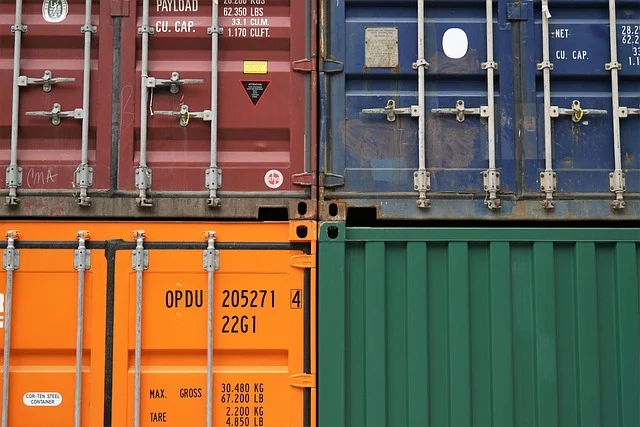
- Lightweight floor-loaded goods: In a 40ft High Cube, standard cartons (60 × 40 × 30 cm) yield 800 to 840 pieces. As a result, they fill 65 to 68 m³ of usable volume.
- Medium-density boxed goods: In a 40ft Standard, medium cartons (40 × 30 × 30 cm) yield roughly 1,400 to 1,600 cartons floor-loaded.
- Heavy or dense cargo: For cartons over 25 kg, payload limits restrict total volume to 28–32 m³. As a result, this leaves top space empty and fits 850 to 900 heavy cartons.
Utilizing leftover space with mixed carton orientations
Professional load planners fill remaining wall gaps efficiently. So, they rotate extra cartons on their side or end if box strength permits.
For example, placing five 400 mm wide cartons across a 40ft High Cube (2,350 mm width) leaves a 350 mm gap. Cartons turned with 300 mm width across, 400 mm length along, and 600 mm height standing fit into that gap (12,032 ÷ 400 = 30 long; 1 across; 2,700 ÷ 600 = 4 high), adding up to 120 extra cartons. Treat mixed-orientation gains as an optional bonus on a load plan rather than a baseline guarantee.
How many pallets fit in a 20ft and 40ft container?
First, choose between floor loading and palletized loading. You can hand-stack individual cartons, or pre-stack them onto standardized pallets.

Palletized loading standardizes handling but leaves empty perimeter gaps. As a result, single floor layer capacities vary:
- Standard ISO / Industrial Pallets (1200 × 1000 mm / 48 × 40 inches):
- 20ft Container: Fits 10 standard pallets.
- 40ft / 40ft High Cube Container: Fits 20 to 21 standard pallets.
- Euro Pallets (1200 × 800 mm / 47.2 × 31.5 inches):
- 20ft Container: Fits 11 Euro pallets.
- 40ft / 40ft High Cube Container: Fits 23 to 25 Euro pallets.
Double-stacking sturdy, lightweight pallets doubles these counts. However, you must ensure total height clears the door header and weight stays within carrier limits.
Floor loading increases carton count by 10% to 25% by filling all space. So, it works ideally for high-volume, low-density cargo. Palletized loading allows forklifts to load or unload a 40ft container in under 30 minutes, cutting labor costs and demurrage. To optimize box size for pallets, see Choosing Carton Sizes to Reduce Shipping Volume and Freight Costs. Next, for complete blueprints, see how many pallets fit in a container.
How do you calculate carton capacity step by step?
Calculating carton capacity requires evaluating rectangular box fit along three perpendicular axes:
- Get exact container interior dimensions: References: 5,900 × 2,352 × 2,395 mm (20ft standard), 12,032 × 2,352 × 2,395 mm (40ft standard), and 12,032 × 2,350 × 2,700 mm (40ft High Cube).
- Measure packed carton dimensions: Measure fully packed, sealed cartons at their widest points. In addition, include any structural bulges or strapping.
- Calculate box count for an orientation:
- Cartons along length: floor(inside length ÷ carton length side).
- Cartons across width: floor(inside width ÷ carton width side).
- Vertical tiers: floor(inside height ÷ carton height side).
- Multiply the counts: Length count × width count × vertical tiers = total capacity for that orientation.
- Test all permitted orientations: Next, repeat for allowed box positions to find maximum yield.
- Apply physical clearance allowances: Next, subtract safety margins for wall ridges, door header restrictions, and loading tolerance.
- Verify gross weight against limits: Finally, ensure total carton weight stays under container payload and road weight limits.
The “floor” function rounds down to the nearest whole integer. For example, a value of 5.9 for how many cartons fit in a container across its width means only 5 cartons fit. So, 0.9 represents empty gap space.
Why orientation matters when loading cartons
A rectangular box has six orientations. Changing orientation alters how box dimensions divide into container space, affecting how many cartons fit in a container. As a result, you alter wasted ceiling and wall gaps.
First, consider an export carton measuring 60 × 40 × 30 cm (600 × 400 × 300 mm). Place it inside a 40ft High Cube (12,032 × 2,350 × 2,700 mm). Below, we compare theoretical yield against practical loading, for how many cartons fit in a container. This calculation applies a 30 mm width allowance and 100 mm height allowance. As a result, you get 12,032 × 2,320 × 2,600 mm of usable space:
| Carton side along length × across × up (mm) | Full inside | With allowance |
|---|---|---|
| 600 × 400 × 300 | 900 | 800 |
| 400 × 600 × 300 | 810 | 720 |
| 600 × 300 × 400 | 840 | 840 |
| 400 × 300 × 600 | 840 | 840 |
| 300 × 400 × 600 | 800 | 800 |
| 300 × 600 × 400 | 720 | 720 |
Math for the first row with allowance: 12,032 ÷ 600 = 20.05 → 20 long; 2,320 ÷ 400 = 5.8 → 5 wide; 2,600 ÷ 300 = 8.67 → 8 high. Total: 20 × 5 × 8 = 800 cartons.
Two key insights: First, the 900 and 810 theoretical counts for how many cartons fit in a container match Mighty Shipping’s guide. Second, with practical allowances, standing cartons on their 60 × 30 cm side yields 840 cartons, beating flat loading (800 cartons). Standing boxes upright achieves 6 complete tiers (2,600 ÷ 400 = 6.5 → 6), leaving less wasted space than 8 tiers at 300 mm (2,600 ÷ 300 = 8.67 → 8). Never rotate cartons unless crush strength permits.
Allowances for walls, ceiling, and door header clearance
Freight forwarders account for key physical constraints:
- Corrugated wall ridges: Container side wall corrugations reduce interior width by 20 to 30 mm.
- Door header restriction: The door frame header is 100 to 115 mm lower than internal ceiling height. Top cartons must clear this frame.
- Carton crush limits: Cardboard boxes lose strength when stacked, limiting stacking to 6 to 8 tiers depending on box test rating.
- Dunnage and security gear: Airbags, lashing straps, and bracing consume floor and doorway space.
Practical loads settle around 25 to 28 m³ for a 20ft container and 65 to 68 m³ for a 40ft High Cube. A 60 CBM shipment does not automatically fit a 60 CBM container due to rigid box shape gaps. The 30 mm width and 100 mm height allowances safeguard real-world packing for how many cartons fit in a container.
Worked example 1: Calculating carton yield in a 20ft container
First, consider export cartons measuring 50 × 35 × 40 cm (Length × Width × Height). Mark them “this side up” (40 cm vertical height), weighing 18 kg each.
In a standard 20ft container (5,900 × 2,352 × 2,395 mm), apply standard clearances. As a result, you get 5,900 × 2,322 × 2,295 mm of usable space.
Orientation 1 (500 mm length, 350 mm width):
- Cartons along length: 5,900 ÷ 500 = 11.8 → 11 cartons
- Next, Cartons across width: 2,322 ÷ 350 = 6.6 → 6 cartons
- Vertical tiers: 2,295 ÷ 400 = 5.7 → 5 tiers
- Total count: 11 × 6 × 5 = 330 cartons
Orientation 2 (350 mm length, 500 mm width):
- Cartons along length: 5,900 ÷ 350 = 16.9 → 16 cartons
- Also, Cartons across width: 2,322 ÷ 500 = 4.6 → 4 cartons
- Vertical tiers: 2,295 ÷ 400 = 5.7 → 5 tiers
- Total count: 16 × 4 × 5 = 320 cartons
Orientation 1 is optimal, yielding 330 cartons. Total weight equals 5,940 kg (330 × 18 kg), which stays well within the 28,130 kg payload limit. So, volume is the limiting factor.
Worked example 2: Calculating heavy cargo in a 40ft standard container
Next, consider dense cartons measuring 45 × 30 × 25 cm, weighing 32 kg each. Ship them in a 40ft standard container (12,032 × 2,352 × 2,395 mm).
- Space calculation: Spatial placement (300 mm length, 450 mm width, 250 mm height):
- 12,032 ÷ 300 = 40.1 → 40 cartons long
- 2,352 ÷ 450 = 5.2 → 5 cartons wide (2,322 ÷ 450 = 5 with allowance)
- 2,395 ÷ 250 = 9.5 → 9 tiers high (2,295 ÷ 250 = 9 with allowance)
- Total volume capacity: 40 × 5 × 9 = 1,800 cartons
- Total weight at space capacity: 1,800 cartons × 32 kg = 57,600 kg.
- Carrier payload limit: Hapag-Lloyd 40ft standard max payload is 28,750 kg.
- Max carton capacity by weight: 28,750 kg ÷ 32 kg = 898.4 → 898 cartons (28,736 kg).
Weight restricts your load to 898 cartons. That total equals about half of your volume capacity (30.3 m³). Booking a 40ft container for how many cartons fit in a container here wastes money. So, split cargo across two 20ft containers or adjust your order quantity. Also, check destination highway axle limits. These limits are often lower than ocean payload limits Container Weight Limits: Tare, Payload and Max Gross Explained.
What common mistakes cause carton calculation errors?
- Dividing container volume by single carton CBM: This calculation ignores box geometry and boundary gaps. As a result, it overestimates capacity by 10% to 25%.
- Using nominal carton dimensions: Packed boxes bulge 5 to 15 mm. Measure fully packed, sealed sample cartons at widest points.
- Ignoring orientation tags: Disregarding “this side up” marks causes crushing, leakage, or warehouse rejection.
- Overlooking payload limits: Dense cargo hits carrier weight limits long before filling volume space.
- Planning with zero clearance: Omitting allowances for wall ridges, door header clearance, and worker handling leads to jammed cartons.
- Forgetting highway weight limits: Regional road limits are often lower than max ocean payload, triggering port fines.
To design cartons that load efficiently, see choosing carton sizes to cut CBM.

Frequently asked questions
How many 60 × 40 × 30 cm cartons fit in a 40ft high cube?
Theoretical yield is 900 cartons (20 × 5 × 9). Applying practical wall and door header clearance allowances yields 800 to 840 cartons depending on orientation.
How many cartons fit in a 20ft container?
A 20ft container holds 200 to 400 floor-loaded cartons depending on box dimensions. Divide container interior dimensions (5,900 × 2,352 × 2,395 mm) by box measurements along each axis, round down, and multiply.
Should I always use the orientation with the highest count?
Only if product structural design and crush strength allow. Orientation tags (“this side up”) and box integrity take priority over maximum yield.
Why does my forwarder’s count differ from the calculator?
Forwarders apply real-world safety allowances for corrugated walls, door headers, dunnage, and manual handling tolerances.
Does the payload limit change the carton count?
Yes. If calculated carton count times box weight exceeds container payload or road weight limits, total weight dictates maximum carton count.
Related guides
- Reefer Container Dimensions and Capacity (20ft and 40ft High Cube)
- How Many CBM in a 40ft Container? 40ft and High Cube Capacity
- How Many CBM in a 20ft Container? Inside vs Usable Volume
- 45ft High Cube Container: Dimensions, Capacity and Uses
Sources and further reading
- Hapag-Lloyd: 40′ High Cube Container: 76.3 m³, 2,700 mm inside height, payload.
- Mighty Shipping: Container Sizes and Load Calculation: forwarder rule of thumb for realistic container loads.
- iContainers: 40-Foot Container Guide: pallet counts and why total CBM is not enough.