
 By
Standard shipping container dimensions vary by type. Inside lengths range from 5.90 m (19 ft 4.3 in) for 20ft boxes to 13.56 m (44 ft 5.7 in) for 45ft high cubes. Next, internal heights measure 2.395 m (7 ft 10.3 in) on standard units and 2.70 m (8 ft 10.3 in) on high cubes. As a result, usable volumes span between 33.2 m³ and 86.0 m³.
Which container do I need?
Runs in your browser; nothing you enter is sent anywhere. Carrier figures differ, so confirm the final numbers with your forwarder. Whole shipment: all-in-one freight calculator →
Standard shipping container dimensions, door sizes, and payloads
Industry standards designate shipping container sizes by nominal exterior length. However, interior room and door clearances dictate how much cargo fits inside. Ocean freight containers follow ISO specifications for exterior dimensions, but internal measurements differ slightly across manufacturing batches and ocean carriers.

First, note that the figures below reflect published fleet specifications from Hapag-Lloyd. Also, we provide measurements in millimeters and kilograms.
| Type | Inside L × W × H (mm) | Door W × H (mm) | Volume (m³) | Tare (kg) | Max payload (kg) |
|---|---|---|---|---|---|
| 20ft standard | 5,900 × 2,352 × 2,395 | 2,340 × 2,292 | 33.2 | 2,350 | 28,130 |
| 40ft standard | 12,032 × 2,352 × 2,395 | 2,340 × 2,292 | 67.7 | 3,750 | 28,750 |
| 40ft high cube | 12,032 × 2,350 × 2,700 | 2,340 × 2,597 | 76.3 | 3,900 | 28,600 |
| 45ft high cube | 13,556 × 2,352 × 2,700 | 2,340 × 2,597 | 86.0 | 4,800 | 27,700 |
Manufacturers set a 20ft container’s max gross weight at 30,480 kg. They cap 40ft standard, 40ft high cube, and 45ft high cube containers at 32,500 kg. Max payload capacity equals max gross weight minus tare weight. For example, for a 20ft box, this calculation, considering shipping container dimensions, yields 30,480 − 2,350 = 28,130 kg.
Container sizes converted to feet and inches
Converting metric dimensions to imperial measurements (using 25.4 mm per inch) yields the following inside dimensions and total cubic volumes:
| Type | Inside length | Inside width | Inside height | Volume (ft³) |
|---|---|---|---|---|
| 20ft standard | 19 ft 4.3 in | 7 ft 8.6 in | 7 ft 10.3 in | 1,172 |
| 40ft standard | 39 ft 5.7 in | 7 ft 8.6 in | 7 ft 10.3 in | 2,391 |
| 40ft high cube | 39 ft 5.7 in | 7 ft 8.5 in | 8 ft 10.3 in | 2,694 |
| 45ft high cube | 44 ft 5.7 in | 7 ft 8.6 in | 8 ft 10.3 in | 3,037 |
For example, you can convert a 20ft container length: 5,900 mm ÷ 25.4 = 232.28 in = 19 ft 4.3 in. Next, convert internal volume: 33.2 m³ × 35.3147 = 1,172 ft³. Also, Hapag-Lloyd quotes its 40ft high cube container capacity as 76.3 m³ (2,694 ft³), matching 76.3 × 35.3147 = 2,694.5 ft³.
Door opening dimensions and loading clearance
Door openings measure 2,340 mm (7 ft 8.1 in) wide across all four standard dry container models. Next, vertical door clearance measures 2,292 mm (7 ft 6.2 in) on standard-height containers and 2,597 mm (8 ft 6.2 in) on high cube containers.
The top door header sits lower than the inside ceiling. Because of this, tall unit loads or stacked pallets might snag at the door frame during forklift loading. Always verify shipping container dimensions, specifically door clearance heights, before arranging rigid cargo items.
Why do container dimensions and weight limits vary between ocean carriers?
While ISO standards govern container corner castings and external length and width, internal specifications differ across ocean shipping lines. Wall corrugation depths, steel panel thickness, and flooring materials (such as hardwood plywood versus composite bamboo) account for slight variations in internal volume, interior height, and tare weight.
| Figure | Hapag-Lloyd | Maersk | CMA CGM | ONE |
|---|---|---|---|---|
| 20ft inside height (mm) | 2,395 | 2,393 | 2,393 | 2,390 |
| 20ft tare (kg) | 2,350 | 2,280 | 2,230 | 2,150 |
| 40ft HC inside height (mm) | 2,700 | 2,697 | 2,700 | 2,695 |
| 40ft HC volume (m³) | 76.3 | 76 | 76.4 | 76.2 |
| 45ft HC tare (kg) | 4,800 | 4,900 | 4,700 | 4,650 |
Weight ratings also vary by vessel carrier and construction series. A 40ft container may carry a maximum gross weight rating of 30,480 kg or 32,500 kg depending on the fleet inventory. For example, ocean carriers like CMA CGM and ONE operate equipment under both weight ratings. So, this variance shifts maximum cargo payload by over two metric tons.
Payload capacity on 20ft containers ranges from 28,130 kg (Hapag-Lloyd) to 28,330 kg (ONE). Next, treat carrier marketing specifications as benchmark guidelines. You should verify exact unit numbers from the CSC safety plate or your booking confirmation for shipping container dimensions. The container weight limits guide explains tare, payload and gross in full detail.
Highway transport limits present another operational boundary. Even if an ocean container supports a 28,000 kg payload, national highway regulations frequently cap legal overland cargo loads around 17,500 to 21,500 kg. As a result, you must arrange specialized tri-axle chassis permits to haul heavier loads.
How much real cargo fits inside a container?
Theoretical interior volume represents total empty space. However, real-world usable volume is lower. This happens because cargo packaging, pallet footprints, air spaces, and loading clearance create unused gaps inside the container.
A standard 20ft box (33.2 m³ nominal capacity) typically yields 25 m³ to 28 m³ of real cargo space. As a result, the remaining space accounts for top clearance, uneven carton dimensions, and door-end buffer zones.
Palletized freight efficiency depends directly on pallet footprints:
- Standard ISO pallets (1200 × 1000 mm / 48 × 40 in): A 20ft container holds 10 to 11 pallets on the floor. Next, a 40ft or 40ft high cube holds 20 to 21 pallets. Also, a 45ft high cube holds 24 to 25 pallets.
- Euro pallets (1200 × 800 mm): A 20ft container fits 11 floor pallets. Also, a 40ft or 40ft high cube fits 23 to 24 pallets. Next, a 45ft high cube fits 27 pallets.
Internal top corner cast structural blocks intrude slightly into upper interior space. In addition, corrugated wall ridges reduce effective floor width by several centimeters compared to flat outer panels. You must account for these physical boundaries in shipping container dimensions when planning tight pallet layouts.
Worked example 1: which container for 31 m³?
Suppose you are shipping 31 m³ of boxed consumer goods weighing 9,000 kg total.
- A 20ft container provides 33.2 m³ of nominal space on paper. As a result, 31 m³ appears to fit.
- Real packing limits for boxed cargo range between 75% and 85% of maximum volume (25 to 28 m³ usable capacity).
- Because 31 m³ exceeds realistic 20ft hand-loading capacity, plan to use a 40ft standard container (67.7 m³). Alternatively, split cargo across two smaller shipments.
- Payload weight presents no issue: 9,000 kg is well below maximum payload limits across all container types.
See how many CBM fit in a 20ft container and 20ft vs 40ft for full container selection criteria.
Worked example 2: heavy cargo in a 20ft
Suppose you need to transport 15 m³ of dense stone tiles weighing 24,500 kg.
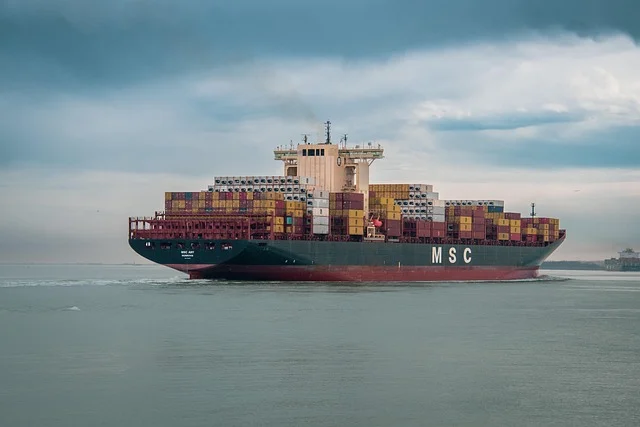
- Volume check: 15 m³ occupies less than half of a 20ft container’s 33.2 m³ interior capacity.
- First, perform a weight check: 24,500 kg sits safely below the 28,130 kg maximum payload rating of Hapag-Lloyd’s 20ft box. As a result, this leaves 3,630 kg of spare payload capacity.
- Upgrading to a 40ft container offers minimal benefit. First, a 40ft standard container payload is 28,750 kg. So, you add only 620 kg of payload capacity while significantly increasing ocean freight rates.
Heavy commodities hit container weight limits long before volume fills. So, shippers choose 20ft containers as the most cost-effective option for dense goods, considering shipping container dimensions. Note that loaded containers require a certified Verified Gross Mass (VGM) submission prior to port gate-in.
Worked example 3: will it go through the door?
Suppose you are shipping industrial machinery mounted on a skid measuring 2.40 m wide by 2.45 m tall.
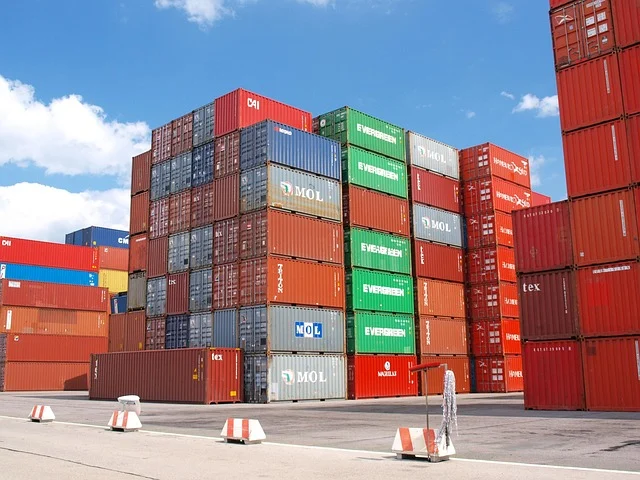
- Width check: 2,400 mm is wider than the 2,340 mm rear door frame width on all dry container models. The unit cannot pass through standard container doors.
- Height check: 2,450 mm exceeds standard container door height (2,292 mm) but fits high cube door openings (2,597 mm).
- Result: Structural door frame width prevents loading inside standard enclosed containers, even though internal length and volume are sufficient.
Overwidth, overheight, or top-loaded machinery usually requires specialized shipping equipment. See open top and flat rack containers for non-standard cargo options.
Which container to choose
- 20ft standard container: Ideal for heavy, high-density commodities (metals, liquids, tiles, minerals) or small volume shipments under 28 m³.
- 40ft standard container: Delivers roughly double the volume of a 20ft box with similar total payload weight limits. Best suited for general medium-density cargo.
- 40ft high cube container: Shares the 40ft footprint while offering 305 mm (12 in) of extra vertical headroom. Recommended for light, voluminous freight, tall pallets, or high-volume consumer merchandise.
- 45ft high cube container: Offers 13,556 mm internal length and 86.0 m³ volume. Designed for extra-large freight volume, but require pre-checks for port clearance and regional road haulage restrictions on destination truck routes. Read the 45ft high cube guide for details.
- Refrigerated containers (Reefers): Feature thick insulated walls and integrated cooling machinery, which reduces interior length, width, height, and usable volume. See the reefer dimensions guide.
We summarize all core equipment dimensions and load limits on the container and pallet specifications page.
Frequently asked questions
What are the inside dimensions of a 40ft high cube?
Hapag-Lloyd lists internal dimensions as 12,032 × 2,350 × 2,700 mm (39 ft 5.7 in × 7 ft 8.5 in × 8 ft 10.3 in) with 76.3 m³ of cubic volume. Other carriers quote volumes between 76.0 m³ and 76.4 m³.
How much taller is a high cube than a standard container?
Inside, a high cube container provides 2,700 mm of internal vertical space compared to 2,395 mm in a standard container. This creates a difference of 305 mm (about 12 inches). Also, door opening height increases from 2,292 mm to 2,597 mm.
Why do different websites give different container sizes?
Carriers buy equipment built by various manufacturers using different wall panel corrugations and floor designs. As a result, units show small variations in tare weight, payload, and internal volume. Always confirm shipping container dimensions against the CSC plate on your assigned container.
What is the payload of a 20ft container?
Maximum payload is approximately 28 metric tons. Hapag-Lloyd lists 28,130 kg; Maersk lists 28,200 kg; CMA CGM lists 28,250 kg; and ONE lists 28,330 kg.
Is a 40ft container exactly twice a 20ft?
In total volume, the answer is almost double: 67.7 m³ versus 33.2 m³. In payload capacity, however, the answer is no. First, a 40ft standard carries 28,750 kg compared to 28,130 kg for a 20ft container under Hapag-Lloyd specifications. So, it provides only 620 kg of additional cargo weight capacity, given these shipping container dimensions.
Related guides
- LCL vs FCL: When Does a Full Container Become Cheaper?
- How Many CBM in a 40ft Container? 40ft and High Cube Capacity
- How Many Pallets Fit in a 20ft and 40ft Container?
- How Many Cartons Fit in a 20ft or 40ft Container?
Sources and further reading
- Hapag-Lloyd: 20′ Standard Container: inside dimensions, door, volume, tare and payload.
- Hapag-Lloyd: 40′ Standard Container: inside dimensions, volume and payload.
- Hapag-Lloyd: 40′ High Cube Container: 76.3 m³, 2,700 mm inside height, payload.
- Maersk: Dry Container Specifications (PDF): a second line’s dry container figures.