
 By
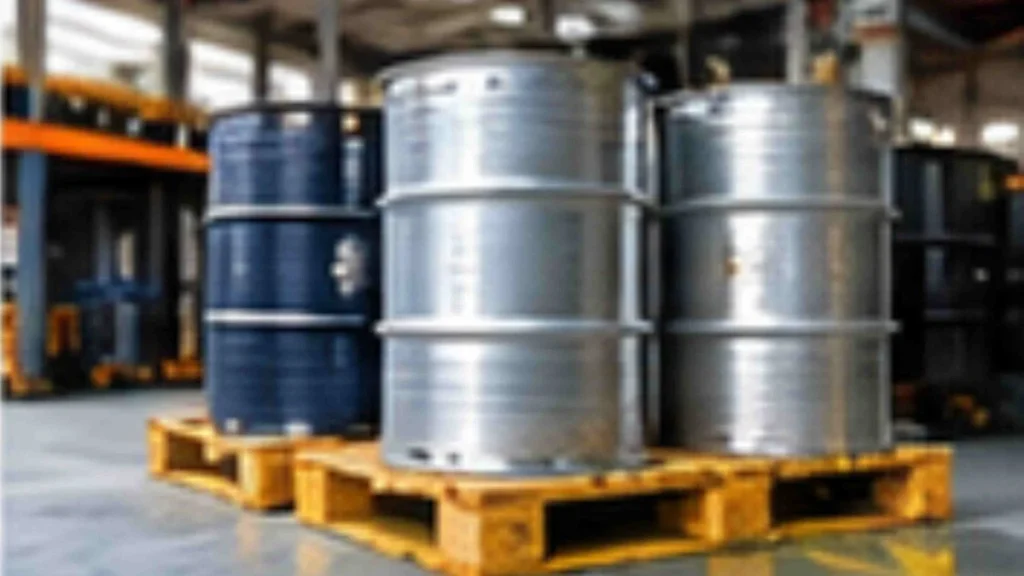
To calculate a pallet’s CBM, use a pallet CBM calculator. Multiply its total length by width. Then, multiply by the overall height in meters. This includes the wooden pallet deck itself. If the load overhangs, measure the cargo’s widest and longest dimensions. Do not use the physical pallet footprint.
Pallet loading calculator (cartons per pallet)
Runs in your browser; nothing you enter is sent anywhere. Carrier figures differ, so confirm the final numbers with your forwarder. Whole shipment: all-in-one freight calculator →
Use Our Pallet CBM Calculator for Exact Formulas
Carriers bill palletized freight. They base this on the total bounding box. This unit occupies space inside a container, truck, or warehouse. Freight operators do not deduct for gaps between cartons. Also, they do not deduct for interior deck clearance or empty spaces around irregular shapes. The calculation always uses the maximum outer dimensions. This includes the pallet and cargo combined.

When measuring in meters, use the direct cubic meter formula:
- Pallet CBM = length (m) × width (m) × total height (m)
When measuring in centimeters, calculate total volume in cubic centimeters. Then divide by one million.
- Pallet CBM = [length (cm) × width (cm) × total height (cm)] ÷ 1,000,000
When you measure in inches, multiply the dimensions. Then divide by 61,023.74 to get cubic meters. Alternatively, divide by 1,728 to get cubic feet.
- Pallet CBM = [length (in) × width (in) × total height (in)] ÷ 61,023.74
- Pallet cubic feet = [length (in) × width (in) × total height (in)] ÷ 1,728
In each formula, length and width represent the maximum boundary. This includes either the pallet base or the cargo overhang. You must measure total height directly from the ground surface. Measure to the stack’s highest point. This measurement also includes the wooden base, top cap, strapping, and protective corner boards.
Standard pallet dimensions and volume reference chart
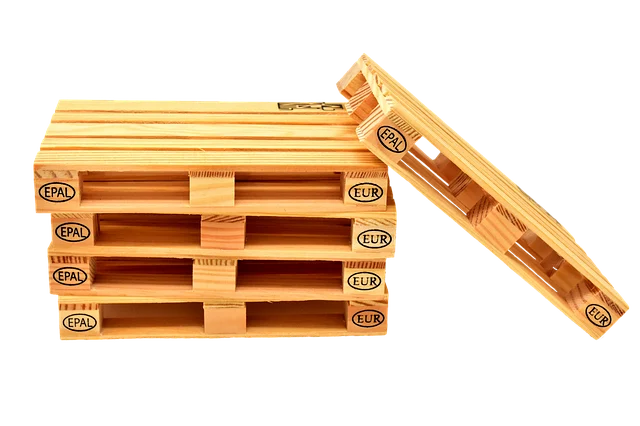
Pallet footprints are standardized across major global trade routes. This happens under ISO 6780 and regional transport standards. The table below outlines common pallet footprints. Also, it shows their total volume in cubic meters at standard loaded heights. We measure these heights from the ground to the top of the load.
| Pallet | Footprint (m) | Area (m²) | CBM at 1.0 m | CBM at 1.5 m | CBM at 1.8 m |
|---|---|---|---|---|---|
| EUR 1 / EPAL | 1.2 × 0.8 | 0.96 | 0.96 | 1.44 | 1.728 |
| EUR 2 / industrial | 1.2 × 1.0 | 1.2 | 1.2 | 1.8 | 2.16 |
| US GMA 48 × 40 in | 1.219 × 1.016 | 1.2385 | 1.239 | 1.858 | 2.229 |
| Australian | 1.165 × 1.165 | 1.3572 | 1.357 | 2.036 | 2.443 |
| ISO square 1,100 mm | 1.1 × 1.1 | 1.21 | 1.21 | 1.815 | 2.178 |
A useful mental shortcut for calculating pallet volume is multiplying the surface footprint area by total height. For example, a EUR 1 pallet has a footprint of 0.96 m², meaning every 10 cm (0.1 m) of load height adds exactly 0.096 m³ to the volume. Regional pallet characteristics and construction specifications are covered in standard pallet sizes and Euro pallet dimensions.
How to measure a loaded pallet step by step
You should measure the pallet after you completely pack it. Also, make sure it is strapped and shrink-wrapped. This helps you avoid re-measurement surcharges. It also prevents unexpected adjustments on freight bills.
- Prepare the load completely: Apply all shrink wrap, corner protectors, top caps, and banding before taking final tape measurements. Wrapping pulls cartons together, while loose bands or corner boards can extend the outer boundary by several centimeters.
- Find the maximum length and width: Measure across the longest and widest points of the unit. Check for cardboard bulge, uneven stacking, or carton overhang. If cartons extend beyond the wooden base, use the outer carton dimensions rather than the pallet deck dimensions.
- Measure total height from the floor: Place the measuring tape directly on the floor. Extend it straight up to the peak point of the shipment. Also, include the height of the bottom pallet structure. Do not forget top protective sheets and any protruding items.
- Round up dimensions: Carrier automated dimensional scanners round dimensions up to the nearest whole centimeter or inch. Rounding up your manual measurements guarantees that your volume estimate accounts for scanner thresholds.
- Determine gross weight: Use a floor scale. Weigh the complete unit. Also, include the wooden pallet, cardboard cartons, inner packaging, banding, and stretch film. This gives you the gross weight.
The measuring guide offers detailed techniques. For example, you can measure bulging boxes. You can also measure non-standard cargo.
Worked example 1: EUR pallet volume, ocean freight W/M, and LDM
Consider a shipment packed on standard EUR 1 pallets. Official EPAL specifications define a EUR 1 pallet. It is 1,200 × 800 × 144 mm. Also, it has an empty base weight of approximately 25 kg. Suppose your cartons are stacked to a height of 1.356 m above the pallet deck.
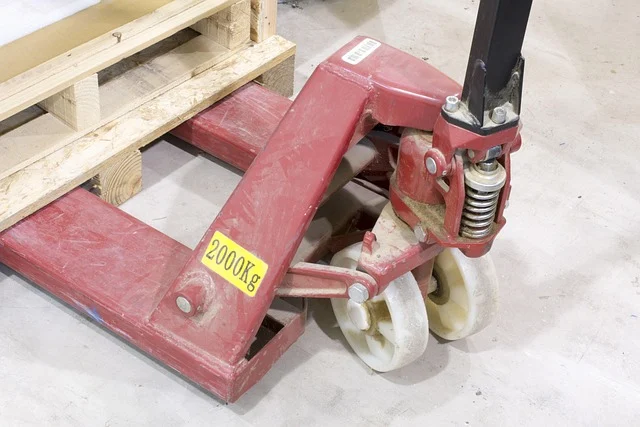
- Total height calculation: 0.144 m (pallet deck) + 1.356 m (cargo) = 1.5 m
- Pallet CBM calculation: 1.2 m × 0.8 m × 1.5 m = 1.44 m³
- Volume in cubic feet: 1.44 m³ × 35.3147 = 50.85 ft³
If you ship 6 identical pallets, each weighing 420 kg gross (including cargo and pallet weight):
- Total shipment CBM: 1.44 m³ × 6 = 8.64 m³
- Total gross weight: 420 kg × 6 = 2,520 kg (2.52 metric tons)
- Ocean freight LCL billing (W/M): Ocean carriers bill less-than-container-load (LCL) freight on a Weight or Measure (W/M) basis. Here, 1 m³ equals 1 metric ton (1,000 kg). Because 8.64 m³ is greater than 2.52 tons, you will be billed at 8.64 W/M.
In European road transport, carriers often charge by floor space. They use loading meters (LDM). For instance, one EUR pallet occupies 0.4 LDM. This is because it takes 1.2 m × 0.8 m ÷ 2.4 m of trailer width. Therefore, six non-stackable EUR pallets take 6 × 0.4 = 2.4 LDM of trailer floor space. You can calculate floor space requirements. Use the loading meter calculator guide.
Worked example 2: US GMA pallet in inches and LTL freight density
In North American logistics, shipments often use 48 × 40 inch GMA pallets. For example, assume a load measures 48 × 40 inches. Its total height is 60 inches from the floor to the top. This load weighs 650 lb gross.

- Volume in cubic inches: 48 in × 40 in × 60 in = 115,200 in³
- Next, Volume in CBM: 115,200 in³ ÷ 61,023.74 = 1.89 m³
- Volume in cubic feet: 115,200 in³ ÷ 1,728 = 66.67 ft³
- Shipment density: 650 lb ÷ 66.67 ft³ = 9.75 lb/ft³
For US Less-Than-Truckload (LTL) shipments, density determines the National Motor Freight Classification (NMFC) freight class. This applies when item entries follow the standard density scale. Under the 13-sub scale, effective July 19, 2025, a density of 9.75 lb/ft³ falls into a specific tier. This is the “8 but less than 10 lb/ft³” tier, corresponding to class 100. Major LTL carriers like Estes require shippers to measure total height from the floor. This includes the pallet deck. They must also state total gross weight when calculating density. Use a pallet CBM calculator for accurate density. See the freight class calculator guide for further class breakdowns.
You must pay careful attention to density boundaries. For example, if you stacked this same shipment 2 inches higher, the total height would be 62 inches. As a result, the cubic volume would increase. It would become 68.89 ft³ (48 × 40 × 62 ÷ 1,728). The density would then drop to 9.44 lb/ft³ (650 ÷ 68.89). This still remains within class 100. However, imagine the gross weight were 50 lb lighter (600 lb total) at 60 inches tall. Then, the density would be 9.0 lb/ft³ (600 ÷ 66.67). This also stays in class 100. Shifts in weight or height most severely affect the freight class when density sits directly on a class threshold. For instance, these thresholds include 8, 10, or 12 lb/ft³.
Worked example 3: the financial cost of load overhang
Cartons may protrude beyond the edges of a wooden pallet base. When this happens, carriers calculate dimensional volume. They use the larger footprint created by the overhanging boxes.
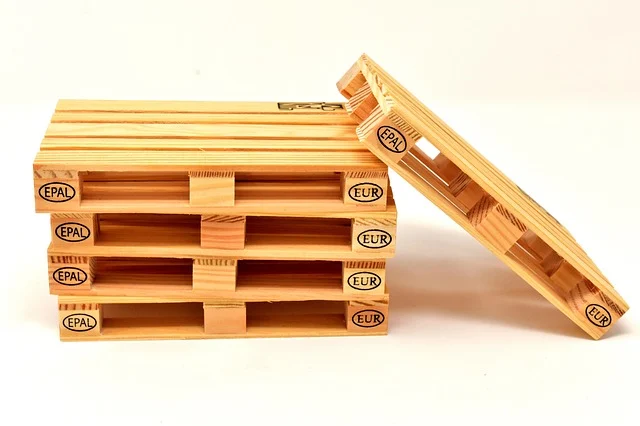
Consider a EUR pallet with a 1.2 × 0.8 m base. Cartons overhang by 2 cm on all four sides. As a result, the effective footprint becomes 1.24 m long. It is also 0.84 m wide. The total load height is 1.5 m.
- Billed volume with overhang: 1.24 m × 0.84 m × 1.5 m = 1.5624 m³
- Standard volume without overhang: 1.2 m × 0.8 m × 1.5 m = 1.4400 m³
- Volume increase: 1.5624 − 1.4400 = 0.1224 m³ extra volume per pallet
- Percentage penalty: 0.1224 ÷ 1.44 = 8.5% increase in billable CBM
Beyond higher freight bills, overhang creates structural instability. It also leaves carton edges vulnerable to crushing against adjacent cargo. Furthermore, it prevents pallets from stowing side by side inside shipping containers or trailers. You can optimize carton patterns to prevent overhang. We explain this in how many boxes fit on a pallet.
When pallet CBM calculations differ from billed freight charges
Calculating a pallet’s pure physical volume does not always reflect your final invoice. Several operational conditions create discrepancies. These conditions cause differences between calculated CBM and billed volume:
Non-stackable cargo and vertical headspace
If a pallet cannot support another pallet on top of it due to fragile contents, pointed tops, or un-level stacking, carriers cannot utilize the space above it. Many ocean LCL and air freight carriers apply a minimum billable height—often 1.60 m or 2.20 m depending on the equipment—or bill non-stackable pallets as a full vertical column up to the ceiling of the container or trailer. Check terms in stackable vs non-stackable pallets.
Pyramid stacking and irregular load profiles
Stacking cartons in a pyramid shape creates empty space. This space forms near the top corners. Automated freight scanners determine volume. They project a bounding cube around the outermost points. Therefore, you are charged for the total rectangular block. This happens even if half of the top volume consists of empty air.
Container loading constraints versus volume limits
Your theoretical total pallet CBM may fit within a container’s cubic capacity. However, physical dimensions may prevent full utilization. For example, standard Australian pallets (1,165 × 1,165 mm) cannot load two-wide. This is true inside a standard sea container (2,352 mm internal width). You need specialized loading patterns. To see floor plans and stowing capacity, review how many pallets fit in a container.
Common pallet measuring errors and how to avoid them
- Excluding the pallet deck height: A standard EUR pallet deck is 14.4 cm tall. Omitting the deck on a 1.5 m pallet understates billable volume by nearly 10% (0.138 m³ per pallet). Always measure from the floor surface up.
- Adding box volumes individually: Summing individual CBM values ignores several factors. These include gaps between boxes, pallet overhang, and structural bases. Freight operators measure the total assembled unit. They see it as one continuous block.
- Ignoring carton bulge under compression: Heavy or improperly stacked boxes bulge outward at the lower tiers. Measure length and width at the widest point of bulge rather than the top corners.
- Confusing net weight with gross weight for density: Freight class and LTL density calculations require total gross weight. This includes pallet weight, packaging, straps, and film. Using net product weight yields artificially low density values. As a result, you get incorrect freight classes.
- Assume global pallet size uniformity: You may plan freight for European 1.2 × 0.8 m pallets. However, this will cause dimensional errors. This happens if you transfer them onto US 48 × 40 in (1.219 × 1.016 m) or square ISO pallets. Always verify pallet base dimensions. Do this for each origin and destination country.
Frequently asked questions
What is the CBM of a standard EUR pallet?
The volume of a EUR pallet depends on its total loaded height. It has a standard footprint of 0.96 m² (1.2 × 0.8 m). For example, a EUR pallet loaded to 1.5 m total height is 1.44 m³. At 1.8 m total height, it is 1.728 m³.
Does pallet CBM include the pallet itself?
Yes, freight volume calculations include the physical pallet base. You measure total height directly from the floor. This includes the 144 mm deck on a EUR pallet. Also, the pallet deck’s weight counts toward total gross weight.
How is the CBM of a 48 × 40 inch pallet calculated?
Multiply 48 inches × 40 inches × total height in inches. Then, divide the total by 61,023.74 to get cubic meters. You can also divide by 1,728 for cubic feet. For example, a 48 × 40 inch pallet loaded 60 inches high yields 1.89 m³ or 66.67 ft³.
Is volume charged for empty space on top of a pallet?
For dimensional weight pricing, carriers measure the highest point of the load. If a pallet is designated non-stackable, carriers may charge based on the full height of the trailer or container space reserved above it; see stackable vs non-stackable pallets.
How many pallet CBM fit in a container?
The total usable CBM in a container depends on its physical footprint layout. It does not depend on total cubic volume alone. We detail the floor space layout and pallet capacities. You can find this information in how many pallets fit in a container.
Related guides
- CBM Calculator in Inches: How to Calculate CBM from Inches
- CBM Calculator: How to Calculate CBM for Shipping
- How to Calculate CBM for Cylinders, Drums and Rolls
- Carton CBM Calculator: CBM for Multiple Carton Sizes
Sources and further reading
- EPAL: Euro Pallet Specifications: 1,200 × 800 × 144 mm, 1,500 kg safe working load.
- ISO 6780: Flat Pallets, Principal Dimensions: the international pallet size standard.
- Estes: Freight Density Calculator: how carriers measure density.