
 By

A container’s weight limit is its maximum gross mass. This includes the empty box plus everything inside. For a 20ft standard, this is usually 30,480 kg (67,197 lb). For a 40ft, it is 30,480 kg or 32,500 kg. This depends on the specific box. You subtract the tare (empty weight) to get the payload. The payload is the most cargo you can load. Therefore, use the calculator below. You can add up cargo, packing, and tare into a verified gross mass.
Verified gross mass (VGM) calculator
Runs in your browser; nothing you enter is sent anywhere. Carrier figures differ, so confirm the final numbers with your forwarder. Whole shipment: all-in-one freight calculator →
Tare, payload and max gross
- Tare: the weight of the empty container.
- Max gross: the most the loaded container may weigh, including the tare.
- Payload: the most cargo, packing and securing material you can put in.
Payload = max gross − tare
Gross mass of a loaded box = cargo + pallets, dunnage and lashing + tare
The gross mass of a packed container is also what you declare as the verified gross mass (VGM) under SOLAS.
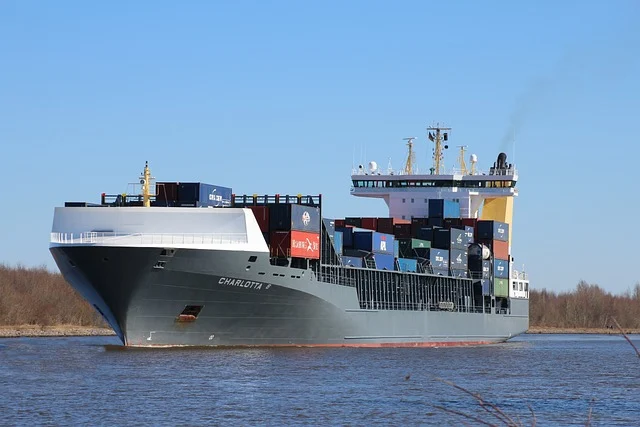
20ft container weight limit by carrier
| Carrier | Tare (kg) | Max gross (kg) | Payload (kg) |
|---|---|---|---|
| ONE | 2,150 | 30,480 | 28,330 |
| CMA CGM | 2,230 | 30,480 | 28,250 |
| Maersk | 2,280 | 30,480 | 28,200 |
| Hapag-Lloyd | 2,350 | 30,480 | 28,130 |
You can check these calculations: 30,480 − 2,150 = 28,330. Also, 30,480 − 2,350 = 28,130. The 200 kg difference in tare directly reduces the payload. However, some 20ft specialist boxes have a higher container weight limit. For example, Hapag-Lloyd lists a 32,500 kg gross for its 20ft open top. It also lists 32,000 kg for its 20ft reefer.
40ft and 40ft high cube weights
| Box | Tare (kg) | Max gross (kg) | Payload (kg) |
|---|---|---|---|
| Hapag-Lloyd 40ft | 3,750 | 32,500 | 28,750 |
| Maersk 40ft | 3,700 | 32,500 | 28,800 |
| CMA CGM 40ft (30,480 rating) | 3,720 | 30,480 | 26,760 |
| ONE Dry 40 | 3,640 | 30,480 | 26,840 |
| Hapag-Lloyd 40ft high cube | 3,900 | 32,500 | 28,600 |
| ONE Dry 40 HC | 3,700 | 32,500 | 28,800 |
CMA CGM lists two ratings for its 40ft standard: 30,480 kg and 32,500 kg. This gives payloads of 26,760 kg or 28,780 kg. That is a difference of about 2 t in container weight limit. The boxes look identical from the outside. Full dimensions are in shipping container dimensions.
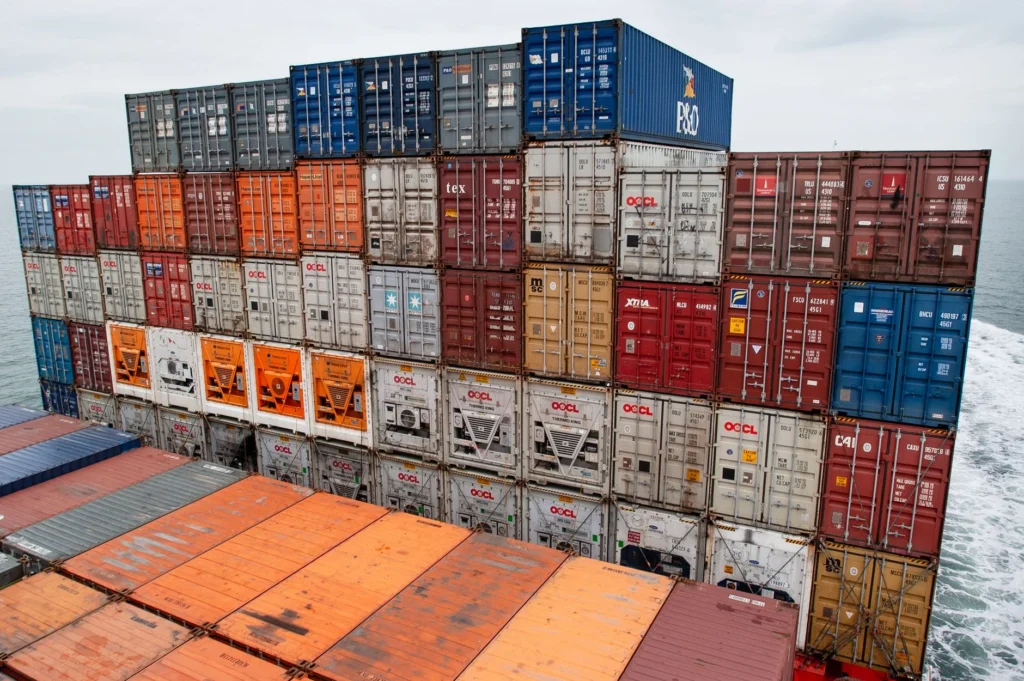
Worked example 1: heavy 20ft load
Say you ship granite slabs in a 20ft from Hapag-Lloyd.
- Cargo: 26,500 kg
- Pallets and packing: 10 pallets × 25 kg = 250 kg. In addition, 400 kg of dunnage and lashing equals 650 kg.
- Cargo plus packing: 26,500 + 650 = 27,150 kg
- Payload check: 27,150 ≤ 28,130, so it fits with 980 kg spare
- Gross mass: 27,150 + 2,350 = 29,500 kg, under the 30,480 kg limit
- In pounds: 29,500 × 2.20462 = 65,036 lb
The box is legal for the sea leg. However, the road leg is a separate question. We cover it below.
Worked example 2: the gross rating matters
Say you load 27,500 kg of cargo. Also add 400 kg of pallets and dunnage. You load these into a CMA CGM 40ft.
- Total to load: 27,500 + 400 = 27,900 kg
- If the box is rated 30,480 kg: payload 26,760 kg. 27,900 − 26,760 = 1,140 kg over
- If the box is rated 32,500 kg: payload 28,780 kg. 28,780 − 27,900 = 880 kg spare
The same carrier and box type can give opposite answers. Therefore, ask your carrier or forwarder for the gross rating. Also ask for the tare of the equipment you will actually receive. Check the container weight limit on the equipment release before loading.
Road limits are often lower than the box
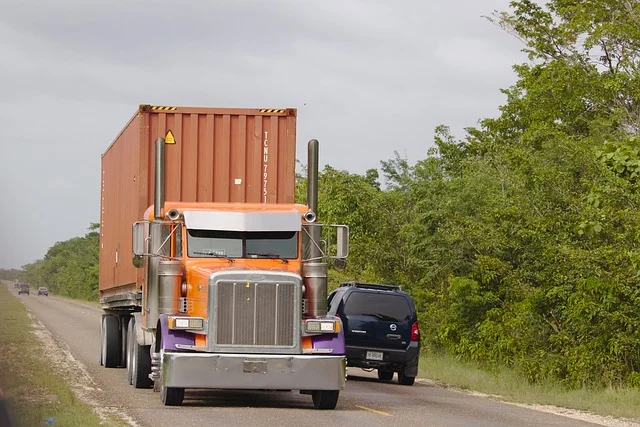
A container loaded to its ocean maximum can be too heavy. Therefore, it might be too heavy for the truck.
United States
The FHWA sets a federal Interstate gross vehicle weight limit of 80,000 lb, with 20,000 lb on a single axle and 34,000 lb on a tandem axle. A 40ft at its 32,500 kg maximum gross weighs 32,500 × 2.20462 = 71,650 lb. That leaves 80,000 − 71,650 = 8,350 lb for the tractor and chassis together. Ask the trucking company what its equipment weighs before you load the box to its limit. See US truck weight limits.
European Union
Directive 96/53/EC sets a general maximum of 40 t, with 44 t allowed for intermodal transport carrying 40ft containers. So, a 40ft at 32.5 t gross leaves 44 − 32.5 = 11.5 t for the tractor and trailer on an intermodal move. See EU truck and trailer sizes.
However, the vehicle’s own weight varies. So, these figures are a prompt to check. They do not guarantee a legal load.
Weight distribution inside the box
Staying under the gross limit is not enough. The weight also needs to be spread sensibly:

- Spread heavy items along the floor. Do not concentrate them at one end. This keeps axle loads within truck limits.
- Put heavy cartons at the bottom and lighter ones on top.
- Block and brace cargo so it cannot shift; shifting weight changes the axle loads during transit.
- For very heavy single items, ask the carrier whether the floor needs extra load spreading.
The container loading plan guide covers stacking and dunnage in more detail.
Common mistakes
- Using a generic tare figure instead of the tare of the actual box.
- Forgetting pallets, dunnage, airbags and lashing in the payload.
- Assuming every 40ft is rated 32,500 kg.
- You can load containers to the ocean limit. However, always check road limits at the origin and destination first.
- Treat reefer and flat rack limits the same as dry boxes. See reefer container dimensions. Also, see open top and flat rack containers.
FAQ
What is the maximum weight for a 20ft container?
Standard 20ft dry boxes have a common gross rating of 30,480 kg. This provides about 28,130–28,330 kg of payload. However, the carrier’s tare determines the exact payload.
What is the maximum weight for a 40ft container?
Gross weight is either 30,480 kg or 32,500 kg. This depends on the specific container. Also, payloads typically range from 26,760 kg to 28,800 kg.
What is the difference between tare and payload?
Tare is the empty container’s weight. You can calculate the payload. Payload is the maximum weight of cargo and packing you can load for the container weight limit. So, subtract the tare from the max gross.
Can I load a container to its maximum gross weight?
For the sea leg, yes, but road limits may be lower. In the US, the federal limit is 80,000 lb for the whole vehicle, including the tractor and chassis.
Does a 40ft container carry more weight than a 20ft?
Only slightly. Hapag-Lloyd’s 40ft carries 28,750 kg against 28,130 kg for its 20ft, even though the volume is about double.
Related guides
- How Many Pallets Fit in a 20ft and 40ft Container?
- How Many Cartons Fit in a 20ft or 40ft Container?
- 20ft vs 40ft Container: Which Is Better for Your Shipment?
- How Many CBM in a 40ft Container? 40ft and High Cube Capacity
Sources and further reading
- Hapag-Lloyd: 20′ Standard Container: inside dimensions, door, volume, tare and payload.
- CMA CGM: Container Types and Sizes: dimensions and payloads for every box type.
- FHWA: Federal Size and Weight Overview: 80,000 lb gross, axle limits, 102 in width.
- ACEA: Heavy-Duty Vehicle Weight Restrictions in the EU (PDF) explains container weight limits. For example, intermodal limits are 40 t and 44 t.