
 By
A standard 20ft shipping container has a maximum internal volume of 33.1 to 33.2 cubic meters (CBM). However, its actual usable volume for packed cargo is typically 25 to 28 CBM. This gap occurs because cargo boxes, pallets, and securement materials create void space. Therefore, you cannot fill every corner.
You need to understand both the theoretical dimensions of a 20ft General Purpose (GP) container. Also, you must know the practical factors that reduce loading space. This will help you accurately plan your shipment. You can also avoid unexpected freight charges.
Container loading calculator (cartons per container)
Runs in your browser; nothing you enter is sent anywhere. Carrier figures differ, so confirm the final numbers with your forwarder. Whole shipment: all-in-one freight calculator →
What is the internal CBM capacity of a 20ft container by ocean carrier?
While standard 20ft dry containers (designated as 20GP or 20DV) share uniform external dimensions set by ISO standards, internal measurements vary slightly between shipping lines. Minor differences in wall panel corrugated depths, floor plank thickness, and corner casting designs mean published cubic capacities range between 33.0 and 33.2 m³.
| Carrier | Inside L × W × H (mm) | Volume (m³) | Tare (kg) | Max payload (kg) |
|---|---|---|---|---|
| Hapag-Lloyd | 5,900 × 2,352 × 2,395 | 33.2 | 2,350 | 28,130 |
| Maersk | 5,896 × 2,350 × 2,393 | 33 | 2,280 | 28,200 |
| CMA CGM | 5,900 × 2,352 × 2,393 | 33.2 | 2,230 | 28,250 |
| ONE | 5,898 × 2,350 × 2,390 | 33.1 | 2,150 | 28,330 |
In imperial units, 33.2 m³ equals about 1,172 cubic feet. We calculate this using 35.3147 cubic feet per cubic meter. A standard 20ft container has a maximum gross mass of 30,480 kg. This combines the empty container weight with the maximum cargo payload limit. The empty container, or tare weight, ranges from 2,150 to 2,350 kg.
Crucially, the rear door frame is smaller than the interior walls. For example, Hapag-Lloyd lists its 20ft door opening at 2,340 mm wide. It is also 2,292 mm high. The top door header sits roughly 103 mm lower than the interior roof line. So, tall loads on forklifts or stacked pallets must clear the door height threshold first. Then they can reach the slightly taller internal ceiling. You should consult your ocean carrier’s spec sheet. Also, view our container dimensions guide. This will verify specific limits for reefer or open-top equipment.
Why can you never load the full 33 m³ inside volume?
In sea freight logistics, we call the difference between a container’s total geometric space and its actual filled space broken stowage. Standard corrugated boxes and rigid goods cannot flow into corner gaps. Also, they do not flex around internal fittings.
Five main factors create broken stowage inside a 20ft container:
- Corrugated steel wall ribs: Container walls get their strength from corrugated steel sheets. The internal ridges project inward. They take up 20 to 30 mm on each side. This reduces effective loading width. However, box sizes might align perfectly inside the wall valleys.
- Door header and ceiling clearance: Cargo must fit through the rear door frame during loading. You need a buffer of 50 to 100 mm at the top of the load. This allows forklift operators to maneuver boxes easily. As a result, they will not scrape the ceiling or the locking mechanism.
- Carton compression limits: Stacking cartons seven or eight tiers high puts heavy pressure on the bottom row. Without high edge-crush test (ECT) ratings, you must restrict top layers to prevent bottom cartons from buckling under load.
- Pallets, lashing, and dunnage: Wooden pallets take up space. Corner protectors, air dunnage bags, and lashing straps also consume space. They reduce both floor footprint and vertical height.
- Carton size mismatch: Master cartons have fixed dimensions. Because of this, gaps can remain. These gaps occur along the length, width, or height. If a gap is smaller than a single box, it becomes unusable void space.
Because of these factors, freight planners budget for practical usable space. They allow 25 to 28 m³ when packing loose master cartons. Also, they budget 21 to 24 m³ when packing palletized cargo.
How do you calculate how many cartons fit in a 20ft container?
Calculating box capacity requires a specific method. You must determine how many cartons fit along each individual axis. These axes are length, width, and height. Do not simply divide container CBM by carton CBM. Dividing total volumes leads to overestimates. This is because you assume boxes can pour liquidly into empty spaces.
Worked example 1: Loose cartons (60 × 40 × 30 cm)
Suppose you ship master cartons. They measure 600 mm long, 400 mm wide, and 300 mm high. Each box is 0.072 m³. You ship them inside a standard 20ft Hapag-Lloyd container. Its dimensions are 5,900 × 2,352 × 2,395 mm.
To find the maximum load, test box orientation along all three container dimensions:
- Cartons along internal length: 5,900 mm ÷ 600 mm = 9.83 → 9 cartons
- Cartons across internal width: 2,352 mm ÷ 400 mm = 5.88 → 5 cartons
- Carton tiers along internal height: 2,395 mm ÷ 300 mm = 7.98 → 7 tiers
- Total carton count: 9 × 5 × 7 = 315 cartons
The total loaded volume is 315 × 0.072 m³ = 22.68 m³. Re-orienting these specific cartons along other axes does not yield a higher count.
This layout leaves noticeable empty space along every side of the container:
- 500 mm of unused space at the rear doors (5,900 mm − 5,400 mm)
- 352 mm of unused space across the width (2,352 mm − 2,000 mm)
- 295 mm of clearance below the ceiling (2,395 mm − 2,100 mm)
Adjusting box dimensions during manufacturing to better match container interior dimensions can recover much of this wasted space. See our guide on how many cartons fit in a container for advanced load calculation strategies and multi-orientation packing setups.
How many pallets fit inside a 20ft container?
When you load palletized freight, floor footprint and pallet dimensions determine usable volume. The interior width of 2,352 mm dictates how pallets can sit side by side.
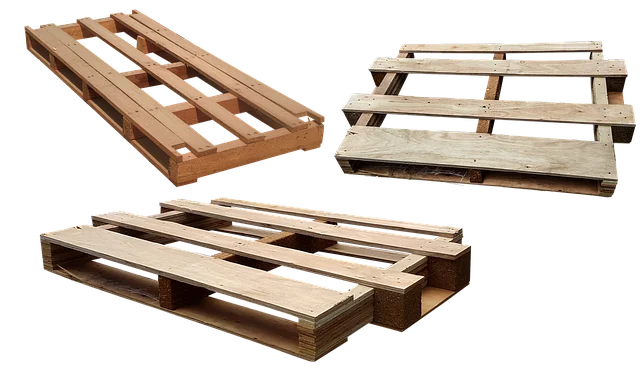
Standard single-layer floor capacities for a 20ft container are:
- EUR 1 pallets (1,200 × 800 mm): Up to 11 pallets on the floor when arranged in a pinwheel layout (combining longitudinal and transverse orientations). Fitting 11 pallets requires flush cargo with zero overhang.
- Standard US / ISO pallets (1,200 × 1,000 mm / 48 × 40 in): You can fit up to 9 pallets on the floor. People sometimes cite 10 pallets in theoretical estimates. However, they cannot fit two-abreast without crushing or damaging goods.
Worked example 2: Double-stacked pallet volumes
Assume you pack each EUR pallet to a height of 95 cm. This includes the goods. The 14.4 cm wooden pallet base adds to this height. So, the total unit height is 1.094 meters (0.95 m + 0.144 m).
- Volume per pallet unit: 1.2 m × 0.8 m × 1.094 m = 1.050 m³
- 11 pallets on a single tier: 11 × 1.050 m³ = 11.55 m³ total usable volume
- 22 double-stacked pallets (2 tiers of 11): Total stack height is 2 × 1.094 m = 2.188 m. This fits below the 2,395 mm ceiling and clears the 2,292 mm door header with 104 mm of overhead space (2,292 mm − 2,188 mm). Total packed volume equals 22 × 1.050 m³ = 23.11 m³.
When you double-stack pallets, always measure against the door header height. Do not use the internal ceiling height. This is because goods must pass through the door frame first. Check our guide on how many pallets fit in a container. It provides floor placement diagrams and stacking rules.
When does cargo weight reach the limit before container volume fills?
Weight limits container capacity. Volume also limits capacity. For example, when you ship dense cargo, you will reach the maximum allowable weight. This happens long before you fill the physical box space. Examples of dense cargo include liquids, hardware, metals, grains, paper rolls, or ceramic tiles.
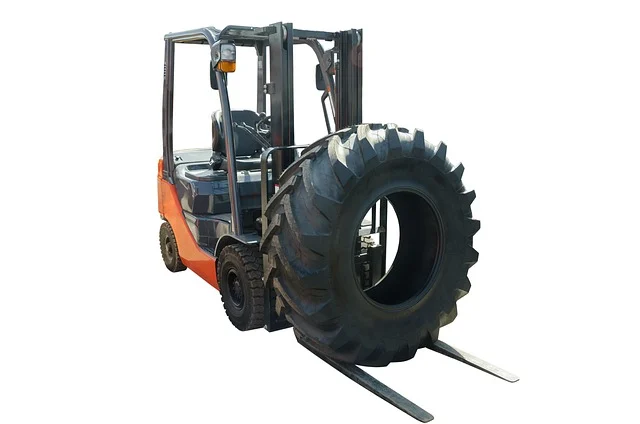
The point where cargo reaches maximum weight payload and maximum volume capacity simultaneously is called the break-even cargo density:
- Theoretical break-even density: 28,130 kg max payload ÷ 33.2 m³ internal volume = 847 kg/m³
- Practical break-even density (28 m³ load): 28,130 kg ÷ 28 m³ = 1,005 kg/m³
- Practical break-even density (25 m³ load): 28,130 kg ÷ 25 m³ = 1,125 kg/m³
Worked example 3: Heavy ceramic floor tiles
Suppose you ship ceramic tiles packed at a bulk density of 1,400 kg per cubic meter. If you load 20 m³ of floor tiles, the total cargo weight reaches 28,000 kg (20 m³ × 1,400 kg/m³).
This single load reaches Hapag-Lloyd’s 28,130 kg maximum payload limit. It has only 130 kg to spare. As a result, more than 13 m³ of empty air space remains inside the container. You would create a cargo weight of 46,480 kg if you tried to fill all 33.2 m³ of volume. This would exceed safety limits and port crane capacities.
For high-density goods, always prefer a 20ft container over a 40ft container. A standard 40ft container offers double the volume. However, it provides only 620 kg of additional payload capacity. This means 28,750 kg versus 28,130 kg. Local road transport regulations often enforce lower gross limits on highways. For example, axle weight limits in North America and Europe can be stricter than carrier container payloads allow. Therefore, always check local road limits with your drayage carrier.
How to decide between a 20ft container, 40ft container, or LCL freight
Choosing the right shipping option depends on total cargo volume, density, and freight rate structures on your trade route.
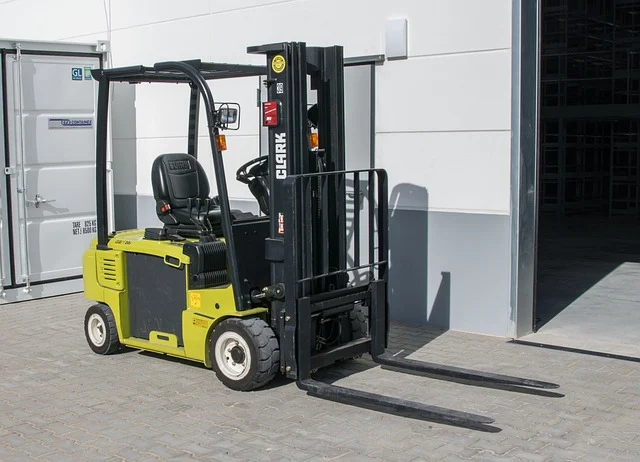
Use these criteria when choosing your shipment method:
- Cargo under 13 to 15 m³: Less than Container Load (LCL) freight is usually more cost-effective. This is true compared to paying for a full 20ft container (FCL). However, your goods must safely share space with other shippers.
- Cargo between 15 m³ and 28 m³: A 20ft FCL container is best. You get exclusive use of the container, avoiding co-loading risks and destination consolidation warehouse delays.
- Cargo above 28 m³: You should upgrade to a 40ft standard container. This container has a 67.7 m³ theoretical volume. Alternatively, you can use a 40ft High Cube container, which has a 76.3 m³ theoretical volume. A 40ft container generally costs 30% to 50% more in ocean freight than a 20ft unit. However, it provides more than double the volume.
- Heavy cargo (density above 1,000 kg/m³): Choose a 20ft container regardless of overall CBM. Your cargo will reach the weight capacity before you can utilize all of the 40ft space.
Ocean freight rates shift based on trade lanes. However, booking FCL becomes cheaper than paying LCL consolidation fees. This happens once your cargo volume crosses 13 to 15 CBM on most international routes.
What practical packing practices maximize usable CBM?
To maximize usable cubic space inside a 20ft container while ensuring cargo arrives undamaged, use these core loading rules:
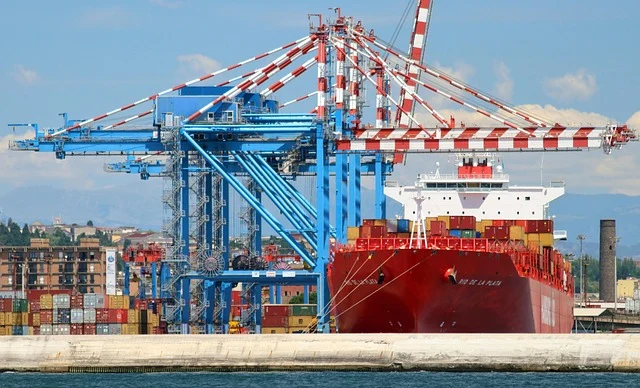
- Get a 3D stuffing plan from your forwarder: Supply exact outer carton dimensions (L × W × H) and gross weight per box to generate an optimized 3D container packing diagram before loading starts.
- Optimize outer carton dimensions: Design master carton measurements so their multiples closely equal interior container dimensions (factors of 5,900 mm length, 2,352 mm width, and 2,395 mm height). See our guide on Choosing Carton Sizes to Reduce Shipping Volume and Freight Costs for detailed box ratio strategies.
- Allow for box expansion under pressure: Corrugated cartons stacked in damp or heavy conditions bulge outward by 5 to 10 mm per side. Always include a 2% width and length tolerance buffer in your load calculations.
- Distribute floor weight evenly: Place heavy items across the floor along the longitudinal center line to balance the container for port crane hoisting and truck drayage.
- Secure cargo with lashing and dunnage: Strap rear boxes using container wall lashing rings, or insert inflatable air dunnage bags between rows to prevent load shifts during ocean transit.
Frequently asked questions
How many CBM is a 20ft container?
A standard 20ft dry shipping container has an internal volume of approximately 33.1 to 33.2 cubic meters (m³), or roughly 1,172 cubic feet, depending on carrier specification variations.
What is the usable CBM in a 20ft container?
The realistic usable volume for loose master cartons in a 20ft container is between 25 and 28 m³, while palletized freight typically yields 21 to 24 m³ of usable space.
How much weight can a 20ft container carry?
A standard 20ft dry container can hold up to 28,000 to 28,300 kg of payload cargo weight. Regulations cap maximum gross weight (container plus cargo) around 30,480 kg, though highway drayage limits often reduce allowable payload further.
How many pallets fit in a 20ft container?
A 20ft container fits up to 11 standard European pallets (1,200 × 800 mm) or up to 9 standard US/ISO pallets (1,200 × 1,000 mm) on a single floor layer. Double-stacking pallets can double these counts if total height remains under the rear door clearance height of 2,292 mm.
How many cubic feet is a 20ft container?
A 20ft container holds approximately 1,172 cubic feet of internal space. You calculate this by multiplying its 33.2 cubic meter internal volume by 35.3147 cubic feet per cubic meter.
Related guides
- Reefer Container Dimensions and Capacity (20ft and 40ft High Cube)
- 45ft High Cube Container: Dimensions, Capacity and Uses
- How to Plan a Container Load: Weight Distribution, Stacking and Dunnage
- Choosing Carton Sizes to Reduce Shipping Volume and Freight Costs
Sources and further reading
- Hapag-Lloyd: 20′ Standard Container: inside dimensions, door, volume, tare and payload.
- Mighty Shipping: Container Sizes and Load Calculation: forwarder rule of thumb for realistic container loads.
- Ocean Network Express: Dry Containers: dimensions, tare and payload.