
 By

Less-than-container-load (LCL) sea freight is calculated using the weight-or-measurement (W/M) rule, comparing total cargo volume in cubic meters against total gross weight in metric tons. Carriers bill based on whichever calculation yields the larger number—known as the revenue ton (RT)—where one metric ton (1,000 kg) equals one cubic meter (1 CBM).
Most ocean freight forwarders apply a minimum charge of 1 RT per shipment, meaning smaller cargo volumes are still billed for a full cubic meter or ton. Use the sea freight CBM calculator below to calculate revenue tons and estimate total freight costs based on your quoted rate.
Ocean LCL freight calculator (W/M revenue tons)
Runs in your browser; nothing you enter is sent anywhere. Carrier figures differ, so confirm the final numbers with your forwarder. Whole shipment: all-in-one freight calculator →
How does the W/M formula work for ocean freight?
W/M means “weight or measurement”. Ocean carriers and freight forwarders use this LCL freight calculation rule. It balances vessel physical volume against total deadweight capacity. Vessel holds have limited volumetric space. Also, strict weight limits exist, based on displacement. The W/M rule sets a standard density baseline. Lightweight cargo, occupying large space, pays for volume. However, dense cargo, consuming heavy capacity, pays for weight.
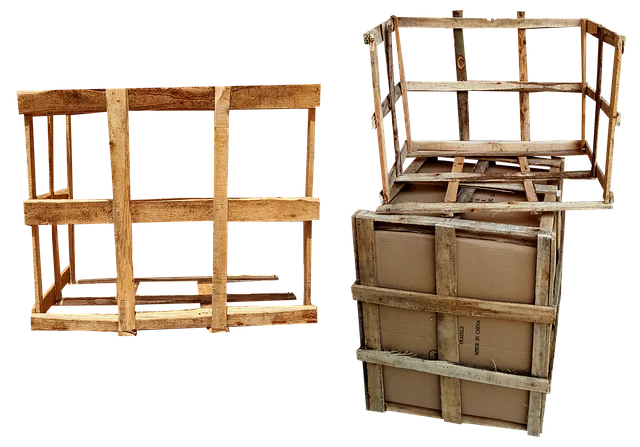
DHL Global Forwarding defines the ocean freight density ratio as 1:1,000, SEKO Logistics states that “1 CBM = 1,000 Kilograms (1 Metric Ton)”, and iContainers expresses the rule as: Chargeable W/M = max(CBM, weight in metric tons).
A revenue ton (RT) is the billing unit for LCL ocean shipping. One revenue ton equals one cubic meter of volume or one metric ton (1,000 kg) of weight. The higher chargeable quantity determines the bill. Carriers bill full container load (FCL) shipments at a flat rate per container. This rate applies regardless of volume or weight up to container structural payload limits. This is different from LCL freight calculation.
Different transport modes use different density ratios to calculate chargeable weight:
| Transport Mode | Standard Density Ratio | Volumetric Conversion Formula | Cargo Type Billed on Volume |
|---|---|---|---|
| Ocean Freight (LCL) | 1 m³ = 1,000 kg (1:1,000) | Chargeable RT = max(m³, kg ÷ 1,000) | Density below 1,000 kg/m³ |
| Air Freight | 1 m³ = 166.67 kg (1:6,000) | Chargeable kg = max(gross kg, m³ × 166.67) | Density below 166.67 kg/m³ |
| Rail Freight | 1 m³ = 333.33 kg (1:3,000) | Chargeable kg = max(gross kg, m³ × 333.33) | Density below 333.33 kg/m³ |
Because ocean freight uses a 1:1,000 ratio, cargo must exceed 1,000 kg/m³ for carriers to bill it on weight. Carriers bill most commercial manufactured goods shipped via LCL on volume (CBM). To calculate raw volume before determining revenue tons, refer to the CBM calculation guide.
Five steps to calculate LCL revenue tons
To calculate the exact billable revenue tons for an LCL shipment, follow these steps in order:

- Measure cargo outer dimensions: Measure length, width, and height of every carton, box, crate, or pallet in meters at the widest extreme points, including protruding handles, corner protectors, bulging, or straps. For palleted goods, measure from the floor to the topmost point.
- Calculate total volume in CBM: Multiply length × width × height for each item to calculate its volume in cubic meters. Then sum the individual CBM values across all items in the shipment.
- Calculate total weight in metric tons: Weigh the complete shipment in kilograms, including packaging, pallets, strapping, and protective wrap. Next, divide total gross weight in kg by 1,000 to convert to metric tonnes (t).
- Determine the revenue tons (RT): Compare total volume in CBM directly against total weight in metric tons. The larger numerical figure represents your baseline revenue ton value.
- Apply carrier minimums and roundings: Check your freight quote for minimum billing thresholds (typically 1 RT per shipment) and rounding policies. Most forwarders round revenue tons to two or three decimal places, while terminal handling fees may round up to whole or half RT increments.
Worked examples of LCL freight calculation for ocean freight
The following examples show how the W/M rule applies across light goods, dense goods, small shipments subject to minimums, and multi-carton packing lists.

Worked example 1: light cargo billed on volume
Suppose you ship 3 m³ of decorative cushions weighing 500 kg.
- Volume: 3 m³
- Weight in tonnes: 500 ÷ 1,000 = 0.5 t
- Greater value: 3 > 0.5, so 3 RT
- At an ocean freight rate of $50 per RT: 3 × $50 = $150
Most commercial goods behave like this. Because their density is under 1,000 kg/m³, physical volume dictates the total freight charge.
Worked example 2: dense cargo billed on weight
Suppose you ship 1 m³ of industrial steel fittings weighing 2,500 kg.
- Volume: 1 m³
- Weight in tonnes: 2,500 ÷ 1,000 = 2.5 t
- Greater value: 2.5 > 1, so 2.5 RT
- At the same $50 per RT rate: 2.5 × $50 = $125
In this case, total weight determines the LCL freight calculation bill. The exact density threshold where cargo switches from volume-based to weight-based billing is 1,000 kg/m³ (62.43 lb/ft³). To test your cargo’s ratio, check the shipping density guide.
Worked example 3: small shipment subject to minimum charges
Suppose you ship a single small carton measuring 0.45 m³ and weighing 120 kg.
- Volume: 0.45 m³; weight: 120 ÷ 1,000 = 0.12 t
- Greater calculated value: 0.45 RT
- Minimum threshold: SEKO notes LCL shipments are “typically subject to a 1 CBM minimum threshold”, meaning you are billed 1 RT
- At an ocean freight rate of $60 per RT: 1 × $60 = $60
As iContainers notes, minimums vary depending on the freight forwarder, carrier, and lane. Small shipments pay for the full minimum revenue ton even when actual measurements fall well below 1 CBM.
Worked example 4: multi-carton packing list calculation
Suppose you ship 40 cartons, each measuring 55 × 45 × 40 cm and weighing 14 kg.
- Convert dimensions to meters: 0.55 m × 0.45 m × 0.40 m
- CBM per carton: 0.55 × 0.45 × 0.40 = 0.099 m³
- Total CBM: 40 × 0.099 = 3.96 m³
- Total weight: 40 × 14 kg = 560 kg = 0.56 t
- Revenue tons: 3.96 > 0.56, yielding 3.96 RT
- At an ocean freight rate of $48 per RT: 3.96 × $48 = $190.08
When dealing with varied packaging dimensions on a single shipment, calculate each carton line separately before adding total cubic meters together; see CBM for multiple cartons.
Summary of example calculations
| Shipment Description | Volume (m³) | Weight (t) | Billed RT | Deciding Factor |
|---|---|---|---|---|
| Cushions | 3 | 0.5 | 3 | Volume |
| Steel fittings | 1 | 2.5 | 2.5 | Weight |
| Small parcel lot | 0.45 | 0.12 | 1 | Minimum charge rule |
| 40 cartons | 3.96 | 0.56 | 3.96 | Volume |
How to calculate LCL freight from imperial measurements (inches and pounds)
Convert imperial carton dimensions and gross weights to metric units before applying the ocean W/M rule.
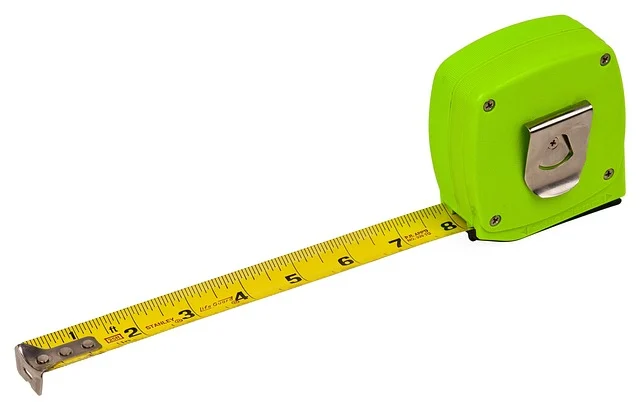
Divide total cubic inches by 61,023.7 to convert to cubic meters (or convert inches to meters first by multiplying dimensions by 0.0254). Multiply total pounds by 0.453592 and divide by 1,000 (or divide total pounds by 2,204.62) to convert to metric tonnes.
Imperial conversion example: 10 cartons, each measuring 24 × 18 × 16 inches and weighing 40 lb.
- Cubic inches per carton: 24 × 18 × 16 = 6,912 in³
- Total cubic inches: 10 × 6,912 = 69,120 in³
- Convert to CBM: 69,120 ÷ 61,023.7 = 1.133 m³
- Convert weight to metric tonnes: (10 × 40 lb) × 0.453592 = 181.44 kg = 0.181 t
- Compare RT values: 1.133 > 0.181, yielding 1.133 RT
Never mix unit systems during calculation. You cannot apply a freight rate quoted per CBM or RT directly to cubic feet or US short tons without conversion. Convert cubic feet to CBM by dividing by 35.3147.
What additional fees appear on an LCL ocean freight quote?
The ocean freight rate per RT represents only a fraction of the total landed cost. Because LCL shipments pass through consolidation warehouses at origin and destination, they incur handling and administrative charges across three fee categories for LCL freight calculation:

- Origin charges: Container Freight Station (CFS) receiving fees, export consolidation handling, warehouse tallying, export customs filing, documentation fees, and terminal handling charges (THC).
- Main ocean carriage: The base freight rate per RT from port of loading to port of discharge, plus surcharges like Bunker Adjustment Factor (BAF), Low Sulphur Surcharge (LSS), Peak Season Surcharge (PSS), or General Rate Increase (GRI).
- Destination charges: Destination CFS devanning (unloading), warehouse deconsolidation, import customs clearance, delivery order (DO) fees, container turn-in fees, chassis charges, and port storage.
Facilities calculate origin and destination CFS charges per RT, but many lines carry strict minimum fee thresholds (such as 2 RT or 3 RT). For very small shipments, destination handling charges can exceed the base ocean freight cost. Always request an itemized quotation covering port-to-port carriage and local terminal charges for LCL freight calculation.
When does LCL stop making financial sense compared to FCL?
LCL costs scale directly with volume because handling fees apply per RT at both origin and destination CFS facilities. In contrast, FCL ocean freight and terminal charges are fixed flat rates per container.
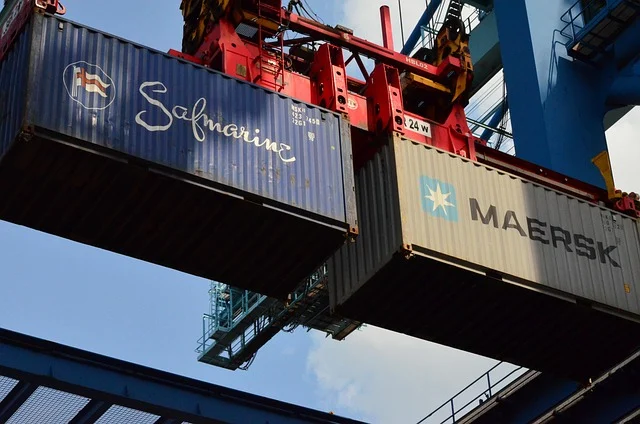
The financial crossover point for LCL freight calculation typically occurs between 13 m³ and 15 m³, depending on the trade lane and destination port fees. Beyond 15 CBM, booking a 20-foot container (providing ~33 m³ of usable capacity) is almost always cheaper overall, even if the container is under half full.
You should also consider non-financial trade-offs. LCL freight calculation involves extra handling at origin and destination CFS facilities, higher risk of cargo damage or loss during consolidation, longer transit times, and potential customs delays if co-loaded cargo triggers an inspection.
Common LCL calculation mistakes and how to avoid them
Discrepancies between quoted estimates and final billing invoices usually stem from measurement errors or rule misunderstandings. To prevent unexpected charges:

- Include pallet bases in height and weight: Standard wooden pallets add 12 to 15 cm of overall height and 15 to 25 kg of weight per unit. Failing to include pallet dimensions understates billable CBM and weight.
- Account for box bulging and overhang: Soft cartons bulge sideways when stacked. CFS warehouses measure cargo using automated laser scanners; extra centimeters increase your billed CBM. Learn more in how to measure cartons and pallets.
- Do not confuse metric tonnes with US short tons: 1 metric ton equals 1,000 kg (2,204.62 lbs), whereas 1 US short ton equals 2,000 lbs (907.18 kg). Ocean freight calculations strictly use metric tonnes.
- Verify weight compliance rules: Ocean shippers must supply verified gross weights for export filing. Review Verified Gross Mass (VGM): SOLAS Rules, Methods 1 and 2 for compliance rules.
- Watch for destination fee minimums: While ocean freight might carry a 1 RT minimum, destination CFS devanning and handling charges frequently impose higher minimums, such as 2 RT or 3 RT.
Frequently asked questions
What does W/M mean in LCL shipping?
W/M stands for “weight or measurement”. It means the carrier calculates your shipping cost on whichever is larger between your cargo’s total volume in cubic meters and its total weight in metric tons.
What is a revenue ton?
A revenue ton (RT) is the freight billing unit used for LCL ocean shipments. One revenue ton represents either 1 cubic meter of volume or 1 metric ton (1,000 kg) of weight, whichever yields the higher chargeable number for LCL freight calculation.
Is there a minimum charge for LCL sea freight?
Yes, freight forwarders almost universally impose a minimum charge, typically 1 CBM or 1 RT per shipment, for LCL freight calculation. Minimum fee structures also apply to destination CFS devanning and documentation charges.
Why am I charged on weight when my cargo volume is small?
When cargo density exceeds 1,000 kg per cubic meter, the weight in metric tons produces a higher number than the volume in CBM. Carriers bill heavy items like machinery, metal castings, or stone on weight rather than volume.
Does LCL ocean freight use the same volumetric ratio as air freight?
No, air freight uses a volumetric ratio of 1:6,000 (1 m³ = 166.67 kg), whereas LCL ocean freight uses a ratio of 1:1,000 (1 m³ = 1,000 kg). Sea freight allows six times more weight per cubic meter before weight-based charges kick in.
Related guides
- LCL vs FCL: When Does a Full Container Become Cheaper?
- Verified Gross Mass (VGM): SOLAS Rules, Methods 1 and 2
- Shipping Container Dimensions: 20ft, 40ft, 40ft High Cube and 45ft
- Reefer Container Dimensions and Capacity (20ft and 40ft High Cube)
Sources and further reading
- SEKO Logistics: LCL Shipping: 1 CBM = 1,000 kg revenue ton basis.
- iContainers: How Ocean Freight Charges Are Calculated: W/M rules and minimum thresholds.
- DHL Forwarding Education Center: Calculating Chargeable Weights: comparative ratios for ocean, air, and rail modes.