
 By
How many CBM are in a 40ft container? A standard 40ft has an internal volume of about 67.7 m³ (2,391 ft³). A 40ft high cube has about 76.3 m³ (2,694 ft³). These figures come from Hapag-Lloyd’s published data. In practice, a forwarder’s rule of thumb suggests a realistic load. This is 55–60 m³ for a 40ft. It is 65–68 m³ for a 40ft high cube. This is because cartons never fill every centimeter. You can use the calculator below. Test your own carton size against a 40ft high cube.
Container loading calculator (cartons per container)
Runs in your browser; nothing you enter is sent anywhere. Carrier figures differ, so confirm the final numbers with your forwarder. Whole shipment: all-in-one freight calculator →
40ft and 40ft high cube CBM capacity by carrier
Both boxes share the same floor: roughly 12.03 m long and 2.35 m wide (about 473.7 × 92.5 in). The difference is height. A standard 40ft is about 2,395 mm (94.3 in) high inside; a high cube (HC) is about 2,700 mm (106.3 in).
| Carrier | 40ft inside L × W × H (mm) | 40ft volume (m³) | 40HC inside height (mm) | 40HC volume (m³) |
|---|---|---|---|---|
| Hapag-Lloyd | 12,032 × 2,352 × 2,395 | 67.7 | 2,700 | 76.3 |
| Maersk | 12,032 × 2,350 × 2,393 | 67 | 2,697 | 76 |
| CMA CGM | 12,034 × 2,352 × 2,395 | 67.8 | 2,700 | 76.4 |
| ONE | 12,032 × 2,350 × 2,390 | 67.6 | 2,695 | 76.2 |
Figures vary by a few millimeters. This can happen between lines and even between builds in one fleet. Therefore, treat them as typical. Always confirm the equipment on your booking. You can find full door and weight data for every box type in the shipping container dimensions guide.
How the CBM figure is worked out
Container CBM = inside length (m) × inside width (m) × inside height (m)
- 40ft standard (Hapag-Lloyd): 12.032 × 2.352 × 2.395 = 67.78 m³, published as 67.7 m³
- 40ft high cube (Hapag-Lloyd): 12.032 × 2.350 × 2.700 = 76.34 m³, published as 76.3 m³
- In cubic feet: 76.3 × 35.3147 = 2,694.5 ft³, which matches Hapag-Lloyd’s “2,694 cbft”
The high cube adds about 305 mm of height (2,700 − 2,395). That is 76.3 − 67.7 = 8.6 m³ more space, or 8.6 ÷ 67.7 = about 12.7% extra volume for the same floor. For the smaller box, see how many CBM fit in a 20ft container.
Realistic loadable CBM
Published volume refers to the empty space inside the steel. However, the cargo you can actually load is lower. Mighty Shipping, a forwarder, publishes this rule of thumb:
| Container | Theoretical (m³) | Typical real load (m³) | Utilization |
|---|---|---|---|
| 40ft standard | 67.7 | 55–60 | 81–89% |
| 40ft high cube | 76.4 | 65–68 | 85–92% |
The same source lists several reasons. Corrugated walls cost 2–3 cm of width. Also, the top 5–10 cm is lost to door clearance. Carton crush strength limits stacking to 6–8 tiers. In addition, dunnage, airbags, and lashing take up space. No container line publishes an official “usable percentage.” Therefore, treat these numbers as a planning range, not a promise. iContainers also warns that “a shipment totaling 60 CBM is not automatically suitable for a container with more than 60 CBM of internal volume.” Broken stowage explains this gap.
Worked example 1: same carton, two boxes
Say your carton is 60 × 40 × 30 cm (23.6 × 15.7 × 11.8 in). One carton = 0.6 × 0.4 × 0.3 = 0.072 m³.
40ft high cube (12,032 × 2,350 × 2,700 mm), carton upright:
- Length: 12,032 ÷ 600 = 20.05 → 20 cartons
- Width: 2,350 ÷ 400 = 5.88 → 5 cartons
- Height: 2,700 ÷ 300 = 9 → 9 tiers
- Total: 20 × 5 × 9 = 900 cartons, or 900 × 0.072 = 64.8 m³
40ft standard (12,032 × 2,352 × 2,395 mm), same orientation:
- Length: 20; width: 2,352 ÷ 400 = 5.88 → 5
- Height: 2,395 ÷ 300 = 7.98 → 7 tiers
- Total: 20 × 5 × 7 = 700 cartons, or 700 × 0.072 = 50.4 m³
The high cube carries 200 more cartons, which is 200 ÷ 700 = about 28.6% more, far above the 12.7% volume difference. The reason is that 300 mm divides into 2,700 mm exactly, while the standard box wastes 2,395 − 2,100 = 295 mm at the top. These are zero-clearance geometric maximums; a real load will be lower. Try other orientations with the carton count guide.
Worked example 2: when weight runs out first
Now say each of those 900 cartons weighs 35 kg (77.2 lb).
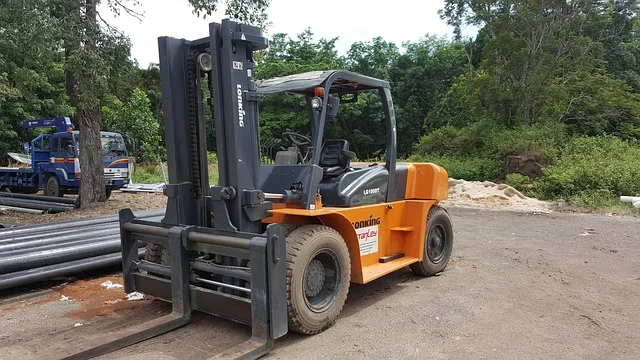
- Total weight: 900 × 35 = 31,500 kg
- Hapag-Lloyd’s 40ft high cube payload: 28,600 kg
- 31,500 kg is over the limit, so the box is weight-limited
- Maximum cartons: 28,600 ÷ 35 = 817.1 → 817 cartons
- Volume loaded: 817 × 0.072 = 58.8 m³
That leaves space empty, and any pallets, dunnage or airbags also count toward the payload. A quick test: divide payload by realistic volume. For a 40ft high cube, 28,600 ÷ 68 = 421 kg/m³ and 28,600 ÷ 65 = 440 kg/m³. Cargo denser than roughly 420–440 kg/m³ tends to hit the weight limit before the volume limit. This carton’s density is 35 ÷ 0.072 = 486 kg/m³, so the result fits the rule.
Payload depends on the box’s gross rating
You can rate 40ft containers at either 30,480 kg or 32,500 kg maximum gross. Payload is gross minus tare. This gives a spread of about 26.8–28.8 t for the “same” box type.
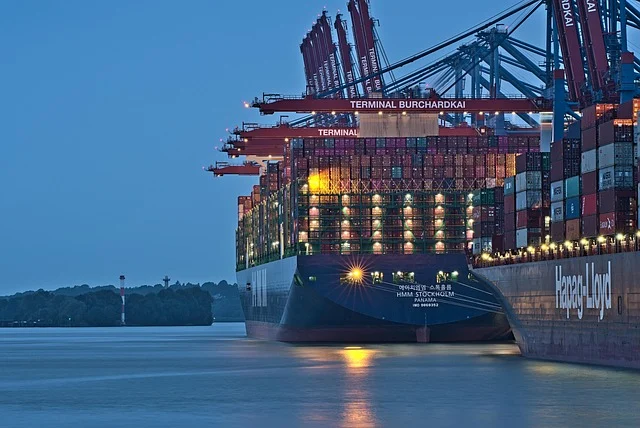
- CMA CGM 40ft standard: 26,760 kg (30,480 kg rating) or 28,780 kg (32,500 kg rating)
- ONE Dry 40: 26,840 kg (30,480 kg rating)
- Hapag-Lloyd 40ft standard: 28,750 kg; 40ft high cube: 28,600 kg
- ONE Dry 40 HC: 28,800 kg (32,500 kg rating)
If your cargo is heavy, ask for the gross rating of the actual box. Road limits can be lower still; see container weight limits.
Pallets in a 40ft container
iContainers publishes these counts for a 40ft. You can place single-tier pallets on the floor. For EUR pallets (1,200 × 800 mm), you can fit “24–25”. You can fit “20–21” pallets measuring 1,200 × 1,000 mm. Also, you can fit “up to 21 with a suitable arrangement” of US GMA 48 × 40 in pallets. Uniform rows on a 12,032 × 2,352 mm floor allow 25 EUR pallets with zero clearance. However, you can fit 23 pallets with 50 mm of clearance.
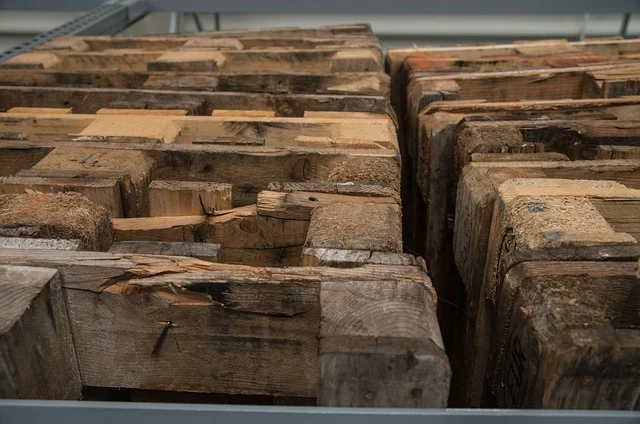
The high cube matters when you can stack pallets. For example, consider 24 EUR pallets. Each pallet is 1.30 m (51.2 in) tall, including its base.
- 40ft standard: 2 × 1.30 = 2.60 m, which is more than 2.395 m, so only one tier fits
- 40ft high cube: 2.60 m is less than 2.70 m, so 2 tiers fit: 24 × 2 = 48 pallets. But 2.60 m is above the 2,597 mm door opening, so the pallets cannot go in already stacked; check with your loader how the second tier will be placed
- Volume: 1.2 × 0.8 × 1.3 = 1.248 m³ per pallet, × 48 = 59.9 m³
- Weight at 550 kg per pallet: 48 × 550 = 26,400 kg, under the 28,600 kg payload
EPAL rates a EUR pallet’s safe working load at 1,500 kg. The bottom pallet has a maximum of 5,500 kg when you stack laden pallets. So, this stack is within the pallet’s rating. You can find more layouts in how many pallets fit in a container.
Tips for planning a 40ft load
- Book a high cube when your load is volume-limited and your carton or pallet height divides well into about 2,700 mm.
- Book a standard 40ft, or check a 20ft, when the cargo is dense; the extra height adds no payload.
- Plan with a package-level packing list, not just a total CBM figure, as iContainers advises.
- Measure cartons accurately before you calculate; see the CBM calculation guide.
- If 68 m³ is still not enough, a 45ft high cube offers about 86 m³ on paper.
FAQ
How many CBM does a 40ft container hold?
A standard 40ft has about 67–67.8 m³ of internal volume. This depends on the carrier. For example, Hapag-Lloyd lists 67.7 m³. You should usually plan a realistic load at 55–60 m³.
What is the 40ft HC container CBM?
The inside capacity is about 76–76.4 m³. Hapag-Lloyd states 76.3 m³, and CMA CGM states 76.4 m³. However, a forwarder rule of thumb estimates the typical real load at 65–68 m³.
Is a 40ft high cube longer or wider than a standard 40ft?
No, the inside length and width are essentially the same. However, the high cube is about 300 mm taller inside. This makes it roughly 2,700 mm.
How much weight can a 40ft container carry?
Published payloads range from about 26,760 kg to 28,800 kg. This depends on the box’s rating. Boxes are rated at either 30,480 kg or 32,500 kg gross. Payload also depends on the box’s tare. You should check the actual box. Also, check any road limits.
How many cubic feet are in a 40ft container?
Multiply CBM by 35.3147. For example, 67.7 m³ is about 2,391 ft³. Also, 76.3 m³ is about 2,694 ft³.
Related guides
- Reefer Container Dimensions and Capacity (20ft and 40ft High Cube)
- How to Plan a Container Load: Weight Distribution, Stacking and Dunnage
- Palletized vs Floor-Loaded Containers: Pros, Cons and Capacity
- 20ft vs 40ft Container: Which Is Better for Your Shipment?
Sources and further reading
- Hapag-Lloyd: 40′ Standard Container: inside dimensions, volume and payload.
- Hapag-Lloyd: 40′ High Cube Container: 76.3 m³, 2,700 mm inside height, payload.
- Mighty Shipping: Container Sizes and Load Calculation: forwarder rule of thumb for realistic container loads.